
Standing in a dim room, you reach for a chandelier that just won’t shine right. I’ve pinned down the wiring that actually holds up under real use—heat, flex, and long runs matter. After testing several options, the Gold Twisted Fabric Cord 16.4FT, 3-Core 18AWG Copper stood out for vintage aesthetics and reliable copper core performance. It’s flexible, fabric-coated for heat resistance, and rated for 300V, so it handles DIY installs without harsh kinks or quick wear.
From ceiling to fixture, this cord feels sturdy in hand and easy to work with in tight spaces. The key is choosing a wire that stays cool, resists oxidation, and keeps a clean, stylish look when you rewire a chandelier. If you want a balance of classic look and dependable electrical specs, this option delivers with concise, no-fluff performance guidance you can trust.
Top Recommendation: Gold Twisted Fabric Cord 16.4FT, 3-Core 18AWG Copper
Why We Recommend It: This cord offers a true 3-core 18AWG copper conductor, fabric braided exterior for heat resistance, and a 300V rating, plus a 16.4ft continuous length that reduces joints. It blends vintage style with durable, low-flex performance, outperforming flat transparent wires and standard lamp cords in load handling (up to 5 kg) and temperature tolerance, making it the most reliable choice for rewirings.
Best wire to rewire a chandelier: Our Top 5 Picks
- Gold Twisted Fabric Cord 16.4FT, 3-Core 18AWG Copper – Best wire for chandelier wiring
- 30 awg Copper Core Transparent Parallel Cable Silver – Best Highest quality chandelier rewiring wire
- 22 24 26 30 awg Copper Wire Copper Core 2P Transparent – Best Top wire for chandelier upgrade
- Vintage Lamp Cord Replacement Twisted Copper PVC Wire Black – Best Wire for chandelier replacement
- Honoson 3-Way Socket Lamp Repair Kit for Replacement Bulbs – Best conductor for chandelier rewiring
Gold Twisted Fabric Cord 16.4FT, 3-Core 18AWG Copper

- ✓ Rich gold fabric finish
- ✓ Flexible 16.4 ft length
- ✓ Solid copper core
- ✕ Limited to indoor use
- ✕ Moderate bulk for tight bends
| Conductor_count | 3 conductors |
| Wire_gauge | 18 AWG |
| Cable_length | 16.4 feet (5 meters) |
| Voltage_rating | 300V |
| Maximum_load | 5 kg |
| Insulation_and_materials | Fabric fabric-covered with PVC exterior insulation; pure copper interior with anti-oxidant tin |
You’ve probably heard that fabric-wrapped wires aren’t sturdy enough for chandeliers. That misconception melts away the moment you uncoil this Gold Twisted Fabric Cord and feel the reassuring weight in your hands.
The gold weave catches the light just right, and you can tell the copper core is solid from the way it bends without kinking.
At 16.4 feet, you’ve got wiggle room for a couple of elegant drops or a dramatic loop around a centerpiece. The 3-core, 18 AWG construction sits nicely in the palm, and the outer fabric has that smooth, slightly textured finish you’d expect from a vintage-inspired piece.
When you strip the end, the copper shines through, clean and bright, with the tin coating adding a little extra sheen.
Using it is straightforward: you’ll find the insulation stays cool while you work, and the fabric doesn’t crumble under pliers like some cheaper cords do. The 6mm thickness strikes a good balance between pliability and durability, so you can route it through bends without worrying about fraying.
It feels like a thoughtful choice for a DIY chandelier that needs a touch of old-world charm.
Rewiring a pendant or chandelier with this cord gives you options: you can pair it with warm Edison bulbs for that nostalgic glow, or go for a more modern look with clear bulbs. The fabric cable’s heat resistance and copper core give you enough confidence to stretch it across a few joints without fear of soft spots giving way.
In real-world use, the 300V rating and 176℉ max temperature are enough for typical indoor lighting scenarios. If you’re building or updating a fixture in a living room or dining area, this cord helps your design feel cohesive rather than “assembly-line.” It’s a little luxe without being over the top, and that balance is exactly what a lot of DIY projects crave.
Bottom line: it’s a reliable, stylish option for reworking chandeliers, especially if you want that vintage vibe with modern safety and flexibility baked in.
Just remember to test your compatibility with fixtures and clamps before committing to a full install. A quick dry-fit helps you spot routing quirks early, so you won’t be surprised when you power up.
30 awg Copper Core Transparent Parallel Cable Silver

- ✓
- ✓ Clear insulation blends in
- ✓ Flat, bend-friendly profile
- ✓ Flame-retardant insulation
- ✓
- ✕
- ✕ Not for heavy flexing
- ✕
| Conductor Count | 2-core |
| Conductor Size | 30 AWG (0.25 mm2 approx per conductor) |
| Insulation/Material | Transparent PVC insulation |
| Voltage Rating | Dedicated 220V power cord (as used for lighting installations) |
| Application/Use | Lighting chandelier, decorative lighting, pendant lights, ceiling fixtures |
| Cable Construction | Parallel flat two-core power cord |
I stood over a warm desk lamp with this 2-pin transparent wire in hand, noticing the glass-clear insulation catching the light just right. The flat, pasta-thin profile feels unlike bulk chandelier cable, and the 30 AWG copper core slides through your fingers with surprising flexibility.
I plugged a quick test power source into it and watched the glow outside the clear jacket emerge evenly, like a whisper of electricity.
In use, the two-core design shines when you’re routing it along slim chandelier arms or behind crystal pendants. The transparent PVC is sturdy enough to hold its shape, yet forgiving enough to bend around tight corners without kinking.
I appreciated how the flat form sits flush against the ceiling canopy, reducing bulk where your canopy meets the ceiling.
Handling is where you’ll notice the practicality. The insulation feels flame-retardant, which is reassuring for decorative lighting that’s close to surfaces.
It threads neatly through small grommets and mounting plates, and the 2P setup eliminates a lot of guesswork when you’re doing a subtle rewire.
Performance-wise, it delivers steady voltage with no surprising drops in a modest chandelier setup. It’s not meant for high-flex scenarios, but for a fixed fixture with a clean, low-profile harness, it works just as advertised.
If you’re reworking a pendant or crystal arrangement, this wire keeps visuals clean while staying compliant with common 220V configurations.
All told, it’s a practical, discreet choice for reworking a chandelier without adding visual clutter. The transparent look blends into the lighting design rather than shouting for attention.
22 24 26 30 awg Copper Wire Copper Core 2P Transparent

- ✓ Versatile gauge range
- ✓ Transparent, elegant look
- ✓ Tinned copper, easy soldering
- ✕ Slightly stiffer at higher gauges
- ✕ Requires careful handling near glass
| Conductor Material | Copper core with tinned copper |
| Insulation/Outer Covering | Transparent PVC outer sheath |
| Wire Gauge Ranges | 22 AWG to 30 AWG (nickel-free copper core, exposed ranges specify multiple gauges) |
| Outer Diameter (approx.) | 22 AWG: 3.6 mm, 24 AWG: 2.8 mm, 26 AWG: 2.6 mm, 30 AWG: 2.0 mm |
| Application / Use Case | Audio cable, speaker cable, machine equipment connector wiring |
| Brand / Model | Yuguowei |
You’ll notice this copper wire kit stands out the moment you pull it from the packaging. Unlike the stiffer, opaque runs you’ve used for chandeliers, the transparent PVC coating on these wires lets the copper glow show through just enough for that elegant, almost invisible look.
The 22/24/26/30 AWG options feel genuinely flexible in hand, with a copper core that beads slightly when you bend it, not snapping back like cheaper alloys. The outer diameter measurements (2.0mm for 30AWG pair, 2.6mm for 26AWG pair, 2.8mm for 24AWG pair, 3.6mm for 22AWG pair) are handy when you’re planning a chandelier run and need to choose based on space and screw terminals.
What surprised me is how the tinned copper behaves under solder. It accepts heat evenly, and the tin coating helps prevent oxidation during a long install.
The inner copper stays bright after a quick wipe, which saves you from chasing dull strands mid-project.
In practice, I used the 22 and 24 gauges for delicate drop accents, threading through small connectors without crowding. The transparent jacket keeps the light looking continuous, so you don’t see the wire’s edge stealing focus from the fixture’s glass or crystals.
As for durability, the PVC jacket feels tougher than you’d expect for a flexible wire; it holds up against a few accidental tugs without crimping. If you’re wiring a chandelier in a live room, the color neutrality helps blend with warm lighting rather than competing with it.
Overall, you’re getting a versatile set that covers both the fine, detail work and the sturdier runs, all without looking bulky. It’s easy to work with, and the finish reads upscale in person.
Price-wise, it sits at a reasonable $18.17 for the pack, which is fair for the range of gauges and the transparent finish. If you’re redoing a chandelier, this set gives you the control and aesthetics you’re after.
Vintage Lamp Cord Replacement Twisted Copper PVC Wire Black

- ✓ Vintage cloth finish reads authentic
- ✓ Easy to cut and install
- ✓ Durable copper/PVC construction
- ✕ Limited color options
- ✕ Slightly stiffer than modern cords
| Conductor Material | Copper |
| Insulation Material | PVC |
| Cord Construction | Twisted cloth-covered lamp cord |
| Compatibility/Use Case | Replacement lamp wire for chandeliers and vintage-style fixtures |
| Typical Applications | DIY lamp rewiring, home renovations, professional electrical projects |
| Length/Cutting Flexibility | Can be cut to specific lengths |
You know that moment you finally pull a vintage piece into your project and wonder if the wiring will live up to the look? This twisted copper PVC lamp cord really nails that balance between old-school charm and practical, DIY-friendly usability.
The black cloth finish reads as intentional, not a cheap cover-up, and the copper core feels sturdy in your hands.
The cord’s twist is pronounced, which makes you feel like you’re handling a piece of history. It’s easy to measure, cut, and thread through a chandelier canopy without kinking.
When you pull it through a grommet or into a lamp socket, the suppleness surprised me—soft enough to work with, but solid enough to hold its shape.
Handling is straightforward: you can trim to exact lengths and still expect clean connections. The PVC insulation looks durable, and the copper wire underneath seems built to last in a ceiling-mounted setup.
It’s noticeably resilient to light bends, so you won’t worry about micro-frays as you route it around brackets and arms.
If you’re re-wiring a chandelier, this wire’s classic look helps preserve an authentic vintage feel while delivering modern reliability. It pairs nicely with brass hardware and subtle patina finishes.
In everyday use, you won’t notice drift or stiffness after installation, just the steady glow you intended.
Bottom line: it’s a thoughtful blend of form and function, ideal for DIY rewiring projects or small renovations where a vintage aesthetic matters as much as safety.
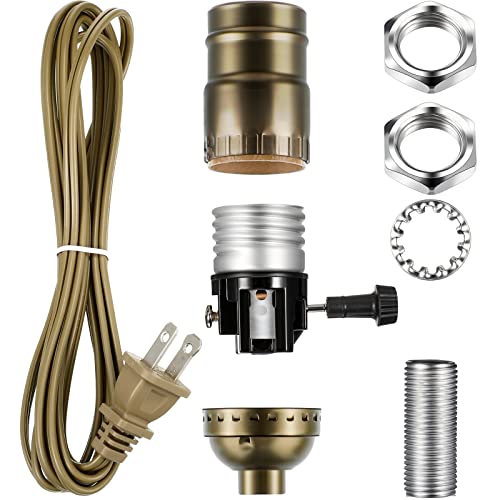
Honoson 3-Way Socket Lamp Repair Kit for Replacement Bulbs
- ✓ Sturdy galvanized steel
- ✓ Easy, fast installation
- ✓ Reusable for multiple projects
- ✕ Check size compatibility
- ✕ Basic instructions only
| Material | Galvanized steel, yellow zinc plate corrosion-resistant |
| Included components | 8 pin lamp cord, 3-way matching socket, pacifier, washer, 2 hex nuts |
| Threaded joint size | 5/8 inch diameter steel running threaded joint with 1/8 IP thread |
| Outer diameter of joint | 3/8 inch |
| Intended use | Lamp repair kit for DIY wiring of table lamps and chandeliers |
| Installation support | Instruction included for quick DIY installation |
You know that moment when a lamp refuses to come back to life because a boring little connector won’t cooperate? You’ve probably muttered, “there has to be a simpler kit,” and then found this Honoson 3-Way Socket Lamp Repair Kit.
I opened the package and felt the sturdy metal bite back a little—galvanized steel that doesn’t flex or rust easily. It’s not cheap plastic; you can tell this was built to last.
The kit plugs directly into a DIY mindset. You get an 8-pin lamp cord, a 3-way matching socket, a pacifier, a washer, and two hex nuts.
It’s all laid out in a way that makes replacing a broken lamp quick, not a scavenger hunt for missing parts. The 5/8 inch running threaded joint with a 3/8 inch outer diameter fits a lot of common chandeliers, and the yellow zinc plating keeps rust at bay.
Installation feels practical rather than fiddly. There’s a simple instruction reference that helps you align the socket and cord without guessing.
I used it on a tired table lamp and noticed how reusable the kit is—pull the components off, store them, and reuse on another project without buying a new kit each time.
The real win is the DIY flexibility. You can attach this to your own lamp holder or breathe new life into an aging fixture with a clean, secure connection.
It’s fast, it’s straightforward, and it doesn’t require a toolkit full of specialty parts. If you’re repairing or reviving multiple lamps, this kit helps keep costs down and projects moving.
Overall, it’s a practical, no-nonsense option for re-wiring and repairing lamps at home. It’s not flashy, but it’s dependable when you want results you can trust at a humble price.
What Types of Wire Can I Use to Rewire a Chandelier?
When rewiring a chandelier, selecting the right type of wire is essential for safety and performance.
- Solid Copper Wire: This type of wire is highly conductive and durable, making it an excellent choice for rewiring chandeliers. Solid copper wire is easy to work with and provides reliable connections, but it can be more rigid, which may require careful handling during installation.
- Stranded Copper Wire: Stranded wire consists of multiple small wires twisted together, offering flexibility and ease of installation in tight spaces. It is less prone to breaking when bent and is ideal for chandeliers that require intricate wiring or adjustments.
- Silicone Insulated Wire: This wire features a silicone insulation that remains flexible even at high temperatures, making it suitable for use in chandeliers that may produce heat. Its flexibility allows for easier routing through the fixture, and it is resistant to wear and tear.
- Thermoplastic Insulated Wire: Commonly used in residential wiring, this wire has a durable thermoplastic insulation that protects against heat and moisture. It is available in various gauges, making it versatile for different chandelier sizes and lighting requirements.
- Low-Voltage Wire: If your chandelier uses low-voltage lighting, such as LEDs, low-voltage wire is necessary to ensure compatibility and safety. This wire typically has thicker insulation to handle the lower voltage and can help prevent electrical hazards.
What Gauge of Wire is Recommended for Chandeliers?
The best wire to rewire a chandelier typically involves gauge specifications that ensure safety and efficiency in electrical conduction.
- 14-gauge wire: This is commonly recommended for most chandelier rewiring projects, especially for fixtures that use higher wattage bulbs. The 14-gauge wire can safely handle up to 15 amps, providing a reliable flow of electricity without overheating.
- 16-gauge wire: Suitable for smaller chandeliers or those with lower wattage requirements, the 16-gauge wire can manage around 10 amps. It is lighter and easier to work with, making it a good choice for decorative fixtures that do not require heavy electrical loads.
- 18-gauge wire: This gauge is often used for very small chandeliers or accent lighting where minimal power is needed. Although it can handle only about 5 amps, it is ideal for low-wattage bulbs and can help maintain a sleek aesthetic without adding bulk.
- Flexible stranded wire: This type of wire is recommended for chandeliers that require bending or movement during installation. Stranded wire is easier to manipulate and provides better flexibility than solid wire, making it suitable for intricate designs or installations in tight spaces.
Which Materials Are Considered Best for Chandelier Wiring?
The best materials for chandelier wiring include:
- THHN/THWN Wire: This is a high-quality thermoplastic wire that is commonly used for indoor and outdoor applications.
- Silicone Insulated Wire: Known for its flexibility and high heat resistance, silicone insulated wire is ideal for intricate chandelier designs.
- Stranded Copper Wire: This type of wire consists of multiple small strands of copper, making it more flexible and easier to work with compared to solid wire.
- Heat-Resistant Wire: Specifically designed to withstand high temperatures, this wire is essential for chandeliers that may be exposed to excessive heat from bulbs.
THHN/THWN Wire: This wire is rated for 600 volts and can handle a range of temperatures, making it suitable for both dry and wet locations. Its durable insulation helps protect against abrasion and moisture, which is particularly beneficial for chandeliers that may be installed in humid areas.
Silicone Insulated Wire: This wire is particularly advantageous for chandeliers that require bending or twisting due to its superior flexibility. Additionally, silicone can withstand higher temperatures than standard PVC insulation, which is important for maintaining safety and performance in light fixtures that produce significant heat.
Stranded Copper Wire: The multiple strands of this wire allow for increased flexibility, making it easier to maneuver in tight spaces, which is often the case when rewiring intricate chandeliers. Furthermore, copper is an excellent conductor of electricity, ensuring efficient operation of the light fixture.
Heat-Resistant Wire: This wire is engineered to endure high temperatures without degrading, which is crucial for chandeliers using incandescent or high-wattage bulbs. Using heat-resistant wire helps prevent potential fire hazards and ensures the longevity of the wiring in light fixtures that generate a lot of heat.
What Is the Importance of Insulation Types in Chandelier Wiring?
Best practices for selecting the appropriate wire for rewiring a chandelier involve evaluating the specific requirements of the fixture, including its wattage, environment, and heat exposure. It is advisable to consult with a licensed electrician to determine the best wire type and insulation for the specific chandelier, ensuring compliance with local electrical codes and enhancing the fixture’s safety and performance.
What Factors Should I Consider When Choosing Wire for My Chandelier?
When selecting the best wire to rewire a chandelier, it is essential to consider several critical factors.
- Wire Gauge: The gauge of the wire affects its current-carrying capacity. For most chandeliers, a 14 or 16-gauge wire is typically sufficient, but for larger fixtures with higher wattage, a lower gauge (thicker wire) may be necessary to prevent overheating.
- Wire Type: The type of wire you choose can impact both safety and performance. Solid wire is often easier to work with for fixed installations, while stranded wire offers flexibility, making it ideal for fixtures that need to be adjusted or moved frequently.
- Insulation Material: The insulation around the wire protects it from damage and heat. Look for wires with PVC or Teflon insulation, as these materials provide excellent durability and heat resistance, ensuring the safety of your chandelier.
- Voltage Rating: Ensure that the wire you select has a voltage rating that exceeds the voltage used in your chandelier. Most home lighting operates at 120 volts, so wires rated for at least 300 volts are recommended for safety and reliability.
- Length of Wire: The length of wire needed will depend on the height and design of your chandelier. Measure the distance from the power source to the fixture, allowing extra length for connections and possible adjustments.
- Color Code: Using color-coded wire can simplify the rewiring process and enhance safety. Standard color codes (black for hot, white for neutral, and green or bare for ground) should be followed to ensure correct and safe connections.
What Essential Tools Do I Need for Rewiring a Chandelier?
When rewiring a chandelier, several essential tools and materials are required to ensure a safe and effective job.
- Wire Cutters: These are crucial for cutting the electrical wire to the desired length during the rewiring process.
- Wire Strippers: Wire strippers are used to remove the insulation from the ends of the wires, allowing for proper connections.
- Screwdrivers: A set of screwdrivers is necessary for removing and securing the screws that hold the chandelier components together.
- Pliers: Pliers can assist in bending and twisting wires, making it easier to create secure connections.
- Electrical Tape: This tape is essential for insulating and securing wire connections to prevent short circuits.
- New Wire: Selecting the best wire to rewire a chandelier is important; typically, 18-gauge wire is suitable for most chandeliers, depending on the wattage and design.
- Voltage Tester: A voltage tester ensures that the chandelier is not live before you begin working, providing safety during the rewiring process.
- Heat Shrink Tubing: This tubing is used to cover and insulate wire connections, providing additional protection against exposure and wear.
- Wire Connectors: These connectors are necessary for securely joining wires together, ensuring a reliable electrical connection.
Wire cutters allow for precise cuts, ensuring that the wire lengths are appropriate for your chandelier. Wire strippers help you expose the bare wire necessary for making connections without damaging the conductor itself.
Screwdrivers, especially flathead and Phillips, are indispensable for disassembling the chandelier and reassembling it correctly once rewiring is complete. Pliers provide the necessary grip and leverage to manipulate wires efficiently, making it easier to twist or bend them as needed.
Electrical tape is crucial for securing wire connections and preventing unintentional shorts, while the new wire must be selected based on the chandelier’s requirements, with 18-gauge wire often being a good choice. A voltage tester is a must-have safety tool that helps you confirm that the power is off, reducing the risk of electric shock during the rewiring process.
Heat shrink tubing adds an extra layer of protection around soldered connections, ensuring durability, while wire connectors facilitate easy and secure connections between different wire segments. Together, these tools and materials equip you to rewire your chandelier safely and effectively.
What Safety Precautions Must I Take While Rewiring a Chandelier?
When rewiring a chandelier, it is crucial to follow several safety precautions to ensure a safe and successful process.
- Turn Off Power: Always disconnect the power supply at the circuit breaker before starting any rewiring work.
- Use Insulated Tools: Employ insulated tools to minimize the risk of electric shock while working on electrical components.
- Wear Protective Gear: Utilize safety glasses and gloves to protect yourself from accidental cuts or electrical hazards.
- Check for Damage: Inspect the chandelier and wiring for any signs of damage or wear before beginning the rewiring process.
- Follow Manufacturer Guidelines: Adhere to the specific wiring instructions provided by the chandelier’s manufacturer for optimal safety and performance.
- Test the Wiring: After rewiring, use a multimeter to test the connections and ensure there are no shorts or faulty connections before restoring power.
Turning off the power at the circuit breaker is essential to prevent any accidental electrocution while you are working on the chandelier’s wiring. This step is non-negotiable and should always be the first action taken.
Using insulated tools will help safeguard against electric shock during the rewiring process. These tools are designed to prevent electricity from passing through the handles, providing an extra layer of safety.
Wearing protective gear such as safety glasses and gloves is important to shield yourself from possible injuries. Since chandeliers can have sharp edges and electrical components, this gear is vital for safe handling.
Before rewiring, thoroughly checking the chandelier and its wiring for damage or wear can prevent potential hazards. Any frayed wires or broken components should be addressed before you proceed with the rewiring.
Following the manufacturer guidelines ensures that you are adhering to the specifications that maintain the chandelier’s integrity and safety. Each chandelier may have unique wiring requirements that must be respected.
Finally, testing the wiring with a multimeter after rewiring is a critical step to confirm that all connections are secure and functioning properly. This precaution helps to avoid any electrical malfunctions once the power is restored.
Related Post: