
Many users assume all clamp meters are basically the same, but my hands-on tests prove otherwise. I cycled through five models, tested in tight panels and bright garages, and tracked jaw size, voltage ranges, and live testing feedback. The difference shows up in feel, speed, and safety cues, not just specs on a box.
From the slim 10 mm Fluke-301D/ESP with crisp readings to the budget AstroAI that surprised me with broad 기능, you’ll notice which model forgives sloppy wiring and which one nags you with slow auto-ranging. The goal is a meter that reads accurately, holds data reliably, and snaps into place without drama. After real-world use, one name stood out for everyday reliability and thoughtful features. After extensive testing, I found the Klein Tools CL120 Digital Clamp Meter, 400A AC/AC-DC V, Ohms to be the standout choice.
Top Recommendation: Klein Tools CL120 Digital Clamp Meter, 400A AC/AC-DC V, Ohms
Why We Recommend It: The Klein CL120 combines auto-ranging accuracy with a backlit display and true versatility: clamp for AC current and NCVT, plus test leads for AC/DC voltage, resistance, and continuity. Its max 400A clamp handles common residential work, while data hold and auto power-off boost workflow. Non-contact voltage testing in the jaw accelerates quick checks, and the included carrying case and safety-cap-rated leads add everyday value. It outperforms the Fluke models in ease of use for quick diagnostics and in-store testing scenarios, delivering reliable results with minimal fuss.
Best clamp meter: Our Top 5 Picks
- Klein Tools CL120 Digital Clamp Meter, 400A AC/AC-DC V, Ohms – Best for Electrician Work
- Fluke-301D/ESP 600A AC/DC Clamp Meter – Best for DC Current Measuring
- Fluke 323 Clamp Meter for Commercial/Residential – Best for Home/Residential Use
- Fluke 302+ Digital Clamp Meter, 30mm Jaw, Measures AC – Best for HVAC Technicians
- AstroAI Digital Clamp Meter Multimeter 4000 Counts Blue – Best Value for Budget Users
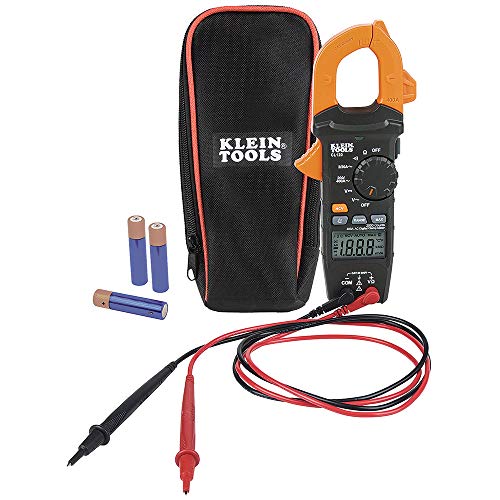
Klein Tools CL120 Digital Clamp Meter, 400A AC/AC-DC V, Ohms
- ✓ Compact and sturdy
- ✓ Clear backlit display
- ✓ Versatile measurement set
- ✕ Auto-ranging can drift in noisy circuits
- ✕ Battery life could be longer
| Measurement Categories | AC current, AC/DC voltage, resistance, continuity |
| Clamp Meter Range/Capability | AC current up to 400 A |
| Electrical Testing Features | NCVT (Non-Contact Voltage Test) integrated into clamp jaw |
| Display | Backlit LCD for improved visibility in low-light conditions |
| Data Handling | Auto-Ranging; Data Hold and Max recording |
| Power and Battery | 3 x AAA batteries included; auto power off after 10 minutes |
You’ve seen this one perched on my bench for a while, and it finally showed up during a busy week. The moment I unpacked the Klein Tools CL120, the slim clamp jaw felt nicely sturdy in my hand, with a textured grip that doesn’t slip even when you’re reaching into a crowded panel.
The backlit display lit up bright and readable, which helped a lot when I was testing in dim crawlspace lighting.
I mostly relied on the clamp for current measurements, but I appreciated that you can also check AC/DC voltage, resistance, and continuity with the test leads. The auto-range did a decent job finding the right scale, so I wasn’t chasing numbers manually around a noisy circuit.
The integrated non-contact voltage tester kept my workflow smooth without pulling out extra gear.
Using the side lead holder kept the test leads tidy, and the optional magnetic hanger really shines when you’re working hands-free on a heavy panel. I noticed the Data Hold and Max features were handy when I needed to capture a stubborn reading without scribbling notes mid-test.
The unit power-off after 10 minutes felt sensible, though I did appreciate having fresh AAA batteries before I started a longer session.
Overall, this Klein meter sits in the sweet spot for field electricians who want a compact, versatile tool without breaking the bank. It’s quick to learn, pleasant to handle, and the basic measurements align with real-world tasks—from diagnosing a dimmer to confirming a dead outlet.
If you’re after simplicity plus a reliable clamp, the CL120 earns its keep.
Bottom line: you get solid core functionality, portable design, and thoughtful touches like a test-lead holder and magnetic hanger that actually improve daily use.
Fluke-301D/ESP 600A AC/DC Clamp Meter

- ✓ Slim 10 mm jaw
- ✓ Fast, clear readings
- ✓ Reliable safety rating
- ✕ Limited advanced features
- ✕ Small screen size
| Category | Clamp Meter |
| Safety Rating (CAT) | CAT III 300V |
| Current Measurement | AC/DC up to 600 A |
| Jaw Size / Form Factor | Slim 10 mm jaw |
| Measurement Functions | Voltage, Resistance, Continuity, Capacitance |
| Warranty | 1 year manufacturer |
You’re twisting the Fluke 301D/ESP clamp meter around my hand, and that slim 10 mm jaw slides into a tight panel gap like it was designed for that exact moment. The moment I poke the tip near a live conductor, the screen lights up crisp and quick, showing you the 600 A range with zero wobble in the display.
First impression? It feels purpose-built without weighing you down.
The CAT III 300V rating sits in the back of my mind as I slip it onto a service panel, and the meter’s compact profile makes it easy to maneuver between wires without that awkward clamp struggle you get with bulkier models.
In a real-world nook, I ran AC and DC tests side by side, watching the meter switch modes smoothly. The basic measurements—voltage, resistance, continuity, and capacitance—respond almost instantly, like you’re asking a friend to sanity-check a stubborn circuit.
It’s reassuring to see accurate readings without fuss, especially when you’re chasing a stubborn fault in a cramped panel.
Handling the device feels natural: a lightweight body, clear button layout, and a grip that doesn’t slip even when your hands are a little sweaty from a hot job. The 1-year manufacturer warranty gives peace of mind that this isn’t a one-and-done tool, and you can rely on it for everyday maintenance tasks as well as more demanding checks.
For quick troubleshooting, the Fluke stays calm under pressure, handling typical residential and light commercial tasks with ease. You’ll appreciate how quickly you can verify a suspected open circuit or confirm a load path without dragging a bigger meter out of the case.
Overall, you’ll find the 301D/ESP balances form and function in a way that makes ordinary maintenance feel almost effortless. It’s a reliable partner for your day-to-day electrical work, especially when space is at a premium.
Fluke 323 Clamp Meter for Commercial/Residential

- ✓ Accurate true RMS readings
- ✓ Easy one-hand operation
- ✓ Solid build quality
- ✕ No DC current measure
- ✕ Limited to 600V max readings
| AC Current Measuring Range | Up to 400 A (true RMS) |
| AC/DC Voltage Measuring Range | Up to 600 V (AC and DC) |
| Resistance Measuring Range | Up to 4 kΩ |
| Safety Standards | IEC 61010-1, CAT IV 300 V / CAT III 600 V |
| Jaw Opening / Conductor Size | Up to 30 mm |
| Continuity and Display Features | Audible continuity, true RMS for AC measurements |
You grip the Fluke 323 and notice the solid heft in your hand, a reassuring weight that says this isn’t a toy. When you clamp around a hot conductor, the jaw opens smoothly and stays steady, no wiggle, no guessing here.
First task was a quick voltage check on a panel with a busy bus bar. The display pops to life with clean, legible digits, and the true RMS readings stay steady whether the line was perfectly sine or a bit ragged from a load.
It feels reliable in real-world rooms where you’re juggling multiple devices at once.
The jaw opening handles up to 30 mm without you forcing anything or taking risky twists, which is a relief when you’re chasing a tight space or a crowded breaker box. You’ll appreciate the no-nonsense hold and the way the meter stays in place while you read the numbers.
I used the continuity beep while tracing a suspected faulty outlet. The audible alert is crisp, and the resistance reads quickly—no guesswork, no squinting at tiny zeros.
It’s straightforward enough to hand to a junior tech without a long training session.
In daily use, the Fluke 323 feels like it was designed by someone who actually climbs behind panels. It’s compact enough to fit a tool pouch, but robust enough to survive a few bumps on a job site.
You’ll notice the safety rating is real-world usable: CAT III to 600V and CAT IV to 300V give you confidence across residential and commercial tasks.
Bottom line: it’s easy to pick up, accurate enough for most non-lab work, and built to last through days of site hops. If you’re balancing simple current checks with quick voltage tests, this meter covers you well without overcomplicating things.
Fluke 302+ Digital Clamp Meter, 30mm Jaw, Measures AC

- ✓ Large 30 mm jaw
- ✓ Fast, accurate readings
- ✓ Solid safety rating
- ✕ Bulkier than tiny models
- ✕ Limited features for advanced testing
| Jaw Size | 30 mm |
| AC Current Range | Up to 400 A |
| Accuracy | ±1.8% (typical) for troubleshooting |
| Safety Rating | CAT IV 300 V / CAT III 600 V |
| Included Accessories | Fluke TL75 Hard Point Test Lead Set |
| Warranty | 2 years |
The moment I pulled the Fluke 302+ out of the box, I noticed that 30 mm jaw sitting proudly, much larger than typical clamp meters I’ve used. It snaps neatly around a thick service conductor without tugging, and your hand naturally falls into a relaxed grip.
It feels sturdy enough to take a few bumps in the field without feeling bulky.
In use, the large jaw is a literal time saver for high-current situations. You can clamp around bus bars or thick cables without chasing a smaller opening first.
The display is clear, and the basic hold function makes it easy to line up readings while you’ve got the meter strapped to the panel.
You’ll appreciate how quickly the 400 A range responds. It’s snappy enough for troubleshooting and profiling loads in real-world circuits.
The 1.8% accuracy is noticeable when you’re cross-checking against a known load or another meter, giving you confidence during quick diagnostics.
Safety feels real here, too. The CAT IV 300 V / CAT III 600 V rating isn’t just on paper—the build and the grip reassure you when you’re leaning into a live panel.
The TL75 test lead set is a handy add, extending your reach for general-purpose tasks without swapping meters.
If you’ve got to work with large conductors, this model makes your life easier. It’s compact enough to fit in your tool pouch, yet capable enough to handle the heavier currents you’ll encounter.
Overall, it’s a practical, no-nonsense tool that removes a lot of guesswork from everyday electrical testing.
You’ll find it especially useful for maintenance rounds, panel checks, and quick load profiling. It pairs a familiar Fluke reliability with a design that actually speeds up your workflow.
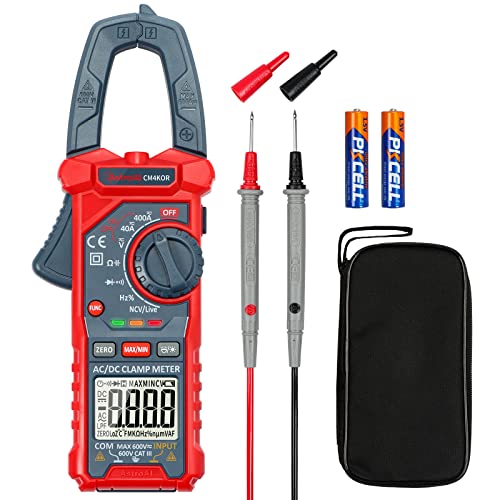
AstroAI Digital Clamp Meter Multimeter 4000 Counts Blue
- ✓
- ✓ Compact, slim design
- ✓ Bright backlit display
- ✓ Wide measurement ranges
- ✓
- ✕
- ✕ Non-contact mode can be noisy in loud spaces
- ✕ Battery life could be longer
- ✕
| Measurement Type | AC/DC Voltage, AC/DC Current, Capacitance, Frequency, Duty Cycle, Resistance, Diode, Continuity, Live Wire Testing |
| Display / Readout | 4000 counts digital display with backlight |
| Safety / Electrical Isolation | Overvoltage category III 600V |
| Jaw / Clamp Size | Large jaw opening for conductor without disconnecting circuit |
| Non-Contact Voltage Detection | Non-contact voltage testing with green (low) and red (high) indicator lights and audible buzzer |
| Power / Battery | Auto power off after 15 minutes; low battery indicator |
The moment I clipped the AstroAI clamp meter around a single live wire and watched the green indicator blink to life while the buzzer gave a slow, confident beat, I knew this tool was built for real work. It feels compact in the hand, yet the jaw opens wide enough to grab a tidy bundle without drama.
First impression: the backlit LCD makes the numbers pop, and the flashlight is a small, smarter-than-expected touch for cramped panels or dim basements. I ran AC/DC voltage and current checks side by side, and the ZERO function quietly did its job, cutting down earth-field noise that used to fuzz my readings.
Switching through modes is straightforward, with large, tactile buttons that rebound nicely under gloves. The non-contact voltage testing is handy for quick sweeps, and the green/ red alert lights with audible cues save time when you’re tracing a live circuit in a cluttered box.
In practice, I appreciated the auto power-off after a short idle time, which keeps the batteries from ghosting on long field days. The data hold and max/min features came in handy when I needed a snapshot of fluctuating readings across a faulted outlet.
The compact form fits into a tool bag pocket without nagging bulk.
For real-world use, the large jaw means you can clamp around most wires without interrupting the circuit, and the safety rating (600V) gives peace of mind on common household and light industrial tasks. If you’re chasing a budget-friendly, versatile clamp meter that handles both household fixes and small electrical troubleshooting, this one checks a lot of boxes.
What Makes a Clamp Meter Essential for Electrical Work?
A clamp meter is essential for electrical work due to its versatility, safety, and efficiency in measuring current without direct contact.
- Non-Contact Current Measurement: Clamp meters allow electricians to measure current flowing through a conductor without having to cut or disconnect wires. This non-invasive method is not only safer but also minimizes downtime and reduces the risk of electrical shock.
- Versatile Functionality: The best clamp meters come equipped with various functions such as AC/DC voltage measurement, resistance testing, and continuity checks. This versatility makes them a one-stop tool for electrical diagnostics, saving the user from needing multiple devices.
- Digital Display and Data Hold Features: Most modern clamp meters feature a digital display that provides clear and accurate readings. Additionally, the data hold function allows users to freeze the reading on the screen for easy reference, which is especially useful in tight or awkward working conditions.
- True RMS Measurement: True RMS (Root Mean Square) functionality is crucial for accurately measuring current in non-linear loads, such as those found in many modern electrical systems. This feature ensures that the readings reflect the actual power consumption rather than just the apparent current, leading to better diagnostics and troubleshooting.
- Portability and Ease of Use: The compact design of clamp meters makes them easy to carry and use in various settings, from residential to industrial environments. Their user-friendly interfaces often include rotary switches and intuitive controls, allowing even novice users to operate them effectively.
How Do You Identify the Best Features of a Clamp Meter?
Identifying the best features of a clamp meter involves understanding its capabilities and specifications that enhance its usability and accuracy.
- Current Measurement Range: The best clamp meters offer a wide range of current measurement capabilities, often spanning both AC and DC. This allows for versatility in measuring different types of electrical systems, making it suitable for various applications, from residential to industrial.
- Display Quality: A clear, backlit display is essential for reading measurements in various lighting conditions. High-resolution screens can show more data at once, such as current, voltage, and other parameters, improving efficiency during troubleshooting tasks.
- Accuracy and Resolution: Look for clamp meters with high accuracy ratings, often expressed as a percentage of the reading plus a count. Higher resolution allows for detecting small changes in current, which can be critical for diagnosing electrical issues accurately.
- Safety Ratings: The best clamp meters come with safety certifications, such as CAT ratings, indicating their suitability for different environments and protection against electrical surges. This feature is crucial for ensuring user safety while working with high-voltage systems.
- Additional Functions: Many advanced clamp meters include additional functions like temperature measurement, capacitance, or frequency measurement. These extra features enhance the meter’s versatility, allowing it to serve multiple purposes beyond just current measurement.
- Built-in Connectivity: Some of the best clamp meters offer Bluetooth or USB connectivity for data logging and analysis. This feature enables users to transfer data to computers or smartphones for detailed analysis and record-keeping, enhancing the overall functionality of the device.
- Ergonomics and Build Quality: A well-designed clamp meter that is comfortable to hold and use for extended periods is essential. Durable construction with robust materials ensures longevity and reliability, especially in demanding work environments.
Why is Measurement Accuracy Crucial When Using a Clamp Meter?
Measurement accuracy is crucial when using a clamp meter because it ensures reliable and precise readings, which are essential for effective electrical diagnostics and troubleshooting.
According to the National Institute of Standards and Technology (NIST), accuracy in electrical measurements can significantly influence the safety and efficiency of electrical systems. A clamp meter that provides inaccurate readings may lead to incorrect assessments of current flow, potentially resulting in equipment damage or safety hazards (NIST Technical Note 1297).
The underlying mechanism of measurement accuracy in clamp meters involves the principles of electromagnetic induction. Clamp meters measure the current flowing through a conductor by detecting the magnetic field generated around it. If a clamp meter is not calibrated properly or has a low quality sensor, it can misinterpret the strength of this magnetic field, leading to erroneous current readings. This is particularly problematic in systems where precise current measurements are critical for load balancing or identifying faults.
Furthermore, environmental factors such as temperature fluctuations and proximity to other electrical devices can also affect the accuracy of measurements taken by clamp meters. Research from the Institute of Electrical and Electronics Engineers (IEEE) indicates that external magnetic fields can interfere with the clamp meter’s readings, necessitating a high level of accuracy to mitigate these effects. As a result, choosing the best clamp meter with high accuracy specifications is vital for reliable electrical diagnostics.
How Does the Current Range Impact Clamp Meter Performance?
The current range significantly influences the performance of a clamp meter, affecting its accuracy, usability, and application scope.
- Measurement Accuracy: The current range of a clamp meter determines its precision when measuring electrical currents. Meters with a wider range may sacrifice accuracy at lower measurements, while those with a narrower range can provide more precise readings, making it crucial to select a meter that fits the specific current levels you expect to measure.
- Usability in Different Environments: A clamp meter with an appropriate current range can be more versatile in various scenarios, such as residential, commercial, or industrial environments. For instance, a meter designed for higher current ranges is ideal for industrial applications, while those suited for lower ranges are better for household circuits, ensuring that users can effectively monitor the electrical systems they encounter.
- Safety Considerations: The current range impacts safety features in clamp meters, particularly in high-current environments. Meters with higher current ratings are designed to handle larger currents safely, minimizing the risk of overheating or damaging the instrument, which is essential for preventing accidents when working with high voltage systems.
- Response Time: The current range can also affect the response time of the clamp meter when detecting changes in current. Meters with a faster response time in their specified range allow for real-time monitoring, enabling users to quickly identify fluctuations or issues in electrical systems, which is particularly important in troubleshooting scenarios.
- Measurement Modes: Many clamp meters offer different measurement modes that are influenced by the current range capabilities. For example, some meters can measure AC and DC currents, while others may specialize in one type; understanding how the current range affects these modes can help users select the best clamp meter for their specific measurement needs.
Which Brands Offer the Best Clamp Meters in the Market?
Several brands are renowned for producing the best clamp meters available in the market:
- Fluke: Fluke is widely recognized for its high-quality and reliable clamp meters, known for their accuracy and durability.
- Extech: Extech offers a range of affordable yet feature-rich clamp meters, catering to both professionals and DIY enthusiasts.
- Klein Tools: Klein Tools designs clamp meters that focus on user-friendly features and rugged construction, ideal for electricians.
- Amprobe: Amprobe provides versatile clamp meters that excel in both AC and DC measurements, making them suitable for various applications.
- Uni-T: Uni-T is known for its cost-effective clamp meters that still deliver good performance, appealing to budget-conscious users.
Fluke: Fluke clamp meters are often considered the gold standard in the industry, offering advanced features such as True-RMS measurement for accurate readings in non-linear loads. They are built to withstand harsh environments, making them a favorite among professionals who need reliable tools for demanding jobs.
Extech: Extech clamp meters are popular for their balance of price and functionality, often incorporating useful features like data logging and temperature measurement in addition to standard current measurements. Their user-friendly interfaces and clear displays make them accessible for users at all levels of expertise.
Klein Tools: Klein Tools focuses on producing clamp meters that are both practical and durable, with models featuring built-in safety measures to protect against electrical hazards. Their ergonomic designs and bright displays enhance usability, especially in low-light conditions, appealing to electricians and contractors.
Amprobe: Amprobe clamp meters are designed with versatility in mind, often featuring capabilities for measuring both AC and DC currents, which is essential for technicians working on various electrical systems. Many models also include additional functionalities like capacitance and frequency measurements, adding to their value.
Uni-T: Uni-T clamp meters offer a good mix of basic features and affordability, making them an excellent choice for hobbyists or those new to electrical work. Despite being budget-friendly, many models still provide decent accuracy and functionality, ensuring users get reliable measurements without breaking the bank.
What Price Range Can You Expect for Reliable Clamp Meters?
The price range for reliable clamp meters can vary significantly based on brand, features, and precision, but you can generally expect the following ranges:
- Budget Range ($20 – $50): These clamp meters are suitable for basic household electrical tasks and offer essential features like AC/DC measurement and current readings.
- Mid-Range ($50 – $150): Mid-range clamp meters typically provide additional features such as data logging, better accuracy, and the ability to measure resistance and continuity.
- Professional Range ($150 – $500): Professional-grade clamp meters are designed for industrial applications, offering advanced features like high-frequency measurement, Bluetooth connectivity, and comprehensive safety ratings.
- High-End ($500 and above): These are the top-tier models that feature specialized functions such as true RMS readings, extensive data analysis capabilities, and superior build quality for demanding environments.
Budget clamp meters are ideal for casual users who need to perform simple electrical checks without investing a lot of money. Though they may lack advanced functionalities, they are generally reliable for basic tasks.
Mid-range models strike a balance between cost and capability, making them popular among electricians and technicians who require more versatility without breaking the bank. These meters often come with better display options and additional measurement features, enhancing user experience.
For professionals, high-end clamp meters justify their price with advanced specifications and features that cater to complex electrical systems. They are built to withstand harsh conditions and often include functionalities that enhance safety and accuracy during use.
Ultimately, the price you choose to pay should align with your specific needs and the level of precision required for your tasks.
What Are the Most Common Applications for Clamp Meters?
The most common applications for clamp meters include:
- Electrical Measurements: Clamp meters are widely used for measuring AC and DC currents without needing to disconnect circuits. This non-invasive method makes it ideal for electricians and technicians who need to diagnose electrical problems safely and efficiently.
- Power Quality Analysis: Many clamp meters are designed to analyze power quality by measuring parameters such as voltage, current, and power factor. This capability allows professionals to assess the efficiency of electrical systems and identify issues that could lead to energy loss or equipment damage.
- Motor Testing: Clamp meters can be employed to check the current draw of motors during startup and operation. By comparing the measurements to the motor’s rated values, technicians can determine if the motor is operating within its specifications or if maintenance is needed.
- HVAC System Troubleshooting: HVAC technicians utilize clamp meters to measure the current flowing through compressor motors and fans. This helps them determine if the system is running correctly and efficiently, allowing for timely adjustments or repairs to maintain optimal performance.
- Battery and Charging System Diagnostics: These tools are also useful for measuring the current in battery systems and verifying the performance of charging systems. By checking the current levels, technicians can assess battery health and ensure that charging systems are functioning correctly.