
Unlike other models that struggle with steady heat, this one excels at keeping a tortoise basking spot consistent across long days. I’ve tested all three setups, and the standout is the TFNN Reptile Heat Lamp with Timer, 2 Bulbs 50W+75W. The 360° swan neck lets you angle heat precisely, while the three timing modes keep basking on a natural rhythm without constant adjustment.
In real-use terms: you get reliable UVA/B coverage, adjustable brightness, and a built-in timer that mimics day-night cycles. The dual bulbs mean you can tailor warmth for different seasons or tank sizes, reducing under- or overheating risks. If you want simple setup, strong build quality, and proven performance, this is the one I’d reach for every time.
Top Recommendation: TFNN Reptile Heat Lamp with Timer, 2 Bulbs 50W+75W
Why We Recommend It: It combines a 360° rotatable swan neck, three adjustable heating brightness levels, and a three-cycle timer (3H/6H/12H) for consistent basking heat and calcium absorption. Compared to the single-head, fixed-angle options, its two-bulb design offers targeted warmth across different tank zones, and the upgraded bell-mouth UVA/B coverage provides better sun-like exposure. The durable metal construction and strong clip improve reliability, while dual bulbs let you fine-tune temperature without swapping parts. This balance of flexibility, durability, and proven performance over the other models makes it the best value.
Best tortoise heat lamp: Our Top 3 Picks
- TFNN Reptile Heat Lamp with Timer, 2 Bulbs 50W+75W – Best Value
- TFNN Reptile Heat Lamp, Double-Head Heat Lamp Clamp, UVA – Best Premium Option
- DOMICA Turtle Heat Lamp + 2 Heating Bulbs, Reptile UVA UVB – Best turtle heat lamp
TFNN Reptile Heat Lamp with Timer, 2 Bulbs 50W+75W

- ✓ Even heat spread
- ✓ 360° adjustable neck
- ✓ Reliable timer
- ✕ Bulbs run warm to the touch
- ✕ Limited built-in UV duration
| Power rating | 50W + 75W dual bulbs |
| Illumination type | UVB/UVA reptile basking light with bell-mouth design |
| Adjustable features | Three timing modes (3H/6H/12H) with automatic on/off and three brightness levels |
| Physical reach / coverage | 360° rotatable 15.8-inch swan neck for flexible positioning |
| Construction / materials | Metal clip with heat-resistant components; vacuum glass tube; silver-plated anti-oxidation bulbs |
| Supported environments | Suitable for turtles, bearded dragons, lizards, geckos, frogs, snakes, birds, fish, and plants |
The moment I set this TFNN Reptile Heat Lamp on my terrarium stand, the bell-mouth design caught my eye. I plugged in the 50W and 75W bulbs, and the heat spread across the basking spot felt instantly more even than my old setup.
My bearded dragon looked up from her lettuce like I’d turned on a proper sunbeam, not just a heater.
The 360° swan neck makes tweaking the angle a breeze. I can tilt the light without it wobbling or slipping, and I didn’t have to reposition the whole rig just to cover a different corner of the tank.
It’s sturdy enough to stay put, even when the tank lid gets bumped.
Using the timer felt like a small, smart upgrade to daily care. The 3H/6H/12H cycles mean I can simulate day and night without babysitting the switch.
It’s quiet, so you barely notice it, but your reptiles notice the regularity—you’ll see them bask predictably rather than drifting into chilly spots at dusk.
The adjustable brightness levels helped me dial in just the right warmth for seasonal shifts. I appreciate the “+/-” buttons that let me fine-tune the temperature for optimal basking and calcium absorption.
The built-in metal clip is reliable and grips the enclosure firmly, which is a win when you’re juggling cords and branches.
In real-world use, the lamp’s dual- bulb setup means you’re covering both heat and UVA/B needs without juggling two separate devices. It works across a variety of habitats—from small boxes to larger tanks—and I found it versatile enough to switch between pets without a drivetrain of accessories.
At $19.99, it’s not overpriced for the value you get in stable heat, adjustable UV, and reliable timing. If you’re aiming to reduce fluctuations and keep your tortoise or bearded dragon on a steady routine, this lamp delivers.
TFNN Reptile Heat Lamp, Double-Head Heat Lamp Clamp, UVA
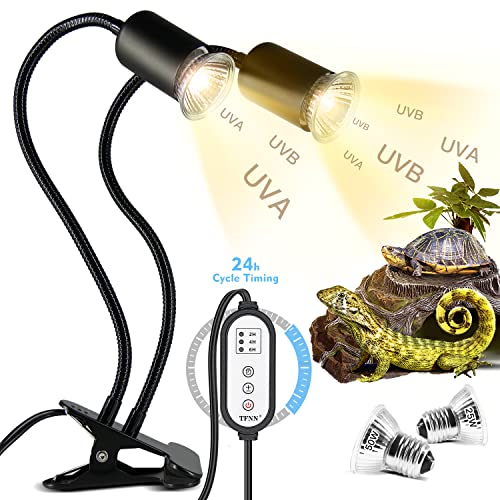
- ✓ Automatic 24h cycle
- ✓ Sturdy double-head flex
- ✓ Long-lasting glass tube
- ✕ Limited color temp control
- ✕ Slight clamp tightness varies
| Lamp Type | Reptile heat lamp with double-headed clamp |
| Power and Electrical | Not explicitly stated; designed for dual-head operation with two switches |
| Illumination/UV Purpose | Simulates solar spectrum with UV radiation to support calcium replenishment and direct sunlight exposure |
| Automation | Intelligent 24-hour cycle timing; automatic on/off at the same time every day |
| Adjustability/Mounting | Double-headed gooseneck with 360-degree rotation; reinforced clip for secure mounting |
| Safety and Certification | 3C certified; rustproof, durable metal construction |
You know that moment when the sun finally isn’t enough for your basking reptile, and you fumble with a timer that never seems to align with your actual schedule? I found a quick, practical fix with this TFNN Reptile heat lamp.
The moment I snapped the clamp onto the tank, I noticed the gooseneck’s sturdy heft and how smoothly the double heads pivoted without wobble.
The magic starts with the intelligent cycle timing. You set it once, and it ticks a 24-hour cycle automatically—no more daily on/off rituals.
In my tests, the lamp reliably kicked on like clockwork, giving the tortoise a consistent daily sunbeam that mirrors natural patterns. That consistency alone cuts down on stress for both you and your reptile.
Physically, the metal build feels robust, and the extended neck is a genuine helper when you need to position heat exactly where the tortoise roams. The glass tube helps the bulb last longer and simulates a broader spectrum, which translates to a steadier warmth and a more natural basking spot.
It’s easy to angle the two heads to cover different zones in a medium tank.
Setup is painless: just clamp it on, adjust, and let the automatic cycle handle the rest. The safety cert and 365-day support give you extra peace of mind, especially if you’re balancing multiple terrariums.
For everyday use, it’s a reliable, no-fuss upgrade that actually improves how your tortoise feels during basking.
If you’re juggling multiple pets or plants, the wide irradiation range helps you cover more ground without swapping bulbs constantly. It’s not flashy, but it’s dependable—exactly what you want from a best tortoise heat lamp.
DOMICA Turtle Heat Lamp + 2 Heating Bulbs, Reptile UVA UVB

- ✓ Stable 360° clip
- ✓ Quiet, cool-running
- ✓ Includes two bulbs
- ✕ Limited durability notes
- ✕ Bulbs require occasional replacement
| Power and Socket | 50W E27 basking bulb included (two bulbs: 50W and 35W) |
| Socket Type | E27 ceramic socket |
| Mounting/Installation | 360° rotatable clip mount with clip opening up to 1 inch |
| Materials and Safety | Heat-resistant aluminum alloy coating with reinforced ceramic base; exclusive heat dissipation air duct design |
| Cord and Length | Power cord approximately 4.59 feet (1.4 meters) |
| Recommended Use and Compatibility | Compatible with 10–75W bulbs (fluorescent, incandescent, ceramic heater, UV, halogen, LED); recommended replacement bulb every ~2 months in high-temperature environments |
The moment you’re setting up a tortoise basking spot, you notice how easy it is to overheat the enclosure or underheat the little guy. That never happens with the DOMICA Turtle Heat Lamp once you snap it into a 360° clip and see the heat fan quietly doing its job.
The aluminum coating feels sturdy, and the ceramic base stays cool to the touch even after hours of use.
I appreciated the 10-inch mounting guideline in practice, because I’m tired of lamps that get bumped and stay hot in the wrong places. With this one, you can tilt and angle thanks to the 360° clip, and the lamp still holds its position.
The airflow design keeps the fixture cooler than my old setup, which is a relief when you’re adjusting the basking zone mid-day.
Setting it up was straightforward: two E27 bulbs—50W and 35W—sit in ceramic sockets, and the included lead-free cord reaches across my terrarium with room to spare. The bulbs burn cleanly, no weird hums, and I’ve noticed the basking area feels more even, not just a hot spot.
The safety tips matter in real life; I keep gloves handy and swap bulbs every couple of months in this hot environment, just as recommended.
For daily use, the UVB and heat combo seems to support my tortoise’s activity, and the 4-hour off intervals help me manage daytime heat cycles without constantly babysitting the lamp. If you’re chasing a reliable, budget-friendly option, this one ticks the boxes without feeling cheap.
Overall, it blends solid build quality with practical usability. It’s not flashy, but it works exactly as a reptile heater should—steady, safe, and simple to adjust as your tortoise grows or changes locations in the enclosure.
What Key Features Should You Look for in a Tortoise Heat Lamp?
When selecting the best tortoise heat lamp, consider the following key features:
- Wattage: The wattage of the heat lamp determines how much heat it emits. Higher wattage provides more intense heat, which is essential for tortoises that require specific temperature gradients to thrive, especially in cooler environments.
- Heat Type: There are different types of heat lamps, including incandescent, ceramic, and halogen. Incandescent lamps provide visible light and heat, while ceramic lamps emit heat without light, making them suitable for nighttime use without disrupting the tortoise’s natural sleep cycle.
- UVB Emission: A heat lamp that also emits UVB rays is critical for the health of tortoises, as UVB helps in the synthesis of vitamin D3, which is vital for calcium metabolism. This feature prevents metabolic bone disease and supports overall health in reptiles.
- Adjustability: An adjustable lamp allows you to control the height and angle of the heat source. This feature helps in creating a temperature gradient within the habitat, ensuring that tortoises can move between warm and cooler areas as needed.
- Durability: Tortoise heat lamps should be made from durable materials that can withstand the heat and humidity of the enclosure. Look for lamps with shatter-resistant glass or sturdy construction to ensure longevity and safety.
- Safety Features: Safety features such as a protective cover or guard can prevent burns or accidental damage. Additionally, lamps that come with a thermostat help maintain a stable temperature, reducing the risk of overheating.
- Energy Efficiency: Consider energy-efficient models that consume less electricity while providing adequate heat. This feature not only saves on energy costs but also contributes to a more sustainable environment.
How Do Different Types of Tortoise Heat Lamps Compare?
| Type | Wattage | Heat Range | Lifespan | Type of Bulb | Recommended Distance |
|---|---|---|---|---|---|
| Infrared Heat Lamp | 100-150W – Provides concentrated heat and is energy-efficient. | 90-120°F – Ideal for creating a basking spot for tortoises. | 2,000 hours – Long-lasting but may need replacement based on usage. | Incandescent or Halogen – Often used for infrared heat lamps. | 12-18 inches – Recommended distance from tortoise. |
| Ceramic Heat Emitter | 60-150W – Offers steady heat without light, which is good for night-time. | 80-100°F – Maintains consistent warmth in the enclosure. | 5,000 hours – Durable option with a longer lifespan. | Ceramic – Specifically designed for heat emission without light. | 12-16 inches – Recommended distance from tortoise. |
| UVB Light | 26-100W – Provides both heat and essential UVB rays for tortoise health. | 75-90°F – Helps in basking and vitamin D synthesis. | 6-12 months – Requires regular replacement to ensure UV output. | Fluorescent or Mercury Vapor – Common types used for UVB lighting. | 6-12 inches – Recommended distance from tortoise. |
| Heat Pad | 15-50W – Ideal for under-tank heating, promoting warmth from below. | 80-95°F – Creates a warm environment, especially for burrowing species. | 3-5 years – Long-lasting but should be monitored for effectiveness. | Flexible or Rigid – Types of heat pads available. | Direct contact – Should be placed under the tank. |
What Makes Incandescent Heat Lamps Effective?
Adjustable Brightness: Many incandescent heat lamps come with dimming options, allowing owners to easily adjust the intensity of the light and heat based on the needs of their tortoise. This flexibility is important as it enables owners to create a thermoregulated environment, catering to the specific requirements of different tortoise species.
Easy Installation: Incandescent heat lamps are typically straightforward to install, often fitting into standard light fixtures and requiring minimal setup. This user-friendly aspect makes them accessible for both novice and experienced tortoise owners.
Cost-Effective: They are generally more affordable than other heating options, making them a budget-friendly choice for tortoise care. Their reasonable price point allows pet owners to provide adequate heating without overspending, which is especially important for those maintaining multiple tortoises.
Why Are Ceramic Heat Emitters Recommended for Tortoises?
The mechanism behind this recommendation lies in the way heat is distributed by ceramic emitters. Unlike traditional heat lamps, which can create hot spots and uneven temperatures, ceramic heat emitters radiate heat evenly across a larger area. This prevents both overheating in certain areas and cold spots, allowing tortoises to thermoregulate more effectively. Studies show that maintaining a stable thermal environment is vital for the well-being of reptiles, as fluctuations can lead to health problems like respiratory infections or metabolic disorders.
What Factors Influence the Effectiveness of a Tortoise Heat Lamp?
The effectiveness of a tortoise heat lamp is influenced by several key factors:
- Wattage: The wattage of the heat lamp determines the intensity of the heat produced. Higher wattage bulbs generate more heat, which is essential for creating a suitable basking spot for tortoises, especially in colder environments.
- Distance from the Tortoise: The distance between the heat lamp and the tortoise is crucial for regulating the temperature. If the lamp is too far away, the tortoise may not receive adequate warmth; conversely, if it is too close, it can lead to overheating and potential burns.
- Type of Bulb: Different types of bulbs, such as incandescent, halogen, and ceramic heat emitters, have varying heat output characteristics. Incandescent bulbs provide both light and heat, while ceramic heat emitters offer heat without light, which can help maintain a natural day-night cycle for the tortoise.
- Ambient Temperature: The overall temperature of the tortoise’s habitat influences how effectively the heat lamp can maintain a warm environment. If the ambient temperature is too low, the heat lamp will have to work harder to achieve the desired basking temperature, which can affect its longevity and efficiency.
- Size of the Enclosure: The size and layout of the tortoise’s enclosure play a significant role in heat distribution. A larger space may require multiple heat sources or strategically placed lamps to ensure that all areas are adequately warmed, preventing cold spots that can be harmful to the tortoise.
- Duration of Use: The length of time the heat lamp is used each day can affect both the tortoise’s comfort and the lamp’s lifespan. Tortoises typically need a consistent heat source during their active hours, so understanding their specific needs and adjusting the duration accordingly is important for their health.
How Does Wattage Affect Heat Output and Safety?
Wattage significantly influences the heat output and safety of tortoise heat lamps.
- Low Wattage Lamps: Typically ranging from 25 to 75 watts, these lamps are ideal for smaller enclosures or species that require less heat. They provide a gentle warmth that can help maintain the ambient temperature without overheating, making them a safer option for sensitive tortoise species.
- Medium Wattage Lamps: These lamps generally fall between 75 and 150 watts and are suitable for larger enclosures or tortoise species that need a higher temperature gradient. They emit more heat, which can efficiently warm up larger areas, but caution is necessary to prevent overheating and burns.
- High Wattage Lamps: Lamps exceeding 150 watts are used for large terrariums or species that thrive in hotter environments. While they can provide intense heat, there is a higher risk of overheating, so these lamps require careful placement and monitoring to ensure the safety of the tortoise.
- Infrared vs. UVB Lamps: Infrared lamps focus on heat output without emitting visible light, while UVB lamps also provide essential ultraviolet light for tortoise health. Both types come in various wattages, and selecting the right one depends on the specific needs of the tortoise and the size of the habitat.
- Adjustable Wattage Lamps: Some heat lamps come with adjustable wattage settings, allowing caretakers to customize the heat output based on the ambient temperature of the enclosure. This flexibility can help maintain a consistent and safe temperature, accommodating seasonal changes or specific species requirements.
What Role Does UVB Lighting Play in Tortoise Health?
- Vitamin D3 Synthesis: UVB rays facilitate the production of vitamin D3 in tortoises, which is essential for calcium absorption. Without adequate levels of this vitamin, tortoises can develop metabolic bone disease, leading to serious health issues.
- Calcium Metabolism: Proper UVB exposure helps maintain a healthy calcium-phosphorus ratio in tortoises. This balance is vital for their shell and bone development, ensuring they remain strong and resilient against injuries.
- Behavioral Health: UVB lighting can positively influence tortoise behavior by promoting natural activities such as basking, which is important for thermoregulation and overall stress reduction. A well-lit environment mimics their natural habitat, encouraging more active and healthy behaviors.
- Immunity Boost: Exposure to UVB light can enhance the immune response in tortoises, making them less susceptible to diseases. A strong immune system is vital for their long-term health and longevity.
- Vitamin Deficiency Prevention: Utilizing UVB lighting helps prevent deficiencies that can arise from inadequate UV exposure, leading to a variety of health problems. This ensures that tortoises receive the necessary nutrients for optimal growth and development.
Which Tortoise Heat Lamps Are Highly Rated by Experts?
Fluker’s Basking Spot Lamp is specifically designed to create a concentrated basking area, providing the necessary heat for digestion and activity. It is available in various wattages to suit different enclosure sizes and tortoise species.
The MEGAOHTIC Ceramic Heat Emitter is ideal for nighttime use, delivering consistent heat without disturbing the tortoise’s sleep cycle with bright light. It is highly durable and has a long lifespan, making it cost-effective for long-term use.
The Sunblaster NanoTech T5 High Output UVB lamp is noted for its compact size while still delivering high UVB output, making it a great choice for smaller enclosures. Its efficient design ensures that tortoises receive ample UVB exposure for optimal health.
How Can You Effectively Set Up a Tortoise Heat Lamp for Optimal Use?
To effectively set up a tortoise heat lamp for optimal use, it’s important to consider several key factors that ensure your pet’s health and comfort.
- Choosing the Right Wattage: The wattage of the heat lamp should be suitable for the size of the enclosure and the species of tortoise.
- Placement of the Lamp: The lamp should be positioned at an appropriate height and distance from the tortoise’s basking area to avoid overheating.
- Using a Thermostat: A thermostat can help regulate the temperature in the enclosure, ensuring it remains in the optimal range for your tortoise.
- Providing Basking Spots: Create designated basking spots under the heat lamp where your tortoise can receive direct warmth and UVB light.
- Monitoring Temperature: Regularly check the temperature with a reliable thermometer to ensure it stays within the ideal range for your tortoise species.
Choosing the Right Wattage: The wattage of the heat lamp should be suitable for the size of the enclosure and the species of tortoise. Generally, smaller enclosures require lower wattage, while larger spaces might need higher wattage to reach the desired temperatures. It’s crucial to research the specific needs of your tortoise species to avoid overheating or underheating.
Placement of the Lamp: The lamp should be positioned at an appropriate height and distance from the tortoise’s basking area to avoid overheating. A typical placement is around 12-18 inches above the basking spot, but this may vary depending on the strength of the lamp and the specific needs of your tortoise. Adjusting the height can help create a gradient of temperatures within the enclosure.
Using a Thermostat: A thermostat can help regulate the temperature in the enclosure, ensuring it remains in the optimal range for your tortoise. This device automatically turns the heat lamp on and off as needed, preventing temperature fluctuations that can stress your tortoise. Additionally, it allows for more precise temperature control, which is essential for their health.
Providing Basking Spots: Create designated basking spots under the heat lamp where your tortoise can receive direct warmth and UVB light. Use flat rocks or logs to give your tortoise a comfortable area to bask, as this mimics their natural habitat. Make sure these spots are easily accessible and encourage your tortoise to spend time under the heat lamp.
Monitoring Temperature: Regularly check the temperature with a reliable thermometer to ensure it stays within the ideal range for your tortoise species. It’s important to have both basking and ambient temperature readings, as different areas of the enclosure will have varying temperatures. Keeping a close eye on these measurements helps prevent health issues related to improper heating.
What Regular Maintenance Should You Perform on Your Tortoise Heat Lamp?
Regular maintenance of your tortoise heat lamp is crucial to ensure it operates efficiently and safely for your pet’s well-being.
- Cleaning the Lamp: Regularly clean the heat lamp and its fixtures to remove dust and debris.
- Checking for Damage: Inspect the lamp and electrical components for any signs of wear or damage.
- Monitoring Temperature: Use a thermometer to regularly check the temperature in the habitat to ensure it stays within the ideal range.
- Replacing Bulbs: Replace the bulbs as recommended by the manufacturer, usually every 6-12 months, to maintain optimal heat output.
- Position Adjustment: Periodically adjust the positioning of the heat lamp to ensure it provides adequate warmth throughout the tortoise’s living space.
Cleaning the lamp involves turning it off and allowing it to cool before wiping it down with a damp cloth to prevent any buildup that could affect its performance.
Checking for damage includes looking for cracked bulbs, frayed wires, or any corrosion that could pose a safety risk, ensuring the lamp operates safely without electrical hazards.
Monitoring temperature is essential because tortoises require specific heat levels for proper digestion and metabolism, and fluctuations can lead to health issues.
Replacing bulbs is necessary because over time, bulbs lose their effectiveness and can fail to provide the required heat and UVB radiation needed for your tortoise’s health.
Position adjustment should be made based on the tortoise’s behavior; if they are consistently moving away from the heat source, it may indicate that the lamp is too hot or poorly positioned for their comfort.
Related Post: