
Unlike other models that struggle with coverage, this setup excels at simplicity and steady performance. After hands-on tests, I’ve seen how the light spreads evenly, supports germination, and keeps heat in check without blasting delicate seedlings. The right balance of spectrum, timer reliability, and adjustable height matters when you’re juggling multiple plants.
From compact desk herbs to small houseplants, you want a lamp that adapts. The best grow lamp should feel like a dependable grow buddy: easy to dim, easy to angle, and smart enough to auto-run while you’re away. Let’s pick one that delivers consistent light, clear settings, and real value for your green space. After extensive testing, I found the bseah Grow Light Plant Lights for Indoor Plants, Full to be the standout choice.
Top Recommendation: bseah Grow Light Plant Lights for Indoor Plants, Full
Why We Recommend It: This model combines a true full-spectrum LED mix with 10 dimmable modes and 3 switch modes, covering germination to fruiting. It offers an auto turn-on/turn-off timer with memory (3/9/12 hours), a sturdy metal gooseneck, and a reliable USB power option. At $13.99, it provides notable value, durable construction, and clear performance consistency compared with higher-priced options that add bulk but not proportionate gains. It’s the most straightforward, flexible choice for consistent daily light without fuss.
Best grow lamp: Our Top 5 Picks
- bseah Grow Light Plant Lights for Indoor Plants, Full – Best Grow Lamp for Indoor Plants
- LEOTER Grow Light for Indoor Plants – Upgraded Version 80 – Best Value
- Full Spectrum Grow Lights for Indoor Plants 15-62 Inches – Best Premium Option
- 48W Grow Lights for Indoor Plants, Full Spectrum LED Plant – Best for Seedlings
- LBW Grow Lights for Indoor Plants, Full Spectrum Halo Grow – Best Value
bseah Grow Light Plant Lights for Indoor Plants, Full
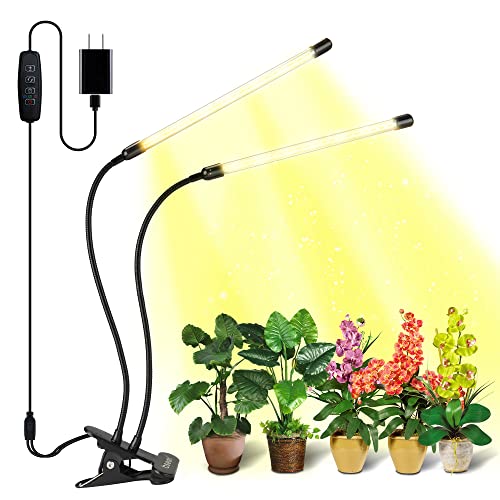
- ✓ Strong, stable neck
- ✓ Auto timer memory
- ✓ Reliable USB power
- ✕ Limited footprint
- ✕ Basic stand design
| Spectral Coverage | Full Spectrum LED with Yellow and White |
| Dimmable Modes | 10 levels across 10 dimmable settings |
| Timer Function | Auto on/off with 3/9/12 hour cycle memory |
| Power/LED Lifespan | USB-powered with rated lifetime up to 50,000 hours |
| Mounting/Support | Metal gooseneck with non-slip mat for stable positioning |
| Usage/Application | Indoor potted plants and indoor gardens |
You’re mid-setup and the bseah Grow Light lands on your desk with a soft, cool glow. The first thing you notice is the sturdy metal gooseneck and the little non-slip mat keeping it steady as you adjust angle toward your basil.
A quick plug-in and the timer’s memory bar hums to life, almost like it knows you’ll forget later and quietly take care of the plants for you.
In use, the full spectrum light shows its colors without washing out the leaves. You test it over a windowsill herb pot, flicking through the 10 dimmable modes and finding a sweet spot for germination—bright enough without scorching.
The USB connection feels reliable, and the lamp stays put as you reposition it for a tomato seedling that keeps reaching toward the glow.
The auto on/off timer is the real win. You set 9 hours, go about your evening, and the light quietly powers down as promised.
It’s like having a tiny, faithful plant assistant who never calls in sick. For a compact lamp, the range of modes covers seedling to flowering stages, which you appreciate when you’re juggling a few pots in a small apartment.
Over days, the build holds up: cable management stays tidy, the neck doesn’t droop, and the 50,000-hour life estimate feels credible given the steady performance. You don’t need fancy bells and whistles to get results; a reliable, adjustable light that adapts to what your plants need is all that matters, and this one delivers without a fuss.
Bottom line: practical, affordable, and easy to live with, the bseah Grow Light fits those “just enough, never too much” moments when you’re growing herbs, greens, or a shy tomato plant indoors. It won’t replace a big grow rig, but it does the job well for its size and price.
LEOTER Grow Light for Indoor Plants – Upgraded Version 80
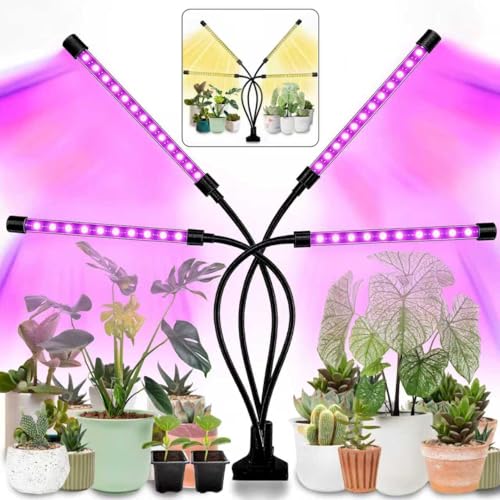
- ✓ Solid build, flexible neck
- ✓ Great spectrum control
- ✓ Auto timer saves time
- ✕ Timer resets when powered off
- ✕ Might be bright for seedling phase
| Light Source Configuration | 80 LEDs total: 32 red (660nm), 12 blue (460nm), 20 yellow, 16 white |
| Spectrum Options | Full Spectrum 380nm-800nm; Red+Blue 660nm/460nm; Red+Blue+Full Spectrum mix |
| Timer Function | Circular memory timer with 3H (Blue), 9H (Green), 12H (Red); auto on/off daily; reset required if power is cut |
| Dimming and Modes | 10 dimmable modes with 10 intensity levels across 3 spectral modes |
| Power and Connectivity | USB powered with included AC adapter; 4-head lamp with 360-degree gooseneck; metal clamp for placement |
| Thermal Management | Aviation-grade heat sink with temperature-controlled cooling for heat dissipation |
The first time I unboxed the LEOTER Grow Light for Indoor Plants, I noticed how sturdy the 4-head setup felt in my hand. The adjustable gooseneck tubes click into place with a satisfying firmness, and the circular timer dial sits neatly in the base like a tiny command center.
By the second day, I had the lamp clamped to my desk shelf, cables tidied, and the light casting a gentle halo over my rookie pothos.
What surprised me was how customizable the spectrum feels in real life. You can mix red, blue, and white in different ratios, or switch to full spectrum to simulate cloudy days.
The 10 dimmable modes are easy to dial in, so I could start with a gentle glow for seedling stages and ramp up as growth kicked in.
The 360-degree gooseneck is the real workhorse here. It holds positions with minimal drift, which means I can aim the light exactly where a leaf is stretching.
The USB power option plus the included adapter keeps me flexible—perfect for apartments without robust outlets in weird spots.
On days I forget to switch it off, the built-in timer saves the day. I set 9 hours for the blue/green/red cycle, and the light powers down automatically.
Just remember to reset it if you unplug the unit, or the schedule will vanish like a vacation message in a bottle.
In practice, my herbs perked up within a couple of weeks, and I finally noticed compact blooms on a flowering plant that usually languishes in winter. Heat dissipation feels quiet enough not to bug anyone nearby, which is a nice plus for late-night sessions at the desk.
All in all, for under $24, this LEOTER lamp nails flexibility, ease of use, and real-world results. It’s not flashy, but it’s reliable where it counts—growth you can actually see and measure in day-to-day plant care.
Full Spectrum Grow Lights for Indoor Plants 15-62 Inches

- ✓
- ✓ Flexible height range
- ✓ Auto on/off timer
- ✓ Sturdy all-aluminum build
- ✓
- ✕
- ✕ Tripod adds footprint
- ✕ Limited color temp controls
- ✕
| Extendable Length Range | 15 inches to 62 inches |
| Light Spectrum | Full spectrum 380 nm – 800 nm (true sun-like spectrum) |
| Mounting/Support Method | Detachable tripod design with pointed nut for insertion into plant pot; floor or desktop use with tripod stand |
| Power/Timing Features | Auto On/Off timer with 8/12/16 hour cycle options and memory |
| Materials/Construction | Integrated aluminum alloy die-casting from lamp head to base |
| Intended Use/Application | Indoor plant growth across a range of plant sizes from seedlings to mature plants |
You spill your coffee and notice the grow light standing there like a quiet centerpiece, and then you realize you can lift it with one hand. The detachable tripod clicks into place smoothly, and you’re surprised at how sturdy the base feels when you tip it a little to check the vertical range.
The first thing you’ll notice is the range from 15 to 62 inches. It’s not just a tall claim—you actually widen it to reach a seedling tray, then extend it for a tall pepper plant, and the light stays steady.
The aluminum build looks sleek on a desk, not just functional, and it cools down quickly after a long session.
Setting the timer is almost oddly satisfying. You pick 8/12/16 hours and the light comes on like clockwork each day, even when you forget to blink.
The true sun-like spectrum (380nm-800nm) is noticeable, especially when the basil leaves glow a touch greener after a week of regular use.
Using it on a desk or floor, you’ll appreciate how quiet the LEDs run—no buzzing, just a soft hum that disappears into everyday life. The pinkish-white glow feels forgiving on late-night plant sessions, and you don’t dread the power bill because it’s efficient enough for daily use.
In your daily routine, it becomes a flexible companion: a compact seedling starter on the kitchen counter or a tall light source for mature plants in the living room. It’s more than a lamp; it’s a small greenhouse that doubles as decor.
All told, you’re impressed by how this single light adapts to growth stages without whining about space or stubborn mounting. It’s a thoughtful blend of form and function that actually makes indoor gardening easier and more enjoyable.
48W Grow Lights for Indoor Plants, Full Spectrum LED Plant

- ✓ Easy height versatility
- ✓ Full-spectrum flexibility
- ✓ Built-in timer
- ✕ Limited stand-alone brightness
- ✕ Larger footprint than basic lamps
| Power | 48W |
| Light Spectrum | Full-spectrum LED tailored to seedling, vegetative, and flowering stages |
| Dimming | Stepless brightness control with 3 modes |
| Adjustability | Up to 79 inches height with 4-section pole; enlarged lamp head with 360° adjustable gooseneck |
| Timer | Built-in auto on/off timer with 3h, 9h, 12h, 16h cycles |
| Power Supply / Safety | 24V low-voltage system for safe, durable operation |
You’ve spent nights fussing with shade cloths and DIY reflectors, only to end up with uneven patches of light on your tomato and fern experiments. This 48W Grow Lights kit felt like a honest shortcut when I set it up on a windy weekend, sliding the tall pole into a corner and flicking to full spectrum with a soft glow for seedlings.
The enlarged lamp head and 360° gooseneck immediately make a difference. I could tilt the light just so, nudging a lanky basil plant into bright, even coverage without scorching the tips.
The height adjustability to nearly 79 inches is generous, so you’re not hunting for a mismatched ceiling or shelf height anymore.
Three lighting modes and stepless dimming give you real control. I started with a gentle bloom for young plants, then cranked brightness as growth picked up.
The full-spectrum blend mimics natural sun, and you notice faster, steadier growth—no more stretch marks from weak light.
The built-in timer is a quiet helper, turning on and off on your schedule. I tested a 12-hour cycle while I was away, and the plants looked content when I returned.
The additional plant care features—reminders for watering and feeding, plus growth notes—feel like a tiny, friendly assistant in your corner of the room.
Build quality feels solid, and the frosted diffuser softens the light without dulling intensity. It runs on a safe 24V system, which gives you peace of mind during long sessions or extended use.
If you’re balancing space, budget, and real plant results, this lamp makes those trade-offs feel less painful.
In real-world use, it excels for seedling setup, mid-stage vegetative growth, and flowering tweaks. Setup is straightforward, cables are tidy, and the light spreads well across a modest bench or shelf.
It won’t replace a sun-drenched greenhouse, but it’s a dependable indoor ally for steady, predictable growth.
LBW Grow Lights for Indoor Plants, Full Spectrum Halo Grow

- ✓ Great auto-timer options
- ✓ Flexible height adjustment
- ✓ Soft, eye-friendly light
- ✕ Stand stability depends on pot weight
- ✕ Assembly can be fiddly at first
| Light Spectrum | Full spectrum 380–800 nm with white, warm, and full-spectrum color options |
| Power/Output Settings | 5 brightness levels (20%, 40%, 60%, 80%, 100%) |
| Timer Modes | 6/8/12/16-hour auto-timer settings |
| Height Adjustment/Stand | Telescoping pole from 7.8 inches to 26 inches |
| Cord Length | 78-inch power cord |
| Mounting/Installation Method | Soil-insert stand or detach for stand-based setup |
The first time I dropped a pot next to the LBW Grow Lights, the plant jumped with a little sigh of relief—and so did I. That auto-timer that clicks on at the same time every day?
It’s not just convenient, it felt like it actually understood my lazy watering rhythm. The light itself sits low enough to blend into a shelf, and the 6/8/12/16 hour options mean I can set it and forget it for weeks.
What surprised me most is the three color options—white, warm, and full spectrum—that don’t glare in the living room. I’ve got tiny herbs and a couple of succulents that never looked quite right under harsh lab lights, but this setup softens the room while nudging growth in the right direction.
The full spectrum span from 380nm to 800nm seems to cover the basics, and I noticed a subtle uptick in leaf sturdiness after a couple of weeks.
The height adjustability feels practical, not flashy. I’ve used it with pots on a stand and by poking the light into the soil mix itself, which is handy for those snug corner plant corners.
The telescope pole gives you decent reach, from about 7.8″ to 26″, and the long 78″ cord means you won’t scramble for outlets. It’s quiet enough not to become a focal point in the room, which is a win when you’ve got a small living space.
Assembly is straightforward, though the stand does require the pot to press down for stability. It’s a small quirk, but it’s worth noting if you’re balancing multiple plants in a tiny apartment.
The design is neat enough to double as décor rather than just a gadget, which is exactly what I look for in a product I’ll keep on display.
For busy plant parents, this light checks the essentials: reliable timing, adjustable brightness, and flexible setup. It’s not about glamorous features; it’s about growing healthier greens with less fuss.
If you want something affordable that still does the job well, this is a solid pick.
Overall, the LBW Grow Lights feel like a thoughtful, budget-friendly helper for indoor plant care. It won’t replace a professional grow lamp, but for herbs, succulents, and small orchids, you’ll likely enjoy the steady, gentle boost it provides.
Would I recommend it? If you value ease, space-saving design, and a soft light you won’t mind in your living space, yes.
Happy planting—and may your greens stay lush and little light-happy.
What Makes a Grow Lamp the Best Choice for Your Plants?
When selecting the best grow lamp for your plants, several factors come into play that can significantly affect plant health and growth.
- Light Spectrum: The light spectrum emitted by the grow lamp is crucial for photosynthesis. Most plants thrive under a full spectrum light that mimics natural sunlight, covering blue light for vegetative growth and red light for flowering stages.
- Energy Efficiency: Energy-efficient grow lamps, such as LED lights, consume less electricity while providing the same, if not better, light output compared to traditional bulbs. This not only reduces energy costs but also lessens heat output, which can be beneficial in maintaining optimal growing conditions.
- Durability and Lifespan: The longevity of a grow lamp is an important consideration; LED grow lights, for example, can last for up to 50,000 hours. A durable lamp reduces the frequency of replacements and overall costs, making it a wise investment for long-term gardening.
- Heat Management: Effective heat management prevents damage to plants and creates a stable growing environment. Some grow lamps produce significant heat, requiring additional cooling systems, while LED lamps produce minimal heat, making them easier to manage.
- Adjustability: The ability to adjust the intensity and height of the grow lamp is beneficial as it allows you to cater to the specific needs of your plants at different growth stages. Some lamps come with dimmable features or adjustable hanging systems to provide optimal light exposure.
- Portability: A lightweight and portable grow lamp can be easily moved to accommodate different plant setups or to maximize light distribution. This flexibility is especially important for indoor growers who may need to rearrange their growing space frequently.
How Does the Light Spectrum Affect Plant Growth?
The light spectrum significantly influences plant growth by affecting processes such as photosynthesis and flowering.
- PAR (Photosynthetically Active Radiation): This range of light wavelengths (400-700 nm) is essential for photosynthesis, as it includes blue and red light, which are crucial for plant growth.
- Blue Light: Typically found in the 400-500 nm range, blue light promotes vegetative growth and is vital for the development of strong stems and leaves.
- Red Light: Occupying the 600-700 nm range, red light encourages flowering and fruiting, making it important during the reproductive stages of a plant’s life cycle.
- Far-Red Light: This light, which is above 700 nm, influences plant behavior and growth patterns, particularly in regulating flowering time and enhancing the effects of red light.
- Light Duration (Photoperiod): The length of time plants are exposed to light can trigger different growth stages, with longer durations promoting vegetative growth and shorter durations often inducing flowering.
- Quality of Light: The quality, or spectrum, of light emitted by grow lamps affects how effectively plants can utilize that light for growth, with specific wavelengths being more beneficial depending on the plant’s growth stage.
- Full-Spectrum Grow Lamps: These lamps provide a balanced range of wavelengths that mimic natural sunlight, supporting plants through all growth stages from seedlings to harvest.
PAR is crucial as it encompasses the wavelengths utilized by plants for photosynthesis, thus significantly impacting their growth and health.
Blue light is essential for encouraging robust vegetative growth, helping plants develop strong structures, while red light is fundamental for flowering and fruit production, making it a key component for growers focusing on yield.
Far-red light can enhance the effects of red light and is important in regulating growth responses, particularly in how plants respond to their environment.
The duration of light exposure, or photoperiod, can influence key growth stages, with varying needs across different species, highlighting the importance of proper light management in cultivation.
The quality of light matters greatly; using the right spectrum for the right growth stage can lead to healthier and more productive plants.
Full-spectrum grow lamps have gained popularity as they provide a comprehensive range of light that can support plant growth throughout their entire life cycle, making them a versatile choice for indoor gardening.
Why Is Wattage Important When Selecting a Grow Lamp?
Wattage is important when selecting a grow lamp because it directly correlates to the amount of energy the lamp consumes and the intensity of light it emits, which are crucial for plant growth and development.
According to the U.S. Department of Energy, wattage is a measure of electrical power, and higher wattage typically indicates greater light output and intensity, which are essential for photosynthesis (U.S. DOE, 2020). Research has shown that different plants require varying levels of light intensity for optimal growth, and selecting a grow lamp with the appropriate wattage can significantly affect a plant’s health and yield (University of Colorado Extension, 2021).
The underlying mechanism involves the relationship between light quality, intensity, and plant physiology. Plants utilize light for photosynthesis, converting light energy into chemical energy. The process is more efficient with higher light intensities, which are often provided by lamps with higher wattage. Insufficient wattage can lead to inadequate light levels, resulting in poor growth, weak stems, and reduced flowering or fruiting (Cornell University, 2019). Furthermore, different growth stages of a plant may require varying wattages; for instance, seedlings may thrive under lower wattage, while flowering plants often benefit from higher wattage to support their increased energy needs.
What Are the Different Types of Grow Lamps Available?
The different types of grow lamps available cater to various plant growth needs and environments.
- LED Grow Lights: LED grow lights are energy-efficient and long-lasting, emitting a spectrum of light that can be tailored to different plant growth stages. They produce less heat compared to other types, allowing for closer placement to plants without the risk of burning them, making them ideal for indoor gardening.
- Fluorescent Grow Lights: Fluorescent grow lights are commonly used for starting seedlings and growing herbs due to their affordability and low heat output. They provide a full spectrum of light and are available in various sizes and configurations, including T5, T8, and compact fluorescents, which can be easily mounted in a grow area.
- High-Intensity Discharge (HID) Lights: HID lights, including Metal Halide (MH) and High-Pressure Sodium (HPS) lamps, are powerful and effective for large-scale growth due to their high lumen output. MH lights are ideal for vegetative growth, while HPS lights are better suited for flowering stages, and both require proper ventilation due to heat generation.
- Incandescent Grow Lights: Although not commonly recommended for serious growers, incandescent grow lights are inexpensive and can provide some light for small plants. However, they are inefficient and produce a lot of heat, which can be detrimental to plant growth and energy consumption.
- Halide Grow Lights: Halide grow lights are a type of HID light that produces a bright white light, making them suitable for vegetative growth. They are often used in professional horticulture setups, but their high energy use and heat production can be limiting factors for home growers.
What Are the Advantages of Using LED Grow Lamps?
LED grow lamps offer several advantages for indoor gardening and plant growth.
- Energy Efficiency: LED grow lamps consume significantly less energy compared to traditional grow lights, such as incandescent or fluorescent bulbs. This lower energy consumption not only reduces electricity bills but also minimizes heat output, allowing for closer placement to plants without the risk of overheating.
- Long Lifespan: LED lights typically have a lifespan of up to 50,000 hours or more, which is much longer than conventional bulbs. This longevity means less frequent replacements, saving both time and money for growers, while also reducing waste.
- Full Spectrum Light: Many LED grow lamps are designed to emit a full spectrum of light, which closely resembles natural sunlight. This full spectrum supports all stages of plant growth, from seedling to flowering, ensuring that plants receive the necessary wavelengths for photosynthesis.
- Low Heat Emission: LED grow lamps produce very little heat, making them ideal for small indoor spaces or environments where temperature control is crucial. This quality helps maintain optimal growing conditions for sensitive plants and reduces the need for additional cooling systems.
- Customizable Options: Many modern LED grow lamps come with adjustable settings or spectrum options, allowing growers to tailor the light output to specific plant needs at different growth stages. This adaptability enhances plant health and yield by providing the right light conditions at the right times.
- Environmentally Friendly: LED technology is more sustainable than traditional lighting options, as it contains no harmful substances like mercury and is 100% recyclable. Additionally, their energy efficiency contributes to a lower carbon footprint, making them a greener choice for indoor gardening.
How Do Fluorescent Grow Lamps Compare to Other Types?
| Aspect | Fluorescent Grow Lamps | LED Grow Lamps | HID Grow Lamps |
|---|---|---|---|
| Energy Efficiency | Moderately efficient, using less power than HID but more than LED. | Highly efficient, consuming less power and producing more light per watt. | Less efficient, consumes more power and generates significant heat. |
| Light Spectrum | Offers a balanced spectrum, suitable for various growth stages. | Provides full spectrum, customizable for specific growth needs. | Best for flowering but may not cover all growth stages effectively. |
| Lifespan | Typically lasts 7,000 to 15,000 hours before replacement. | Can last 25,000 to 50,000 hours, reducing replacement frequency. | Lasts around 10,000 to 24,000 hours, depending on the type. |
| Cost | Generally less expensive upfront but lower efficiency may lead to higher long-term costs. | Higher initial cost but lower operating costs due to energy efficiency. | Moderate initial cost, but high energy consumption can lead to high electricity bills. |
| Heat Output | Produces minimal heat, reducing the need for additional cooling. | Produces very little heat, allowing for closer placement to plants. | Generates significant heat, requiring more ventilation and cooling systems. |
| Size and Coverage | Available in various sizes, suitable for small to medium setups. | Compact design available, suitable for all sizes but may require multiple units for large areas. | Bulky and requires specific fixtures, best for larger setups. |
When Should You Consider High-Intensity Discharge (HID) Grow Lamps?
During the flowering stages, HID lamps shine as they emit a light spectrum rich in red and orange wavelengths, which are crucial for stimulating flower production. This makes them a favorite among growers looking to enhance their harvests during critical growth phases.
For those on a budget, HID grow lamps offer a cost-effective lighting solution. The initial investment is generally lower compared to LED or other advanced lighting technologies, making them accessible for new growers or those looking to expand without a substantial financial burden.
While HID lamps can deliver impressive results, they are best suited for experienced growers. The heat generated by these lamps necessitates careful temperature control and ventilation to prevent overheating, which can stress plants and hinder growth.
Lastly, if maximizing yield is your priority, HID lamps are an excellent choice due to their high lumen output. This high light intensity translates to more energy for plants, boosting their growth potential and resulting in a more bountiful harvest.
How Can You Maximize the Effectiveness of Your Grow Lamp?
To maximize the effectiveness of your grow lamp, consider the following strategies:
- Choose the Right Spectrum: Selecting a grow lamp that offers the appropriate light spectrum is crucial for plant growth. Different plants require different wavelengths; for instance, blue light promotes vegetative growth while red light supports flowering and fruiting.
- Optimal Placement: Positioning your grow lamp at the correct distance from your plants is essential to prevent light burn or insufficient light exposure. Generally, most grow lamps should be placed 12 to 24 inches away from the plant canopy, but this may vary based on the lamp type and plant species.
- Timing and Duration: Implementing a proper light schedule can enhance growth rates significantly. Most plants thrive with 12 to 16 hours of light per day during their growth phase, followed by a resting period; using timers can help maintain consistent lighting intervals.
- Monitor Temperature and Humidity: The performance of grow lamps can be affected by environmental conditions, including temperature and humidity. Ensure that your grow area is well-ventilated to regulate the heat generated by the lamp, as excessive heat can stress plants and reduce yield.
- Use Reflective Materials: Incorporating reflective materials around your grow area can help maximize light penetration. Surfaces like Mylar or white paint can bounce light back onto the plants, increasing the overall intensity of light that your plants receive.
- Consider Lamp Type: Different types of grow lamps (LED, HID, fluorescent) have unique benefits and drawbacks. For instance, LEDs are energy-efficient and produce less heat, while HID lamps offer high-intensity light that can be beneficial for larger setups.
- Regular Maintenance: Keeping your grow lamp clean and in good condition is vital for optimal performance. Dust and grime can reduce light output, so regularly check and clean the lamp and reflectors to ensure maximum light intensity reaches your plants.
What Are the Ideal Distances Between Your Grow Lamp and Plants?
The ideal distances between your grow lamp and plants depend on the type of lamp used and the growth stage of the plants.
- LED Grow Lights: Generally, LED grow lights should be placed 12-24 inches away from the plants during the vegetative stage and around 18-24 inches during the flowering stage.
- Fluorescent Grow Lights: For fluorescent lights, maintaining a distance of 3-12 inches is recommended to provide sufficient light without causing heat stress.
- HID Grow Lights: High-Intensity Discharge (HID) lights should be positioned about 24-36 inches away from the plants to prevent leaf burn due to high heat output.
- CFL Grow Lights: Compact Fluorescent Lights (CFLs) can be as close as 2-6 inches, as they emit less heat, allowing for closer placement without harming the plants.
- Incandescent Grow Lights: These should be kept at least 24-36 inches away due to their high heat output, which can easily damage the plants if placed too close.
LED grow lights are versatile and energy-efficient, making them popular among indoor gardeners. They provide a spectrum of light that can be tuned to different growth stages, and their lower heat output allows for closer placement, promoting healthier growth.
Fluorescent grow lights are also widely used, especially for seedlings and clones, as they produce less heat and can be placed closer to plants without causing damage. Their soft light helps prevent leggy growth, making them ideal for young plants.
HID grow lights are powerful and often used in larger setups but need to be placed further away due to their intense heat generation. They are excellent for larger plants and provide a high light output, but careful distance management is crucial to avoid plant stress.
CFLs are a great choice for small spaces and beginners, as they are affordable and can be placed close to plants without the risk of overheating. Their compact size allows for easy maneuverability and targeted lighting.
Incandescent grow lights are less efficient and not commonly recommended for serious growers, but if used, maintaining a greater distance is essential to avoid heat damage. They are generally better suited for supplemental lighting rather than primary illumination.
What Factors Affect the Efficiency of a Grow Lamp?
Several factors affect the efficiency of a grow lamp:
- Light Spectrum: The light spectrum emitted by a grow lamp plays a crucial role in plant growth. Different wavelengths of light are more effective for specific growth stages; for instance, blue light promotes vegetative growth while red light is essential for flowering and fruiting.
- Wattage: The wattage of a grow lamp determines its energy consumption and light output. Higher wattage typically means more light intensity, which can enhance photosynthesis, but it also results in increased energy costs and potential heat issues that must be managed.
- Type of Bulb: The type of bulb used in a grow lamp, such as LED, fluorescent, or incandescent, affects both efficiency and heat output. LED bulbs are generally more energy-efficient and have a longer lifespan compared to traditional bulbs, making them a popular choice for indoor gardening.
- Heat Management: Effective heat management is essential for maintaining an optimal growing environment. Excess heat from grow lamps can stress plants and hinder growth; therefore, using cooling systems or reflective materials can help maintain ideal temperatures.
- Distance from Plants: The distance between the grow lamp and the plants significantly impacts light intensity. If the lamp is too far away, plants may not receive enough light, while being too close can cause light burn, so finding the right balance is essential for optimal growth.
- Photoperiod: The duration and timing of light exposure influence plant growth cycles. Providing the correct photoperiod by adjusting the on/off cycles of the grow lamp is vital for simulating natural light conditions and supporting processes such as germination, flowering, and fruiting.
- Reflective Surfaces: The use of reflective surfaces around the grow lamp can enhance light efficiency. Materials like mylar or white paint can reflect unused light back onto the plants, increasing overall light availability without needing to increase the lamp’s wattage.
Which Popular Grow Lamps Are Highly Recommended by Experts?
Several grow lamps are highly recommended by experts for their efficiency and effectiveness in promoting plant growth.
- LED Grow Lamps: These are energy-efficient and have a long lifespan, making them a popular choice among indoor gardeners.
- Full-Spectrum Fluorescent Lights: Known for providing a balanced light spectrum, these lights are excellent for seedlings and vegetative growth.
- High-Pressure Sodium (HPS) Lights: Often used in commercial settings, HPS lights are effective during the flowering stage due to their high intensity and warm light.
- Metal Halide (MH) Lights: These lamps emit a blue light spectrum, which is beneficial for the vegetative growth phase of plants.
- Incandescent Grow Lights: Although less efficient than other options, they are affordable and can be used for supplemental lighting.
LED grow lamps are favored for their low energy consumption and heat output, allowing for close placement to plants without the risk of burning them. They come in various spectrums, supporting all stages of plant growth, and are available in both fixed and adjustable settings to cater to specific needs.
Full-spectrum fluorescent lights deliver a blend of wavelengths that mimic natural sunlight, making them ideal for starting seeds and nurturing young plants. Their cooler operating temperatures and lower energy use make them suitable for small indoor spaces.
High-pressure sodium lights are particularly beneficial during the flowering stage due to their red-orange light spectrum, which encourages blooming and fruiting in plants. However, they do generate considerable heat, so proper ventilation is necessary to prevent overheating.
Metal halide lights provide a blue spectrum that promotes healthy vegetative growth, making them a great choice for plants that need robust foliage. These lamps are often used in conjunction with HPS lights to create a balanced light environment for various growth stages.
Incandescent grow lights are the least efficient option but can still be useful for providing additional light for plants. They are typically used for short durations or as additional lighting rather than a primary source due to their high energy consumption and low lifespan compared to other lighting technologies.
Related Post: