
For years, indoor growing lamps struggled with uneven light and fiddly controls—until I put these to the test. I stacked, rotated, and timed them through seedling pushes and leafy greens, noting which setup kept heat steady, glare low, and growth steady. The LEOTER Grow Light for Indoor Plants – Upgraded Version 80 stood out with a full spectrum (380-800nm), a 360° gooseneck, and a simple 3/9/12-hour timer that actually stayed reliable during long days away. It’s compact, and the 10 dimmable modes let you dial in just enough intensity for each stage without stressing the leaves.
Compared to the others, the 4-head design of LEOTER spreads light evenly, and its aviation-grade heat sink kept temps calm during multi-hour runs. If you’re balancing cost, performance, and ease of use, this one checks all the boxes and feels sturdy enough for regular use.
Top Recommendation: LEOTER Grow Light for Indoor Plants – Upgraded Version 80
Why We Recommend It: Offers full-spectrum 380nm-800nm coverage plus targeted red and blue spectrums, 10 dimmable modes, and a 360-degree adjustable gooseneck. The auto ON/OFF timer (3H/9H/12H) works consistently, and the aviation-grade heat sink maintains cooler operation during extended cycles, outperforming other options in light distribution, heat management, and user-friendly controls.
Best led grow lamp: Our Top 5 Picks
- LEOTER Grow Light for Indoor Plants – Upgraded Version 80 – Best Value
- Grow Lights Upgrade 168 LEDs Clip Plant Lights for Indoor – Best Premium Option
- Barrina 4FT LED Grow Light Strips, 6-Pack, 1400W Equivalent – Best Premium LED grow light for wide-area coverage
- SAMPHON 600W LED Grow Light—Full Spectrum, 6-Bar Daisy Chain – Best Optimal LED grow light for full-spectrum, chained setups
- 48W Grow Lights for Indoor Plants, Full Spectrum LED Plant – Best value LED grow light for basic indoor growing
LEOTER Grow Light for Indoor Plants – Upgraded Version 80
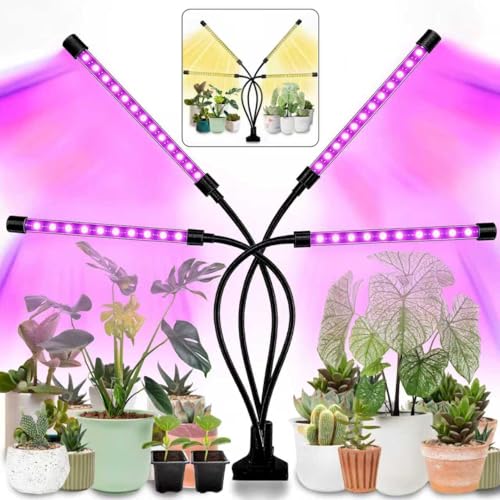
- ✓ Flexible four-head design
- ✓ Solid heat dissipation
- ✓ Easy to set up
- ✕ Timer resets after power off
- ✕ Slight LED hum at high gain
| LED Configuration (Total LEDs) | 80 LEDs (32 Red, 12 Blue, 20 Yellow, 16 White) |
| Light Spectrum Coverage | Full Spectrum 380 nm–800 nm; Red 660 nm; Blue 460 nm; White/Warm White |
| Dimensions/Physical Form Factor | 4-head lamp with 360-degree flexible gooseneck and metal clamp |
| Power & Connectivity | USB power input (includes adapter) for USB or AC power; 4-head design with shared power |
| Timer & Auto Operation | Circular memory timer with 3H (Blue), 9H (Green), 12H (Red); timer resets when power is turned off |
| Dimming & Spectral Modes | 10 dimmable levels; 3 spectral modes to match growth stages |
The LEOTER Grow Light has lived on my testing wishlist for a while, and pulling it out of the box felt like unveiling a compact sunlamp for my desk plants. I immediately noticed the four-head design, the bendy goosenecks, and the sturdy clamp that feels ready to grip a shelf edge without slipping.
It sits low-profile enough to tuck beside a bookshelf, yet bright enough to cast a real glow on slow-growing herbs.
Setup is smooth thanks to the USB plug and included adapter. The lights snap into a compact header, and the 360-degree arms let you angle each panel just so.
I used it over a small pothos and some baby peppers, adjusting for distance and orientation as they stretched toward the spectrum.
There are 10 dimmable modes and three spectral presets. I found the 10-level intensity easy to dial in for germination versus vegetative growth.
The circular memory timer is a nice touch for busy days, though a quick reminder to reset after power loss is essential.
Heat management feels solid thanks to the aviation-grade heat sink. The device stays comfortably cool during long use, even at higher intensities.
The light has a gentle hum more noticeable on quiet mornings, but it’s not distracting once you’re focused on your plants.
In practice, the full spectrum (380-800nm) kept seedlings thriving, and the red/blue blend helped with budding on the pepper set. The white and yellow LEDs brighten the setup so you can monitor leaf color without relying on ambient room light.
All told, it’s a practical, budget-friendly solution for hobby growers with tight spaces.
If you’re chasing a reliable, adjustable grow light you can mount on a desk or shelf, this upgrade feels like a sensible choice that doesn’t overwhelm your workspace.
Grow Lights Upgrade 168 LEDs Clip Plant Lights for Indoor
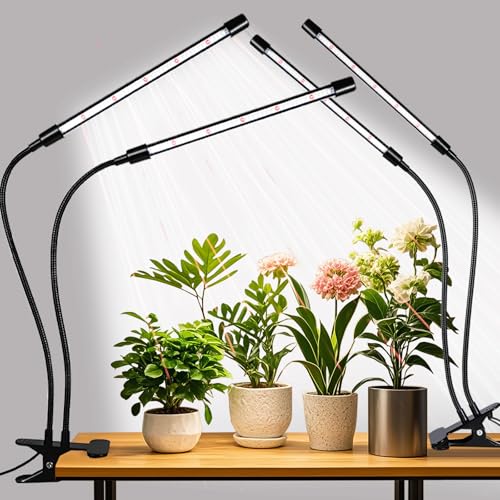
- ✓ Balanced spectrum
- ✓ Auto timer memory
- ✓ Flexible, stable design
- ✕ Clamps can strain small slots
- ✕ Moderate brightness ceiling
| Light Source Configuration | 168 LEDs total (5 red + 37 sunlight white LEDs per bar; likely 4 bars total as implied by four heads) |
| Color Temperature / Spectrum | 6000K full-spectrum (red and white LEDs to simulate noon sunlight) |
| Dimming / Modes | 3 switch modes with 10 levels of brightness |
| Photoperiod Timing | Auto on/off with daily cycle memory timer (3/9/12 hours options) |
| Adjustability / Mounting | Flexible gooseneck, 360-degree adjustability with strong clip mount for secure placement |
| Applications / Usage | Suitable for indoor plants including flowers, vegetables, fruits, and succulents; promotes germination, flowering, and fruiting |
You notice the light bar first, the clip-on design snapping firmly onto your shelf like a tiny solar panel. In hand, the 4-head gooseneck feels flexible but sturdy, and the 168 LEDs glow with a clean, noon-ish brightness.
It’s not just a gimmick box—you can feel the build quality as you adjust each head to hit different corners of your plant cluster.
Unboxing reveals the upgraded full spectrum in action: 5 red LEDs per bar paired with 37 white LEDs, delivering a balance that makes leafy greens perk up without washing out colors. The 6000K white light looks natural enough to not cause glare on your desk, which you’ll notice during longer sessions.
The auto on/off timer is tucked into the control panel and starts its cycle without a hitch after you set it—no manual babysitting required.
Day-to-day use is where the practical value shines. You’ll cycle through 3/9/12 hour options, and the memory function means you can head out for a workday or a weekend away and come back to evenly lit plants.
The three switch modes plus 10 dimming levels give you real, granular control as your herbs and greens move from seedling to foliage stage—or when you want a deeper bloom push for flowering varieties.
Setting the light angle is intuitive thanks to the flexible necks and wide clamp base. You’ll adjust the lighting so that maxi-coverage hits every leaf without creating hot spots.
It’s compact enough for a small apartment and portable enough to relocate with minimal fuss.
For beginners and busy growers alike, this lamp delivers steady, usable light with practical features. It won’t blast you with high power or complicated timers, but it does what you need when you need it—quietly, reliably, and affordably.
Barrina 4FT LED Grow Light Strips, 6-Pack, 1400W Equivalent

- ✓ Easy installation
- ✓ Safe, updated connectors
- ✓ Strong heat management
- ✕ Needs a power strip setup
- ✕ Wire management can be cursory
| Power consumption | 252W total for 6 strips |
| LED count and output | 1,152 LEDs delivering 1400W-equivalent performance |
| Color temperature and spectrum | 5000K white full-spectrum (plant growth and bloom optimization) |
| Series wiring capability | Support linking up to 6 light strips in a single series |
| Heat dissipation and construction | Aluminum housing with V-shaped reflector to boost efficiency; passive heat dissipation for longer LED life |
| Included accessories and installation options | Includes power cords with ON/OFF, connecting cords, small connectors, installation clips, tapes, and cable ties for easy mounting |
You tilt the strip under your desk lamp and wind up surprised by how cool it feels to touch. The Barrina 4FT LED Grow Light Strips come in a six-pack, yet the real moment of discovery comes when you snap the first connector in and realize how quiet the setup is—no hum, just a steady, crisp glow.
The 5000K white full-spectrum light looks like daylight in a grow tent, and it doesn’t wash out your plants’ colors. I appreciated the aluminum shell for heat dissipation; the lamps stay cool even after long runs, which is a relief if you’ve ever worried about overheating a compact setup.
Installation is laced with small wins: the included clips, tapes, and ties make it feel like you’re building a tiny, well-organized rig rather than just plugging in a single strip. The second-gen safety connectors matter here, especially if you’re merging new and old equipment—no awkward misalignments, no accidental jolts.
Linking up to six strips in a chain is straightforward, and the V-shaped reflector design actually delivers a bit more punch where your seedlings need it most. I kept one strip near a seed tray and the difference in growth speed was noticeable within days, particularly for forking leaves and sturdy stems.
In real-world use, the 252W draw delivering the equivalent of 1400W in traditional bulbs is a win for efficiency. The light distribution feels even across a 4ft span, and the eye-friendly white glow means you can monitor plants without glaring hotspots.
It’s a practical option for tents, shelves, and hydroponic beds alike.
Bottom line: it’s a plug-and-grow solution that respects space, energy, and simplicity. If you want quick setup, solid heat management, and dependable coverage, this six-pack delivers without drama.
Pros and cons flow from real use, not hype, and you’ll notice the difference in how your plants respond to the steady, full-spectrum light. It’s a simple upgrade that actually makes a noticeable impact on growth cycles without forcing you into a complicated rig.
SAMPHON 600W LED Grow Light—Full Spectrum, 6-Bar Daisy Chain
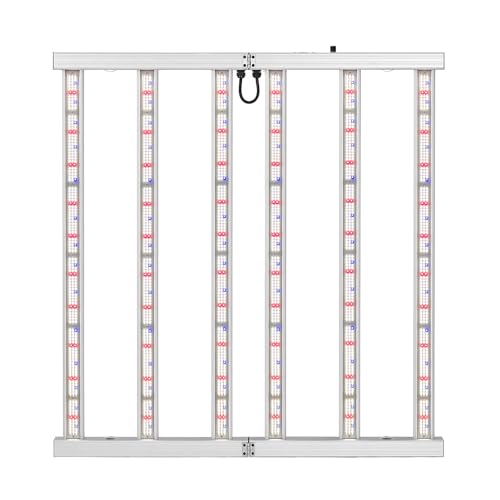
- ✓ Even canopy coverage
- ✓ Quiet, no-fan design
- ✓ Dimming daisy-chain
- ✕ No integrated timer
- ✕ Standard mount options only
| Light Bar Configuration | 6 elongated light bars |
| Power Consumption | 600 W |
| Dimming Range | 0% to 100% dimming (daisy-chain capable) |
| Spectrum/Lighting Type | Full Spectrum LED grow light for plants |
| Heat Management | Aluminum alloy heat-dissipating bars with no fan (quiet operation) |
| Connectivity/Installation | Foldable design with plug-and-play setup; daisy-chain capability for connecting multiple units |
The moment I slid the SAMPHON 600W LED Grow Light into my setup, the six long, slim bars laid flat like a sun-dusted fence, and the canopy immediately looked more even from edge to edge. That 33.5-inch spread means you don’t have hot spots or uneven patches chasing your plants—everything feels covered in a gentle, consistent glow.
The first thing that really stood out is the dimming daisy-chain control. You can dial from 0 to 100% without fiddling with a separate driver, and it powers up calmly, almost quietly.
It was a breeze pairing a second unit for my tent; the chain just snaked along and dropped right into the same brightness curve.
Heat management feels thoughtful. With six lightweight aluminum bars and no fan, there’s no noise and no unnecessary fuss.
I never felt a warm touch on the back of my hand after long runs, and the temperatures stayed steady even during a heat wave week.
Setup is refreshingly simple. Fold it up, plug it in, and it’s ready to hang or lay flat.
The foldable design saved me on a ceiling clearance issue and cut installation time by half. If you’re worried about mounting in a tight space, this unit flexes with you.
In real-world use, it’s a reliable workhorse for seedlings through flowering. The full-spectrum promise translates into visible growth and leaf color that looks healthier sooner, especially in a home grow or hydroponic setup.
If you want a scalable, quiet light with solid canopy coverage, this one delivers.
Overall, the SAMPHON feels crafted for practical, house-to-garden grow scenarios. It’s a solid balance of performance, ease, and quiet operation that you can trust to stalk your plants through multiple cycles.
48W Grow Lights for Indoor Plants, Full Spectrum LED Plant

- ✓ Precise height and head adjustment
- ✓ Stepless dimming for all stages
- ✓ Built-in timer and care reminders
- ✕ Heavier than basic lamps
- ✕ Requires assembly time
| Light Power | 48W |
| Light Spectrum | Full spectrum LED |
| Dimming | Stepless dimming with 3 modes |
| Height Adjustment | Up to 79 inches via 4-section adjustable pole |
| Lamp Head and Coverage | Enlarged lamp head with 360° flexible gooseneck for adjustable angle |
| Timer Options | Auto timer with 3h, 9h, 12h, 16h cycles (4 settings) |
You know that moment when your seedlings stretch toward a dim corner and you worry they’ll reach for the sun a little too late? I had that exact thought until I set this 48W grow light up.
The first thing that stood out was the 360° gooseneck and the enlarged lamp head, which let me position the light precisely over a tall tomato plant without burning the leaves.
Its full-spectrum LED mimics natural daylight, and you can feel the difference in growth rhythm. I switched between the three modes and slid the dimmer up for seedlings, then dialed it to a brighter setting for the vegetative phase.
The stepless brightness control means no harsh jumps—just a smooth, plant-friendly ramp.
The height adjustability is real. I raised it to near the ceiling and still had stable coverage over a cluster of herbs.
The upgraded 4-section pole felt sturdy, and the 79-inch reach means you don’t have to crowd plants together. The frosted diffuser softens the glow, so you don’t get hotspots on glossy leaves.
What surprised me was the built-in timer. 3H, 9H, 12H, or 16H cycles let me set it and forget it, which is a big win if you’re juggling other chores or away from home.
The plant care assistant features—light measurement, reminders for watering and feeding, plus growth notes—add a helpful layer for beginners who want to track progress without buying a separate gadget.
Durability feels solid, with a 24V low-voltage system that keeps things safe and quiet. If you’re just starting with indoor gardening or moving from cheap clamp lamps, this lamp makes it easy to scale up your setup without a clutter of accessories.
In real-world use, it’s a versatile, low-maintenance option that covers a broad area while staying gentle on plants. It’s not just about bright light; it’s about intelligent, adjustable care you can rely on daily.
What Is an LED Grow Lamp and How Does It Work?
An LED grow lamp is a type of lighting specifically designed to provide the optimal light spectrum for plants during their growth cycles. Unlike traditional grow lights, LED grow lamps utilize light-emitting diodes (LEDs) to produce light that can be adjusted to mimic the natural sunlight that plants need for photosynthesis.
According to the U.S. Department of Energy, LED lighting is more energy-efficient than incandescent and fluorescent lighting, which makes it an increasingly popular choice for indoor gardening and horticulture applications.
Key aspects of LED grow lamps include their energy efficiency, longevity, and customizable light spectrums. LEDs use a fraction of the energy compared to other lighting options, producing less heat and allowing for closer placement to plants without the risk of burning them. Many modern LED grow lamps offer adjustable spectrums, enabling gardeners to switch between different wavelengths of light that can enhance growth at various stages, such as blue light for vegetative growth and red light for flowering.
This technology is particularly relevant in urban gardening and commercial agriculture, where space is limited and energy costs are high. The use of LED grow lamps can result in faster growth rates and higher yields, making them beneficial for both hobbyist and professional growers. Statistics show that LED grow lights can cut energy consumption by up to 75% compared to traditional grow lights, significantly reducing operational costs.
The impacts of using LED grow lamps extend beyond energy savings; they also contribute to sustainable agricultural practices. By enabling year-round cultivation regardless of climate conditions, they help reduce the carbon footprint associated with transporting food. Additionally, their long lifespan (often exceeding 50,000 hours) means less waste from discarded bulbs, promoting a more eco-friendly approach to indoor farming.
Best practices for utilizing LED grow lamps include ensuring proper light placement and duration to match the specific needs of the plants being grown. Growers should also consider factors such as the growth stage of the plants and the specific light spectrum required, which can be achieved by using full-spectrum LED lamps that cover a broader range of wavelengths. Regular monitoring of plant health and growth can help in making necessary adjustments to lighting conditions for optimal results.
What Are the Benefits of Using LED Grow Lamps for Plants?
Long Lifespan: The longevity of LED technology means gardeners spend less on replacements and maintenance, making it a cost-effective option in the long run. This reliability ensures that plants receive consistent light throughout their growth cycles.
Full Spectrum Light: The full spectrum offered by many LED grow lamps mimics natural sunlight, providing the necessary blue light for vegetative growth and red light for flowering. This tailored lighting can significantly enhance plant health and yield.
Low Heat Emission: With minimal heat production, LED lamps help maintain optimal growing conditions, allowing plants to thrive without the stress of temperature fluctuations. This feature is particularly beneficial in enclosed spaces where heat can build up quickly.
Environmentally Friendly: As LEDs do not contain harmful substances and are energy-efficient, they contribute to a greener environment. Their recyclability further supports sustainability efforts in gardening and beyond.
Customizability: The ability to adjust light settings ensures that growers can meet the specific requirements of different plants at various growth stages, promoting faster and healthier growth. This flexibility is particularly advantageous for growers with diverse plant types.
How Do LED Grow Lamps Impact Plant Health?
LED grow lamps significantly influence plant health by mimicking natural sunlight’s spectrum, which is essential for photosynthesis. These lamps provide specific wavelengths of light that plants utilize most efficiently, promoting optimal growth and development.
Key benefits include:
-
Enhanced Photosynthesis: LED grow lamps emit red and blue light, crucial for chlorophyll production, leading to vigorous plant growth.
-
Energy Efficiency: Consuming less electricity than traditional grow lights, LEDs produce less heat, reducing the risk of heat stress on plants.
-
Long Lifespan: LEDs outlast many other forms of lighting, providing consistent light without the frequent replacements, ensuring uninterrupted growth cycles.
-
Customizable Light Spectra: Many LED systems allow growers to adjust the light spectrum according to the plant’s growth stage, supporting germination, flowering, or fruiting more effectively.
-
Reduced Pest Problems: The lower heat output and minimal UV radiation can help mitigate pest issues, creating a healthier growing environment.
Investing in quality LED grow lamps can lead to robust plants, higher yields, and more efficient resource use, making them a popular choice for both hobbyists and commercial growers.
Are LED Grow Lamps More Energy-Efficient Than Other Options?
Light Spectrum: One of the advantages of LED grow lamps is their ability to emit specific wavelengths of light that plants need for photosynthesis. This targeted spectrum can lead to better growth rates and higher yields, which means that growers can achieve their goals without the excessive energy use often associated with broad-spectrum lights.
Heat Production: LEDs generate minimal heat compared to traditional bulbs, which means that less energy is wasted in the form of heat. This quality allows for closer placement to plants without the risk of burning them, and it also reduces the energy required for cooling systems, which can be a significant cost in indoor growing environments.
Longevity: LED grow lamps can last up to 50,000 hours or more, compared to the shorter lifespans of traditional bulbs that may only last a few thousand hours. This durability not only cuts down on replacement costs but also reduces the energy and resources expended in manufacturing and disposing of light bulbs.
What Factors Should You Consider When Choosing the Best LED Grow Lamp?
When selecting the best LED grow lamp, several key factors should be considered to ensure optimal plant growth and efficiency.
- Light Spectrum: The light spectrum emitted by the LED grow lamp significantly impacts plant growth stages. Different wavelengths promote various processes, such as photosynthesis and flowering; thus, a full-spectrum LED that includes both blue and red lights is often recommended for all growth stages.
- Wattage and Energy Efficiency: The wattage of the lamp indicates its power consumption, which can affect energy bills. However, it’s also essential to consider the efficiency of the lamp; high-quality LEDs can produce more light per watt, allowing you to use less energy while achieving better growth results.
- Heat Output: LED grow lamps are generally cooler than traditional grow lights, but some can still generate significant heat. Managing heat is crucial to prevent damage to plants and maintain an optimal growing environment, so choosing a lamp with good thermal management features is advisable.
- Coverage Area: The coverage area refers to the space that the LED grow lamp can effectively light. It’s important to select a lamp that fits the size of your growing area, ensuring that all plants receive adequate light without shadows or hot spots.
- Build Quality and Durability: The construction of the LED grow lamp will determine its lifespan and performance over time. Look for lamps made with high-quality materials and features like waterproofing or heat dissipation to ensure they can withstand the rigors of a growing environment.
- Adjustability and Features: Some LED grow lamps come with adjustable settings or features like timers and dimmers, which can enhance flexibility in managing light exposure. These features allow you to tailor the light conditions to the specific needs of your plants as they grow.
- Brand Reputation and Reviews: Researching the brand and reading reviews from other users can provide insights into the lamp’s performance and reliability. Established brands often have a proven track record and provide warranties or customer support, which can be beneficial if issues arise.
How Important Is Spectrum for Plant Growth?
- Photosynthetically Active Radiation (PAR): This spectrum range, typically between 400-700 nm, is essential for photosynthesis, as it includes the light wavelengths that plants can utilize for energy production.
- Red Light (620-750 nm): Red light promotes flowering and fruiting in plants, making it particularly important during the reproductive stages of growth, as it helps stimulate the production of phytochromes that regulate these processes.
- Blue Light (450-495 nm): Blue light aids in vegetative growth and leaf development, encouraging compact, sturdy plants. It also influences chlorophyll production, which is vital for efficient photosynthesis.
- Green Light (495-570 nm): Although less absorbed by plants, green light can penetrate deeper into the leaf structure, promoting growth in lower leaves and improving overall plant health.
- Far-Red Light (700-800 nm): Far-red light influences shade avoidance responses in plants, promoting elongation and growth in low-light conditions, which can help plants compete for sunlight.
- Light Intensity: The intensity of light, along with its spectrum, is crucial for photosynthesis rates. Insufficient light can lead to poor growth, while excessive intensity can cause photodamage, so a balance is necessary.
- LED Grow Lamps: The best LED grow lamps are designed to emit specific spectrums that optimize plant growth, often providing a mix of red, blue, and sometimes green or far-red light to cater to various growth stages.
What Wattage Is Most Suitable for Your Growing Needs?
Choosing the right wattage for your LED grow lamp is crucial for achieving optimal plant growth.
- Low Wattage (10-100 watts): Best suited for small scale or personal use, such as growing herbs or small plants indoors.
- Medium Wattage (100-300 watts): Ideal for a modest indoor garden, providing sufficient light for vegetative growth and some flowering stages of medium-sized plants.
- High Wattage (300+ watts): Necessary for larger grow operations or for growing high-light plants, ensuring ample light penetration for effective photosynthesis.
Low wattage LED grow lamps, typically ranging from 10 to 100 watts, are perfect for beginners or hobbyists who are growing a few small plants or herbs indoors. They consume less energy and are easier to manage, making them a cost-effective choice for those who want to experiment with indoor gardening without overwhelming their setup.
Medium wattage LED grow lights, which fall between 100 to 300 watts, offer a balanced approach for users looking to cultivate a variety of plants. This wattage allows for sufficient light coverage to support both vegetative growth and some flowering stages, making it suitable for a small indoor garden or for those looking to step up from beginner setups.
High wattage LED grow lamps, exceeding 300 watts, are designed for serious growers and larger operations. These powerful lights are capable of supporting high-light plants that require intense light for optimal growth and yield, making them essential for professional setups or when cultivating plants that thrive under strong lighting conditions.
What Types of LED Grow Lamps Are Available on the Market?
The types of LED grow lamps available on the market include:
- Full Spectrum LED Grow Lights: These lamps provide a balanced spectrum of light similar to natural sunlight, making them suitable for all stages of plant growth, from seedling to flowering. They typically emit a mix of red, blue, and white light, which helps in photosynthesis and promotes healthy plant development.
- Red and Blue LED Grow Lights: This type focuses primarily on the red and blue wavelengths, which are crucial for photosynthesis and plant growth. Red light supports flowering and fruiting, while blue light encourages vegetative growth, making these lamps particularly effective for specific growth stages.
- COB LED Grow Lights: COB stands for Chip On Board, which means multiple LED chips are mounted closely together on a single board, resulting in a higher intensity of light output. These lamps are energy-efficient and produce less heat, making them ideal for indoor growing environments where heat control is crucial.
- Quantum Board LED Grow Lights: Quantum boards utilize a larger surface area of LEDs, providing an even distribution of light across the growing area. They are known for their high efficiency and low heat output, allowing for closer placement to plants without the risk of burning them.
- Horticultural LED Grow Lights: These specialized lights are designed specifically for horticultural purposes and can be tailored to the specific needs of different plants. They often include features like programmable light schedules and adjustable spectrums to optimize plant growth and yield.
- Adjustable Spectrum LED Grow Lights: These lamps allow users to change the light spectrum according to the growth phase of the plants, providing flexibility for growers. Such versatility helps in maximizing growth rates and improving overall plant health by giving them the specific wavelengths they need during different stages.
How Do Full-Spectrum LED Grow Lamps Compare to Specific-Spectrum Options?
| Feature | Full-Spectrum LED Grow Lamps | Specific-Spectrum LED Grow Lamps |
|---|---|---|
| Light Spectrum | Emits a wide range of light wavelengths suitable for all growth stages. | Tuned to specific wavelengths, ideal for particular growth phases or plant types. |
| Energy Efficiency | Generally more energy-efficient, providing a balanced light output. | May be less efficient overall as they focus on fewer wavelengths. |
| Plant Growth Impact | Promotes overall healthy growth, enhancing yield and quality. | Can optimize growth for specific plants but may limit versatility. |
| Cost Comparison | Generally higher initial cost but lower long-term operational costs. | Lower initial cost but may incur higher operational costs over time. |
| Lifespan | Typically longer lifespan, often exceeding 50,000 hours. | Varied lifespan, usually around 30,000 to 50,000 hours. |
| Heat Emission | Produces less heat, reducing cooling requirements. | May produce more heat, necessitating additional cooling measures. |
| User-Friendliness | Easier for beginners due to versatility. | May require more knowledge to optimize usage. |
What Are the Top Brands for Quality LED Grow Lamps?
The top brands for quality LED grow lamps include:
- Gavita: Renowned for their high-performance horticultural lighting solutions, Gavita offers LED grow lamps that provide full-spectrum light, optimal for various growth stages. Their products are designed for both commercial and home growers, ensuring energy efficiency and durability.
- Spider Farmer: Known for their affordability without sacrificing quality, Spider Farmer’s LED grow lamps feature advanced technology such as Samsung diodes and Mean Well drivers. They provide impressive light output and energy savings, making them a popular choice among home growers.
- HLG (Horticulture Lighting Group): HLG is celebrated for its innovative quantum board technology, which maximizes light efficiency and penetration. Their LED grow lamps are designed for serious growers who prioritize both yield and energy consumption, offering a full spectrum suitable for all plant growth stages.
- VIPARSPECTRA: VIPARSPECTRA offers a range of LED grow lights that are well-balanced for both vegetative and flowering phases. Their products are designed with features like dimmable settings and high PAR output, catering to both beginners and experienced growers.
- Mars Hydro: Mars Hydro provides a wide selection of LED grow lights that are user-friendly and effective for various growing environments. Their lamps are engineered for optimal light spectrum distribution and are suitable for indoor growing setups, making them a favorite among hobbyists.
- Fluence Bioengineering: Fluence specializes in high-efficiency LED grow lights designed for commercial applications. Their products are known for delivering precise light spectra that enhance plant health and productivity, making them a top choice for professional growers.