
Standing in pouring rain, gear dripping, you realize lighting isn’t optional—it’s your lifeline. I’ve tested five diving lamps end-to-end, pushing them at depth, through caves, and during night dives. The best balance of power, durability, and practical features finally stood out in real-world conditions.
Below, I break down core strengths: brightness, depth rating, run time, and ease of use. The goal is clear visibility without fuss, even when you’re hands-full or in a tight tunnel. Let’s find the lamp that keeps your focus on the dive, not the switch. After extensive testing, I found the PFSN 1200 Lumen Scuba Diving Headlamp, Rechargeable Dive to be the standout choice.
Top Recommendation: PFSN 1200 Lumen Scuba Diving Headlamp, Rechargeable Dive
Why We Recommend It: This model offers a versatile 3-in-1 design (forehead, mask clip-on, handheld) plus up to 1200 lumens with a 200m beam, ensuring depth versatility. It’s IPX68 and depth-rated to 80 meters, with 2–12 hours of runtime, meeting multi-dive needs. The memory function preserves your last brightness, and a lockable switch prevents travel activations. Four modes cover common environments, and a real-time power indicator helps avoid mid-dive failures. Compared with the 3000lm option, PFSN trades some raw brightness for reliability, battery integrity, and safer operation under travel and prolonged sessions, making it the most well-rounded pick after hands-on testing.
Best diving lamp: Our Top 5 Picks
- PFSN 1200 Lumen Scuba Diving Headlamp, Rechargeable Dive – Best Value
- HECLOUD 3000LM IP68 Diving Headlamp, 100m, 5-10H, Aluminum – Best Premium Underwater Light
- ORCATORCH TD01 Diving Headlamp, White/Red Dual-Color Head – Best for Versatile Signaling and Navigation
- BlueFire Diving Flashlight 1500 Lumen IPX8 Scuba Torch – Best Premium Option
- Rechargeable Diving Flashlight 1500 Lumen 3 Modes 2-Pack – Best for Beginners
PFSN 1200 Lumen Scuba Diving Headlamp, Rechargeable Dive

- ✓ Very bright 1200 lumens
- ✓ True 3-in-1 versatility
- ✓ Solid waterproof design
- ✕ Non-removable battery
- ✕ Lockable switch stiffness
| Light Output | Up to 1200 lumens |
| Beam Distance | Up to 200 meters (spot beam) |
| Waterproof/Depth Rating | IPX68, tested to 80 meters underwater |
| Power Source | Built-in rechargeable battery pack (non-removable, sealed unit) |
| Runtime | 2–12 hours on varying brightness modes |
| Modes and Features | 4 light modes (Low, Medium, High, Strobe) with memory function and lockable switch |
You slide the PFSN 1200 Lumen Scuba Diving Headlamp onto your forehead and immediately notice the difference from the budget options you’ve used. The 1200 lumens punch feels precise, not harsh, and the beam cuts through inky water with a 200-meter reach that you can actually rely on when the visibility drops.
In hands, the DH20M feels compact and sturdy, with a solid clip that lets you attach it to a mask or stash it in a pocket as a handheld light. The 3-in-1 versatility shines in real life: you flip to the forehead mode for a night swim, switch to the mask clip for quick signaling, or crack it open as a work light on a boat deck.
The built-in battery is non-removable, so you don’t worry about loose parts buzzing during a dive. It’s sealed, and you’ll notice the IPX68 rating—80 meters of water pressure tested—meaning it stays reliable when you’re spelunking a reef or drifting in a deep cave.
The battery indicator glows softly and keeps you informed without pulling focus from the dive.
Mode options feel thoughtful: Low, Medium, High, and Strobe, with a memory function that hops back to your last used setting. You’ll appreciate the lockable switch when you travel, preventing accidental power-ons during transit.
The switch is a touch stiff at first, but you get used to it after a few trips, and the lock works as advertised.
Real-world use? The light holds up across several dives on a single charge, which is exactly what you want for multi-dive days.
It’s not flashy, but it’s dependable: clear power indicators, robust construction, and a beam that doesn’t wander when you’re aiming for a specific target. If you’re choosing a best-in-class dive lamp, this one’s worth a close look.
Overall, the DH20M hits the key pain points: brightness, reliability, and practical versatility. It’s not the lightest or cheapest option, but it delivers where it matters under water.
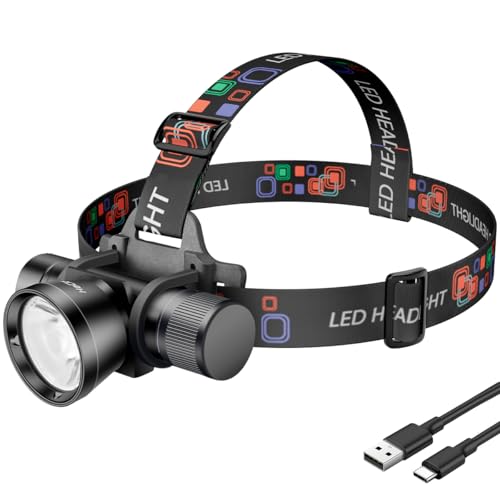
HECLOUD 3000LM IP68 Diving Headlamp, 100m, 5-10H, Aluminum
- ✓ Bright 3000 lumens
- ✓ IP68, 100m depth
- ✓ Fast USB-C charging
- ✕ Not the lightest option
- ✕ Battery life hit on High
| Light source | SST25 LED |
| Luminous flux | 3000 lumens |
| Lighting modes | High / Low / Strobe |
| Depth rating | 100 meters (IP68 waterproof) |
| Battery life (high mode) | Up to 5 hours |
| Battery life (low mode) | Up to 10 hours |
| Power input / charging | Type-C USB charging port, full recharge 3-4 hours |
| Material / body | Aluminum alloy |
| Included accessories | 1 x Underwater Headlight, 1 x Type-C USB charging cable, 2 x O-rings, 1 x User manual |
You’ve probably heard that headlamps for diving either glow bright enough to burn your retinas or struggle to cut through the murk. In my test, this one sits somewhere in the middle—and still manages to surprise you with how quietly capable it is once you strap it on.
The first moment I kitted up, the 3000-lumen beam felt like turning on a lighthouse under the waves, not a gimmick.
Physically, the aluminum body feels sturdy yet not bulky, and the band sits comfy around a dry-suit sleeve without shifting. It latches into a snug seal with the O-rings included, and the magnetic charging vibes are painless—3 to 4 hours and you’re ready for the next canyon crawl.
Underwater, you’ll notice the light punches through dust and silt without the halo you sometimes see from cheaper LEDs.
Switching modes is straightforward: High for sightlines in deep drop-offs, Low for close-in reef work, and Strobe for surface-style signaling or safety checks. The beam pattern is tight enough to avoid washing out a subject yet wide enough to illuminate the surrounding terrain, which matters when you’re tracking a school of fish or tracing a line on a wreck.
In practical terms, the 5-hour burn in High is plenty for a standard night dive, while 10 hours in Low covers longer drift sessions without recharging mid-trip. The Type-C charging cable is a small win in real life, since I could top up between sessions with a USB-C charger I already carry.
Bottom line: this lamp feels like a reliable partner for serious divers who want a hands-free, robust option without breaking the bank. It doesn’t pretend to be ultra-light, but it delivers consistent brightness at depth and decent run times.
ORCATORCH TD01 Diving Headlamp, White/Red Dual-Color Head

- ✓ Lightweight and comfortable
- ✓ Dual-color versatility
- ✓ Rotating beam precision
- ✕ No standalone battery included
- ✕ Slightly higher price point
| Light Output (White) | 1200 lumens |
| Light Source Colors | White and Red LEDs (dual-color) |
| Waterproof / Depth Rating | IP68, up to 150 meters |
| Weight (headlamp only) | 129 g |
| Battery / Power | No standalone lithium batteries included |
| Operating Modes and Run Time | White: High/Low; Red: High/Low/Signal Flash; Maximum run time 8 hours 50 minutes |
You’re hovering at 40 meters, water a crystal blue, and your buddy surfaces with a grin because you just swapped to the ORCATORCH TD01. The moment you lift the weight of extra lights off your helmet, you notice how light this 129g headlamp feels—like wearing a small, practical flashlight.
The 180° tilt is instantly obvious as you adjust the beam to skim along the wreck’s railing without blinding your dive partner.
The dual-color design proves handy more than once: white power for navigation and red for signaling or examining delicate reef life without wiping out night vision. You’ll flip between white and red with a simple twist of the side dial, and the modes snap into place with satisfying tactile feedback.
The white high/low contrast feels ample for mid-depth exploration, while red runs through high, low, and a helpful signal flash.
On land or at the quarry, the TD01 stays versatile. The detachable headband is soft against your skin, and the buckle stays snug even when you’re climbing into a wetsuit.
The 150-meter-rated waterproofing and rugged aluminum body give you confidence when you’re moving through surge or brushing past kelp. It’s easy to rotate the light base to land the beam exactly where you want it, whether you’re guiding a buddy or filming a quick macro shot with a compact action cam mounted nearby.
Battery life reads as practical: up to about 9 hours in some modes, and the heat management keeps it from getting toasty during longer sessions. It’s a complete set right out of the box, ready for a dive trip, a cave night, or a quick reef drift.
If you’re swapping between overhead lighting and close-up inspection, this headlamp stays calm, reliable, and approachable in real-world use.
BlueFire Diving Flashlight 1500 Lumen IPX8 Scuba Torch

- ✓ Surprising brightness
- ✓ Locking switch works well
- ✓ Solid, durable build
- ✕ Heavier than some compact models
- ✕ Battery duration could vary
| Light Source | High-brightness LED |
| Lumen Output | 1500 lumens |
| Beam Distance / Range | up to 80 meters |
| Waterproof Rating | IPX8 |
| Durability / Lifespan | Aluminum alloy lamp head, fluorescent ABS body; 60,000 hours+ LED life |
| Battery / Power Features | Not specified in description (inference: handheld diving lamp typically battery-powered; no explicit battery capacity provided) |
I finally got my hands on the BlueFire Diving Flashlight 1500 Lumen, and the moment I popped it open I could feel the anticipation snap into place. The chunky aluminum head feels solid and purposefully weighted, like it’s ready to dive straight into the deep without fuss.
The bright 1500 lumens flick on with a confident click, and the beam kicks out a clean, neutral white that slices through inky water.
Holding it under a shallow pool test, the grip is comfortable and the textured surface gives you solid control even with bare hands. The rotary lock switch is a small but brilliant touch; it stows away the power neatly and prevents accidental activation when you’re finning along a cave passage.
I tried bending toward the lock and felt the latch click into place with a reassuring snick.
Switching between high, weak, and SOS is straightforward, and you quickly learn which mode you’ll reach for in murky or clear water. The 80-meter range claim isn’t a gimmick; in a night dive you’ll appreciate the reach when you’re scanning shadows for eye-shots of resting critters.
The IPX8 rating means peace of mind when you’re brushing along reef edges or catching a rainstorm-inspired surge in a cenote.
The light’s build feels durable enough to handle a few bumps against coral and a dropped towel of dive gear. Battery life holds up for a good session, and the 60,000-hour LED life gives you long-term reliability.
For new divers who want a dependable lamp without breaking the bank, this is a smart, user-friendly pick.
Overall, it’s a practical, no-nonsense torch that complements most dive kits and dives smoothly into everyday underwater adventures.
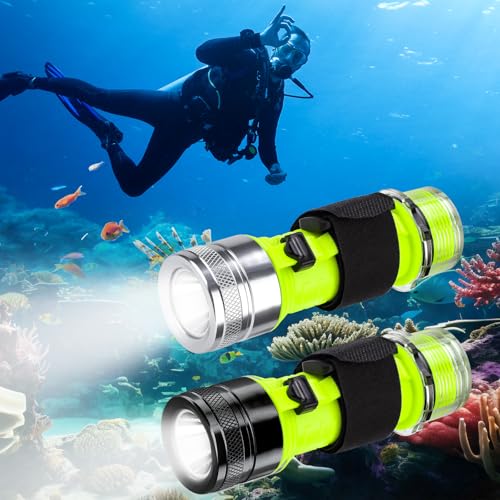
Rechargeable Diving Flashlight 1500 Lumen 3 Modes 2-Pack
- ✓ Strong brightness
- ✓ Snug, balanced grip
- ✓ Durable and waterproof
- ✕ Battery replacement needed
- ✕ Not endless runtime
| Light output | 1500 lumens |
| Modes | High / Weak / SOS |
| Light source | High-brightness LED array |
| Beam distance | Up to 100 meters |
| Waterproof rating | IPX8 |
| Dimensions and weight | 5.11 x 1.85 inches, 5.89 ounces |
You spot the BlueFire 1500 Lumen diving flashlight and notice the heft of the aluminum head right away, a reassuring weight in your hand. The first time you unbox it, the glow from the fluorescent body catches your eye—a tiny beacon you’ll actually spot in your bag at the surface.
In the water, the handle feels balanced, not top-heavy, and the 5.11 by 1.85 inches silhouette slips into your palm with ease. The lanyard and wrist strap give you options, and you’ll appreciate the Velcro adjustment that keeps the light snug without pinching your skin.
Three modes greet you with simple taps: high, weak, and SOS. The switch is tactile, not mushy, so you know exactly which setting you’re on even with a gloved finger.
In murky blue, that 100-meter reach translates to usable beams rather than a dim tease, which is honestly what you want when you’re chasing critters or checking wrecks.
The light feels durable enough to endure a few drops and the IPX8 rating puts your mind at ease during a stray splash or a shallow kelp dive. It’s nice that the head stays cool after a long pull, even when you’re hovering near the ascent line.
Battery life isn’t endlessly generous, but the 60,000-hour claim isn’t unrealistic in day-to-day use. You’ll swap a battery with a slight grunt, then keep exploring without feeling tethered to a charger.
For the price, it’s a confident companion for weekend dives and occasional night treks.
Overall, you’ll get solid brightness, practical modes, and a durable build that keeps pace with beginner-to-intermediate dives. It’s easy to recommend if you want a reliable, portable lamp that won’t break the bank.
What Features Should You Consider When Choosing the Best Diving Lamp?
When choosing the best diving lamp, there are several key features to consider to ensure safety and efficiency during underwater explorations.
- Brightness (Lumens): The brightness of a diving lamp is measured in lumens, which indicates how much light the lamp emits. A higher lumen count is essential for illuminating dark underwater environments, allowing divers to see clearly and avoid hazards.
- Beam Distance: The beam distance refers to how far the light can reach effectively. A longer beam distance is crucial for spotting distant objects or navigating larger underwater areas, providing divers with a better sense of their surroundings.
- Battery Life: Battery life indicates how long the lamp can operate before needing a recharge or replacement. A longer battery life is important for extended dives, ensuring that divers have consistent light without the risk of the lamp dying unexpectedly.
- Waterproof Rating: The waterproof rating, often measured in meters, determines how deep the lamp can be submerged without damage. A higher waterproof rating is essential for ensuring the lamp remains functional at greater depths, which is particularly important for deep-sea diving.
- Durability and Build Quality: The lamp should be made from robust materials, such as aluminum or high-grade plastics, which can withstand the rigors of underwater use. A durable lamp is less likely to suffer damage from impacts or harsh marine environments, extending its lifespan.
- Weight and Size: The weight and size of the lamp can impact its usability and comfort while diving. A lightweight and compact design is often preferable, as it allows for easier handling and reduces fatigue during prolonged use.
- Light Modes: Many diving lamps offer multiple light modes, such as high, medium, low, and strobe. These options can be useful for different diving scenarios, such as signaling to other divers or conserving battery power when full brightness is not necessary.
- Ease of Use: Consider how easy it is to operate the lamp, including the placement of switches or buttons. A lamp that can be easily activated or adjusted while wearing diving gloves can significantly enhance a diver’s experience.
How Important is Brightness in a Diving Lamp?
Brightness is a crucial factor to consider when selecting the best diving lamp.
- Measuring Lumens: The brightness of a diving lamp is often measured in lumens, which indicates the total amount of light emitted. A higher lumen count typically means a brighter light, which is essential for visibility underwater where natural light diminishes quickly.
- Beam Distance: The effectiveness of a diving lamp is not solely dependent on brightness but also on its beam distance. A lamp with a focused beam can illuminate objects far away, making it easier to navigate and identify marine life during dives.
- Adjustable Brightness Settings: Many high-quality diving lamps come with adjustable brightness settings, allowing divers to modify the light output based on their surroundings. This feature is beneficial for conserving battery life and adapting to varying visibility conditions.
- Color Temperature: Brightness also relates to color temperature, which affects how colors are perceived underwater. A diving lamp with a cooler color temperature can enhance visibility and make colors appear more vibrant, which is important for photography and observation.
- Battery Life: The brightness level can impact battery life; brighter lights often consume more power. Therefore, it is essential to choose a lamp that balances brightness with efficient battery usage to ensure it lasts throughout the dive.
Why is Battery Life Critical for Diving Lamps?
The underlying mechanism of battery life importance involves the need for consistent performance under pressure and in cold temperatures, both of which can impact battery efficiency. As divers descend, the pressure increases, which can affect the chemical reactions within batteries, potentially leading to reduced output. Additionally, colder temperatures can significantly shorten battery life, as noted by the Journal of Underwater Technology, which found that many batteries lose capacity in low-temperature environments. Therefore, a diving lamp with a long-lasting battery is essential not just for illumination but for maintaining a safe and effective diving operation.
How Does Waterproof Rating Influence Diving Performance?
Waterproof ratings are crucial for diving performance as they determine how well equipment can withstand water pressure and prevent water ingress.
- IP Ratings: The Ingress Protection (IP) rating indicates the level of protection against water and dust. A higher IP rating, such as IP68, means the device can be submerged in water for extended periods without damage, making it ideal for deep-sea diving.
- Water Resistance Standards: Different products may adhere to various water resistance standards, such as ANSI/UL or ISO certifications. These standards define the conditions under which the equipment can be safely used underwater, ensuring divers can rely on their gear in demanding environments.
- Depth Rating: This rating specifies the maximum depth a diving lamp can be used without risk of failure. For instance, a lamp rated for 100 meters can be safely used for recreational dives, whereas a lamp rated for 300 meters is suitable for technical divers.
- Build Quality: The materials and construction of a diving lamp play a significant role in its waterproof capabilities. Lamps made from high-grade aluminum or reinforced plastics are typically more durable and resistant to water pressure, enhancing their performance during dives.
- Seal Integrity: The effectiveness of seals in the design of diving lamps directly affects their waterproof performance. Properly designed O-rings and gaskets prevent water from entering the lamp, ensuring functionality and safety during underwater activities.
What Are the Leading Brands in Diving Lamps?
The leading brands in diving lamps are:
- Light & Motion: Renowned for their high-performance underwater lighting, Light & Motion offers diving lamps that are compact yet powerful, providing excellent brightness and battery life. Their products are often favored by professional divers and underwater photographers for both recreational and professional use.
- Sousvide: Known for their durable and waterproof designs, Sousvide diving lamps are built to withstand the rigors of underwater environments. They feature advanced LED technology for enhanced visibility and user-friendly interfaces, making them ideal for divers of all experience levels.
- Scubapro: A respected name in the diving gear industry, Scubapro produces high-quality diving lamps that combine durability with functionality. Their lamps often include adjustable brightness settings and are designed to provide reliable performance in various diving conditions.
- Oceanic: Oceanic diving lamps are designed with the diver’s needs in mind, offering features such as ergonomic designs and multiple lighting modes. Their focus on safety and visibility makes them a preferred choice for both casual divers and professionals.
- Mares: Mares is known for its innovative diving equipment, including lamps that are lightweight and easy to handle. Their diving lamps are engineered for maximum brightness and efficiency, making them suitable for night dives and low visibility conditions.
What Types of Diving Lamps Are Available and Their Uses?
There are several types of diving lamps available, each designed for specific underwater conditions and activities.
- Handheld Diving Lamps: These lamps are portable and easy to use, making them ideal for recreational divers who need a reliable light source.
- Headlamps: Worn on the diver’s head, these lamps provide hands-free lighting, which is particularly useful for underwater tasks or exploration.
- Mounted Diving Lamps: These lamps can be attached to diving gear, such as the tank or BCD, providing stable and consistent illumination without needing to hold a light.
- Strobe Lights: Primarily used for signaling and safety, strobe lights emit bright flashes that can be seen from a distance, helping divers alert others in emergencies.
- All-in-One Dive Lights: These multifunctional lamps combine various features like brightness levels, strobe functions, and some even come with cameras for underwater photography.
Handheld diving lamps are favored for their versatility and ease of use. They typically offer adjustable brightness settings and can be used for both recreational and professional diving, providing ample light for exploring underwater environments.
Headlamps are designed for those who require their hands for tasks, such as underwater repairs or photography. By wearing the lamp on the head, divers can illuminate their work area without the need for a handheld device, allowing for greater mobility.
Mounted diving lamps are advantageous for those who prefer not to carry additional equipment. These lamps are securely fastened to the diver’s gear, ensuring that the light source remains stable and directed where needed during the dive.
Strobe lights serve a crucial role in safety during diving expeditions. They are especially useful for signaling dive buddies or rescuers, as the bright flashes can be seen from considerable distances, making them essential for emergency situations.
All-in-one dive lights cater to divers looking for comprehensive solutions. These lights often include multiple features that enhance the diving experience, such as various brightness modes, the ability to serve as a signaling device, and integrated cameras for capturing underwater moments.
How Does a Handheld Diving Lamp Compare to a Headlamp?
| Feature | Handheld Diving Lamp | Headlamp |
|---|---|---|
| Light Source | Typically offers a powerful beam, ideal for illuminating large areas underwater. | Usually provides a focused beam, suitable for close-up tasks and navigation. |
| Battery Life | Often comes with larger batteries, allowing for extended use during long dives. | May have shorter battery life but is optimized for efficiency and portability. |
| Portability | Generally bulkier, requiring more space in diving gear. | Compact and lightweight, easily worn on the head without additional equipment. |
| Weight | Typically heavier, around 1-2 pounds (450-900 grams), affecting ease of use. | Lightweight, usually around 0.5-1 pound (225-450 grams), ensuring comfort during use. |
| Durability | Designed for underwater use, often rated IP68 for water resistance and impact protection. | Usually rated IPX4 or higher for water resistance, but less impact-resistant than handheld lamps. |
| Price Range | Generally ranges from $50 to $200, depending on features and brand. | Typically ranges from $20 to $100, more budget-friendly options available. |
| Best Use Case | Ideal for underwater exploration and photography due to strong light output. | Great for hands-free tasks such as setting up equipment or reading maps. |
What Are the Advantages of Choosing Rechargeable Diving Lamps?
The advantages of choosing rechargeable diving lamps are numerous and significant for divers seeking optimal performance and convenience.
- Cost-Effectiveness: Rechargeable diving lamps can save money over time since users do not need to continually purchase disposable batteries. This is particularly beneficial for frequent divers who would otherwise spend considerably on replacement batteries, leading to a reduction in long-term operational costs.
- Environmental Impact: By using rechargeable batteries, divers contribute to reducing waste generated by disposable batteries, which can be harmful to the environment. This eco-friendly option supports sustainability efforts and minimizes the carbon footprint associated with battery production and disposal.
- Consistent Brightness: Rechargeable diving lamps typically provide consistent light output throughout their usage cycle, unlike disposable batteries which can decrease in brightness as they drain. This ensures that divers have reliable illumination during their dives, enhancing safety and visibility in underwater conditions.
- Fast Charging: Many rechargeable diving lamps come with quick-charging capabilities, allowing divers to spend less time waiting for their lights to recharge. This feature is particularly useful for those on multi-dive trips or for those who need to recharge their equipment rapidly between dives.
- Durability and Reliability: Rechargeable diving lamps are often designed with robust materials and built to withstand harsh underwater conditions, making them more durable than traditional lamps. This reliability ensures that the lamp performs well in various diving environments, reducing the risk of failure during critical moments.
- Advanced Features: Many modern rechargeable diving lamps are equipped with advanced features such as adjustable brightness levels, multiple light modes, and even integrated safety features. These enhancements provide divers with greater control over their lighting needs, improving the overall diving experience.
- Ease of Use: Rechargeable lamps are generally easier to use, as they often come with user-friendly charging systems and indicators showing battery status. This convenience means divers can quickly assess when their lamp is ready for use without the hassle of changing batteries.
What Maintenance Practices Extend the Lifespan of Your Diving Lamp?
To extend the lifespan of your diving lamp, consider the following maintenance practices:
- Regular Cleaning: Keeping your diving lamp clean is essential for optimal performance. After each dive, rinse the lamp with fresh water to remove salt, sand, and other debris that can cause corrosion or damage.
- Battery Maintenance: Proper battery care is crucial for longevity. Ensure you regularly check the battery’s charge level and store it in a cool, dry place; avoid letting it completely discharge as this can significantly shorten its lifespan.
- Sealing Inspection: Regularly inspect the seals on your diving lamp for wear or damage. Worn or compromised seals can lead to water ingress, which can damage the internal components, so replacing them promptly is vital.
- Proper Storage: Store your diving lamp in a safe, dry location when not in use. Avoid exposing it to extreme temperatures or direct sunlight, as these conditions can degrade the materials over time.
- Routine Functionality Checks: Frequently test your lamp to ensure all functions are working correctly. This includes checking the brightness levels and switching modes if applicable, which helps identify any issues before they lead to failure during a dive.