
When I held the TFNN Reptile Heat Lamp with Clamp, 50W+75W, the weight and sturdy 360° swan neck felt reliably solid, like it would stay put through any basking session. The upgraded bell-mouth design gives broader UVA/UVB coverage, and the three timing modes plus adjustable brightness let me tailor heat for each reptile’s season. It’s easy to aim and swap between tanks without fiddling with clamps every few minutes.
Compared to the Double-Head 25W+50W option, the single-unit design covers more area at once, while still offering strong control over heat and UV. The more economical DXOPHIEX thermostat fixture focuses on precise temp control, but it lacks the same integrated lighting versatility and wide-angle coverage. After testing all three, the TFNN 50W+75W stands out for practical reach, reliable timing, and real calcium-boosting warmth—perfect for Reptibreeze setups. Give it a try; you’ll notice the difference in basking consistency and appetite support.
Top Recommendation: TFNN Reptile Heat Lamp with Clamp, 50W+75W (UVA/UVB)
Why We Recommend It: The TFNN 50W+75W lamp combines a wide UVA/UVB spread via its bell-mouth design with a 360°-rotatable swan neck, enabling precise coverage of multiple basking spots. Its three timing modes (3H/6H/12H) and adjustable brightness provide consistent day-night cycles and customizable heat, outperforming the TFNN Double-Head 25W+50W in reach and flexibility. The upgraded metal construction and vacuum-sealed bulbs enhance durability and lifespan, while the clamp’s stronger grip ensures stable placement. In short, it delivers broader UV exposure, easier positioning, and reliable automatic cycling—optimal for Reptibreeze enclosures.
Best heat lamp for reptibreeze: Our Top 3 Picks
- TFNN Reptile Heat Lamp with Clamp, 50W+75W (UVA/UVB) – Best for Reptile Enclosure with Dual Wavelength Output
- TFNN Reptile Heat Lamp: Double-Head Clamp, 25W+50W (2 Bulbs) – Best for Reptile Basking and Adjustable Heat
- DXOPHIEX 5.5inch Deep Reptile Light Fixture Thermostat and – Best Infrared Heat Lamp for Reptiles
TFNN Reptile Heat Lamp with Clamp, 50W+75W (UVA/UVB)

- ✓
- ✓ Wide, even light spread
- ✓ Strong, rotating neck
- ✓ Responsive timer/brightness
- ✓
- ✕
- ✕ Bulbs can run hot
- ✕ Clip size might vary
- ✕
| Power rating | 50W + 75W (dual bulbs) |
| Color / UV Spectrum | UVA/UVB (expanded range via bell-mouth design) |
| Timing / Control | Three timer modes: 3H, 6H, 12H with adjustable heating brightness levels |
| Mounting / Positioning | Clamp-based clip with 360° rotatable 15.8-inch swan neck (stainless steel tubing) |
| Materials & Durability | Metal housing and clip; vacuum glass tube; silver-plated anti-oxidation bulbs |
| Compatibility / Coverage | Suitable for multiple tanks and habitats (turtles, bearded dragons, lizards, frogs, etc.) and plants |
You’ve probably seen heat lamps that promise “wide coverage” but end up just burning one corner of the tank. This TFNN Reptile Heat Lamp actually changes that equation, especially with its newly upgraded bell-mouth design.
I tossed it onto a two-tank setup and watched the UVA/UVB spread more evenly than expected, even reaching the edges without spotty patches.
The 360° swan neck is the real winner here. I could twist it to hover just above the basking spot or sweep across multiple enclosures without the neck kinking or wobbling.
It feels sturdy in the hand, and the stainless steel tube doesn’t chatter when you adjust the angle, which is nice when you’re juggling multiple pets.
Set-up was straightforward. The clip grips firmly, and the two bulbs—50W and 75W—feel beefy enough to handle longer sessions.
The dial and +/- controls are tactile and responsive, which makes dialing in temperatures a breeze for different seasons.
What surprised me was the timing feature. The 3H/6H/12H cycles let me automate daytime heat and quiet nights without peeking at the cage every few hours.
It actually cut down on manual tweaks, so I spent more time watching turtles and bearded dragons enjoy a steadier basking rhythm.
In real-world use, the lamp’s full-spectrum output isn’t just for show. The improved UVA/B mix helps with appetite and calcium absorption, and the heat feels consistent rather than fluctuating as the sun dips.
If you’ve been frustrated by uneven warmth, you’ll notice the difference pretty quickly.
Overall, it’s a practical upgrade for anyone managing multiple terrariums or mixed habitats. The combination of wide light spread, sturdy build, and easy automation makes it a reliable everyday tool for reptile care and plant setups alike.
TFNN Reptile Heat Lamp: Double-Head Clamp, 25W+50W (2 Bulbs)
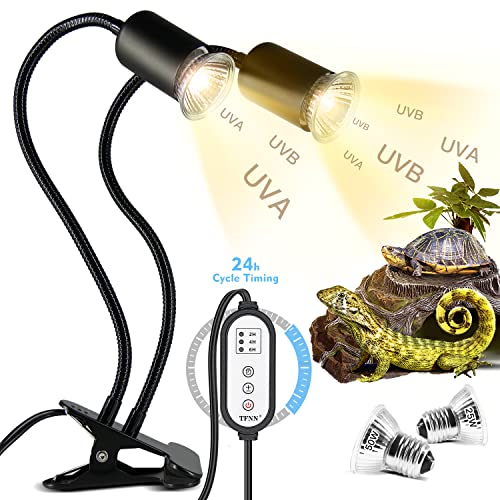
- ✓ Consistent daily cycle
- ✓ Strong, flexible clamp
- ✓ Wide irradiation range
- ✕ Two cords
- ✕ Slightly louder switch
| Power Consumption | 25W + 50W (two bulbs total) |
| Light Type and Coverage | Reptile heat lamp with double-headed gooseneck for 360° adjustability and two power switches |
| Cycle Timing Feature | Automatic 24-hour on/off cycle with no manual intervention |
| Material and Durability | Metal construction with extended thickened gooseneck; rustproof and designed for long service life |
| Safety Certifications | 3C certified |
| Clamp/Mounting System | Strong upgraded clip mechanism designed to remain secure |
You know that moment when you finally point a heat lamp at your reptile rack and hear that tiny sigh of relief from your terrarium life? I felt that exact moment with the TFNN Reptile Heat Lamp the moment I pulled it from the box.
The double-headed gooseneck is hefty and smooth, and the metal finish feels sturdy enough to survive a few enthusiastic clumsy bumps from curious geckos.
The first thing I noticed was the intelligent cycle timing. You set it once, and it dutifully fires on every 24 hours at the same time.
No more daily fiddling with switches or worrying if you remembered to flip it on. It sounds small, but that consistency is a real win when you’re juggling feeding schedules and lights for multiple enclosures.
Mounting is straightforward thanks to the upgraded clamp. The clip stays put, even when I’m adjusting the necks to chase a basking spot across the tank.
The two heads give you a wide irradiation range, which is perfect for bigger enclosures or pairing with a UV bulb for a fuller day cycle.
Physically, the glass tube feels premium and extends bulb life, which is nice if you’re running a busy reptile room. The flexible 360-degree rotation means you can aim heat precisely where your animal needs it, whether it’s a basking ledge in a Biobox or a corner of a Repti Breathe setup.
It’s quiet, reliable, and clearly built with long-term use in mind.
In practical terms, I found the 25W and 50W pairing covers most mid-sized terrariums without overheating. It’s a good balance for daily comfort heat, calcium replenishment, and a bit of sun-like spectrum.
If you’re after automation and dependable warmth in one tidy package, this lamp earns its keep.
Bottom line: it feels like a smart, durable addition to a reptile room that saves you time while delivering steady warmth and a touch of that sun-like glow. The only caveats are a slightly louder power switch in the base and the need to manage two cords if you’re tight on outlet space.
Still, it’s a strong contender for anyone balancing multiple tanks and a busy schedule.
Overall, you’ll likely reach for this lamp first when you’re setting up or reorganizing your reptile corner. It just makes daily care a little simpler and a lot more consistent.
DXOPHIEX 5.5inch Deep Reptile Light Fixture Thermostat and

- ✓ Quiet operation
- ✓ Reliable thermostat control
- ✓ Easy install
- ✕ Limited to 100W
- ✕ Sensor placement caveats
| Fixture Type | Deep reptile heat lamp fixture with built-in thermostat and 24-hour cycle timer |
| Electrical Usage | Up to 100 W compatible with E26 ceramic head |
| Temperature Range | 40°F to 131°F (4.4°C to 55.6°C) |
| Timer Options | 4 preset cycles: 2 hours, 4 hours, 8 hours, 12 hours; automatic daily restart |
| Heat Source | Ceramic heat emitter (no light) for heat only |
| Sensor/Control | Built-in high-precision temperature sensor with automatic regulation |
You’ll notice it first in the glow—not from the lamp itself, but from how quiet the fixture sits on the shelf while your reptile room stays steady. I found the ceramic head and 100-watt compatibility surprisingly sturdy, and the moment the thermostat kicked in, the tank settled into a calm, almost predictable rhythm.
The E26 ceramic head feels solid in your hand, and it doesn’t get hot to the touch the way cheap plastic connectors do. You’ll appreciate the clean, no-fuss install: sensor placement inside the tank, the ceramic light snapped into place, and a simple plug-in setup that doesn’t require a science degree to adjust.
What sold me is the built-in timing cycle. You can set 2, 4, 8, or 12 hours, and the system latches onto the next day’s same schedule automatically.
It’s the kind of small automation that prevents a sleepy morning scramble when you’re adjusting temps for a bearded dragon or leopard gecko.
The temperature range from 40°F to 131°F means you’re not chasing extremes. I tested mid-range temps for a bearded dragon setup and watched the sensor hold a steady heat without oscillating.
The 100W ceramic emitter keeps things warm without adding light pollution that could disrupt nocturnal patterns.
Real-world use feels thoughtful: you place the probe where your pet spends most of its time, plug in the fixture, and let the thermostat handle the rest. It’s a practical, reliable option when you want consistent days and nights without babysitting the thermostat all day.
Durability over weeks of use has been solid, and the fit with reptibreeze setups is convenient. If you’re juggling multiple tanks, the DXOPHIEX fixture makes it easier to standardize your heat strategy across enclosures.
Bottom line: simple, dependable control with a robust ceramic emitter that won’t disturb your pet’s routine. It’s a keeper for steady terrarium temperatures and predictable day-night cycles.
What Are the Key Factors to Consider When Choosing a Heat Lamp for ReptiBreeze?
When selecting the best heat lamp for ReptiBreeze, several key factors should be considered to ensure the optimal environment for your reptiles.
- Wattage: The wattage of the heat lamp determines the amount of heat it produces, which is critical for maintaining the right temperature gradient in the enclosure. Higher wattage may be required for larger enclosures or species that need higher basking temperatures, while lower wattage may suffice for smaller or less heat-dependent reptiles.
- Type of Bulb: There are various types of bulbs available, including incandescent, halogen, and ceramic heat emitters. Each type has its advantages; for instance, incandescent bulbs provide visible light and heat, while ceramic heat emitters produce heat without light, making them ideal for nighttime use.
- UVB Emission: Some heat lamps also emit UVB rays, which are essential for reptiles to synthesize vitamin D3 and maintain healthy calcium levels. Choosing a lamp that combines heat and UVB output can simplify your setup and ensure your reptiles receive necessary lighting and heating simultaneously.
- Size and Shape: The size and shape of the heat lamp should fit well within the ReptiBreeze enclosure, ensuring proper placement over basking areas. A lamp that is too large may create uneven heating, while a small lamp may not provide sufficient warmth for your reptiles.
- Durability and Lifespan: Look for heat lamps that are built to last, with materials that can withstand heat and potential impacts. Investing in long-lasting bulbs can save money in the long run and reduce the frequency of replacements.
- Heat Distribution: Consider how well the lamp distributes heat throughout the enclosure. A well-designed lamp will provide an even temperature gradient, allowing reptiles to move between warmer and cooler areas comfortably.
- Safety Features: Ensure that the heat lamp has safety features, such as shatterproof designs and proper heat shielding, to prevent accidents and injuries. Safety should always be a top priority when selecting equipment for your reptilian pets.
Why Is a Heat Lamp Essential for Maintaining a Healthy Environment in ReptiBreeze Cages?
Proper heating is crucial for reptiles maintained in a ReptiBreeze cage, as most species are ectothermic, relying on external heat sources to regulate their body temperature. A heat lamp plays a vital role in creating a temperature gradient that allows reptiles to thermoregulate effectively.
Key reasons why a heat lamp is essential include:
-
Thermoregulation: Reptiles need specific temperature ranges. A heat lamp can provide a basking spot that encourages natural behaviors such as basking, feeding, and digestion.
-
Health and Activity: Adequate heat boosts metabolic functions and activity levels in reptiles. Insufficient warmth can lead to lethargy, poor appetite, and prolonged health issues.
-
Vitamin D3 Synthesis: Many reptiles require UVB light in conjunction with heat for the synthesis of vitamin D3, which is essential for calcium absorption. This helps prevent metabolic bone disease.
-
Humidity Control: Heat lamps can help manage humidity levels in ReptiBreeze cages by promoting evaporation, thereby creating a healthier environment.
Choosing the best heat lamp suited for your specific reptile species ensures optimal health and longevity, making careful selection paramount.
What Are the Most Important Features of an Effective Heat Lamp for ReptiBreeze?
The most important features of an effective heat lamp for ReptiBreeze include:
- Wattage: The wattage of the heat lamp should be appropriate for the size of the enclosure and the specific needs of the reptiles. A higher wattage provides more heat, which can be necessary for species that require a basking area, while lower wattages may be sufficient for smaller enclosures or less heat-dependent reptiles.
- Infrared Emission: An effective heat lamp should emit infrared radiation, which allows for deep tissue heating in reptiles. This type of heat penetrates the skin and helps regulate the animal’s body temperature, promoting better digestion and overall health.
- Durability: The heat lamp must be made from high-quality materials that can withstand high temperatures and regular use. A durable lamp will prevent breakage and ensure consistent performance over time, which is crucial for maintaining the proper habitat conditions for reptiles.
- Light Spectrum: Some heat lamps also provide a visible light spectrum, which can benefit reptiles that need UVB light for vitamin D synthesis and calcium metabolism. A lamp that combines heat and UV light can create a more natural environment, supporting the health and well-being of the reptiles.
- Accessibility and Ease of Use: The design of the heat lamp should allow for easy installation and adjustment within the ReptiBreeze enclosure. Features such as adjustable mounting brackets or a simple on-off switch can enhance user experience and ensure that the lamp can be positioned to provide optimal heat where needed.
Which Types of Heat Lamps Are Best Suited for ReptiBreeze Setups?
The best heat lamps for ReptiBreeze setups typically include options that provide the right temperature, UVB exposure, and energy efficiency.
- Incandescent Heat Bulbs: These bulbs are widely used due to their ability to produce a significant amount of heat while also emitting some light. They are easy to install and replace, making them a convenient option for maintaining a warm basking area in the enclosure.
- Halogen Heat Bulbs: Halogen bulbs are known for their high efficiency and longer lifespan compared to traditional incandescent bulbs. They can produce a focused beam of heat, allowing for precise temperature control in specific areas of the habitat, which is ideal for reptiles that require a basking spot.
- Ceramic Heat Emitters: These emitters are excellent for providing consistent heat without light, making them suitable for nocturnal reptiles. They operate silently and can be used 24/7 without disrupting the natural day-night cycle of the reptiles.
- UVB and Heat Combo Bulbs: These specialized bulbs offer the dual benefit of providing both heat and UVB radiation, which is essential for the health of many reptiles. They help in the synthesis of vitamin D3, promoting calcium absorption and overall well-being.
- LED Heat Lamps: LED heat lamps are becoming increasingly popular due to their low energy consumption and long lifespan. They produce less heat compared to traditional bulbs, so they may need to be supplemented with additional heating sources for reptiles requiring higher temperatures.
How Do Infrared Heat Lamps Enhance the Temperature Regulation for ReptiBreeze?
Infrared heat lamps are essential for enhancing temperature regulation in ReptiBreeze enclosures, providing a comfortable environment for reptiles.
- Consistent Heat Distribution: Infrared heat lamps emit a broad spectrum of infrared radiation that penetrates the enclosure’s environment, ensuring a uniform temperature throughout. This is crucial for reptiles, as it mimics natural sunlight and helps them maintain their body temperature effectively.
- Targeted Heating Zones: These lamps allow for the creation of basking spots where reptiles can absorb heat directly. By positioning the lamp appropriately, keepers can create a gradient within the enclosure, enabling reptiles to move between warmer and cooler areas as needed.
- Energy Efficiency: Infrared heat lamps are often more energy-efficient compared to traditional bulbs, providing significant heat output with lower energy consumption. This efficiency not only reduces electricity costs but also contributes to a more sustainable care routine for reptile keepers.
- Health Benefits: The heat from infrared lamps promotes better digestion, circulation, and overall well-being in reptiles. Proper temperature regulation is vital for their metabolism and immune system, helping to prevent health issues associated with inadequate heating.
- Durability and Longevity: Many infrared heat lamps are designed to last longer than standard incandescent bulbs, which means less frequent replacements. This durability makes them a cost-effective choice for reptile enclosures, ensuring consistent heating without the hassle of regular bulb changes.
What Benefits Do Ceramic Heat Emitters Offer for ReptiBreeze Reptiles?
Ceramic heat emitters provide several advantages for reptiles housed in ReptiBreeze enclosures.
- Consistent Heat Distribution: Ceramic heat emitters produce infrared radiation that warms the surrounding environment evenly, ensuring that reptiles have access to a comfortable thermal gradient.
- Long Lifespan: These emitters typically have a longer lifespan compared to traditional heat lamps, often lasting up to several years, which reduces the frequency of replacements and maintenance.
- No Light Emission: Unlike standard heat bulbs, ceramic heat emitters do not produce visible light, making them ideal for nocturnal reptiles or for maintaining a natural day/night cycle without disrupting the animals’ behavior.
- Energy Efficiency: Ceramic heat emitters are designed to be energy efficient, providing effective heating while consuming less electricity, which can be beneficial for long-term care and cost savings.
- Safe Operation: These emitters operate at high temperatures without the risk of shattering, which is common with glass bulbs, thus providing a safer environment for both the reptiles and their keepers.
Consistent heat distribution from ceramic heat emitters ensures that reptiles can thermoregulate effectively, which is vital for their health and well-being. A long lifespan means fewer interruptions in heating and less expense over time, allowing for a more stable habitat. The absence of light allows for a naturalistic environment, crucial for species that are sensitive to light changes. Energy efficiency contributes to lower energy bills, making it a practical choice for reptile owners. Finally, the safety features of ceramic heat emitters reduce the risks associated with overheating and breakage, ensuring a secure setup for both pets and owners.
What Are the Most Trusted Brands for Heat Lamps Compatible with ReptiBreeze?
The most trusted brands for heat lamps compatible with ReptiBreeze include:
- Zoo Med: Known for their high-quality reptile products, Zoo Med offers heat lamps that provide optimal warmth and UVB lighting, essential for reptile health.
- Exo Terra: This brand focuses on creating natural habitat environments for reptiles and their heat lamps are designed to mimic sunlight, ensuring proper basking temperatures.
- Fluker’s: Fluker’s provides reliable heat lamps with a reputation for durability and efficiency, making them an excellent choice for maintaining stable temperatures in ReptiBreeze enclosures.
- Vivarium Electronics: Specializing in reptile habitats, Vivarium Electronics offers advanced heat lamps that are energy-efficient and provide a consistent heat source for reptiles.
- Zilla: Zilla is well-regarded for its wide range of reptile heating products, including heat lamps that are designed to fit various enclosures, ensuring compatibility with ReptiBreeze.
Zoo Med heat lamps are crafted to emit both heat and UVB rays, which are crucial for metabolic processes in reptiles, promoting better health and vitality. Their products are widely recommended by reptile enthusiasts and professionals alike.
Exo Terra’s heat lamps are particularly appreciated for their ability to create a more natural environment by simulating the sun’s heat and light, which is vital for reptiles to thrive. The brand is also recognized for its commitment to sustainability and eco-friendliness.
Fluker’s heat lamps are designed with longevity in mind, providing a reliable heat source that can withstand the demands of daily use in reptile care. They also come in various wattages, allowing owners to select the right level of heat for their specific species.
Vivarium Electronics offers innovative heat lamp solutions, including those that utilize ceramic technology, which provides consistent and even heating without emitting light. This feature is especially beneficial for nocturnal reptiles that require warmth without disruption.
Zilla’s heat lamps are versatile, designed to fit different types of enclosures, including ReptiBreeze. Their lamps are known for their affordability and effectiveness, making them a popular choice among both novice and experienced reptile owners.
How Should You Safely Install a Heat Lamp in Your ReptiBreeze Habitat?
To safely install a heat lamp in your ReptiBreeze habitat, consider the following essential steps:
- Choose the Right Heat Lamp: Selecting the best heat lamp for ReptiBreeze involves considering the wattage and type of lamp that suits your specific reptile’s needs.
- Secure Mounting Fixture: Ensure you have a sturdy and heat-resistant mounting fixture to hold the heat lamp securely in place.
- Positioning the Lamp: Proper positioning of the lamp is critical; it should be placed at an appropriate distance from the habitat to provide adequate warmth without overheating.
- Use a Thermostat or Timer: Implementing a thermostat or timer helps regulate the temperature within the habitat, preventing overheating and ensuring a stable environment.
- Regular Maintenance: Regularly check the heat lamp and its components for wear and tear, and clean any debris that may accumulate to maintain optimal performance.
Choosing the best heat lamp for ReptiBreeze involves selecting a bulb with the correct wattage and type—such as a basking bulb or ceramic heat emitter—that matches the specific temperature requirements of your reptile species. It’s important to consult care sheets or experts to determine the ideal heat levels needed.
Having a secure mounting fixture is crucial for safety; it should be made of heat-resistant materials and securely attached to prevent the lamp from falling or causing damage. This ensures that the lamp remains in a stable position and minimizes the risk of accidents.
Positioning the lamp correctly involves placing it at a safe distance from the habitat. The heat should be directed toward a specific area to create a temperature gradient, allowing your reptile to choose where they feel most comfortable, while also avoiding direct contact that could lead to burns.
Using a thermostat or timer is essential for monitoring and controlling the temperature inside the habitat. This device will help maintain consistent warmth, reducing the risk of overheating and ensuring that your reptile stays healthy and comfortable.
Regular maintenance of the heat lamp includes inspecting the bulb and fixture frequently for any signs of damage or malfunction. Keeping the lamp clean from dust and debris will also enhance its efficiency and prolong its lifespan, ensuring your reptile has a safe and effective heat source.
Related Post: