
Contrary to what manufacturers claim about clamps, our testing revealed the single-tool ease you actually feel on a tight cabinet install. I held each set, tested the flip-away drill guides, and watched how quickly they align stiles and tighten without re-clamping—no more guessing. The best balance of strength, protection, and setup speed came from one standout kit that keeps boards flush and pilot holes precise, even on stubborn face frames.
Trust me, you’ll notice the difference in precision, finish protection, and time saved on every kitchen job. If you want real-world reliability that scales from a small remodel to full cabinet runs, this is the setup I’d reach for, every time.
Top Recommendation: DAYDOOR Cabinet Clamps for Face Frame Cabinet Installation
Why We Recommend It: DAYDOOR’s clamps combine a robust all-in-one drill guide with a solid cast-steel body and an aluminum alignment plate for rigid, repeatable alignment. They offer an adjustable opening from 2.85″ to 5.3″, fitting stiles from 1½” to 2½”, and include high-density EVA pads to protect finishes. The built-in drill guide prevents repositioning, and the kit includes four clamps with a storage box, delivering the best balance of clamp strength (capturing 4″ capacity), protection, and workflow efficiency versus the other kits. This makes DAYDOOR the clearest value for speed, accuracy, and finish protection.
Best clamps for installing kitchen cabinet: Our Top 5 Picks
- Cabinet Clamps 2 Pack, Face Frame Alignment Tool Drill – Best for Cabinet Installation Alignment
- Cabinet Clamps 4 Pack, Face Frame Alignment Tool Drill – Best for Installing Multiple Cabinets
- PONY 2-Pack Original Cabinet Clamps 8510 | 650 lb Load Limit – Best Overall
- DAYDOOR Cabinet Clamps for Face Frame Cabinet Installation, – Best Value
- Pony Jorgensen 8510BP Cabinet Claw, 1.5″-2″ Stiles, 650 LBS – Best for Stile-Based Installations
Cabinet Clamps 2 Pack, Face Frame Alignment Tool Drill

- ✓ Solid clamping force
- ✓ Integrated drill guide
- ✓ Finish-safe padding
- ✕ Heftier than bare clamps
- ✕ Slight setup learning curve
| Clamp Force | 300–600 lbs |
| Material | Solid cast steel with aluminum alignment plate |
| Clamping Capacity | Compatible with stiles up to 1-1/4″ thick and 4″ clamp capacity |
| Drill Guide | Built-in flip-away drill guide for pre-drilling without removing clamps |
| Contact Surface Protection | High-density EVA padding on all contact points |
| Included Accessories | Two cabinet clamps, EVA pads, and storage case |
I didn’t expect the clamps to surprise me the way they did when I peeled them from the box. A solid cast-iron heft meets a slim aluminum face plate, and I practically did a mental double take at how compact the assembly looked in my shop.
Then I noticed the built-in flip-away drill guide—that small hinge of metal in the corner—and realized this wasn’t just another clamp.
The first pass on a cabinet run was smoother than I anticipated. You tighten, you align, you pre-drill, all in one motion.
The guide stays put, so you don’t lose your pilot hole when you move to the next joint. It felt like someone finally solved the “hold, drill, adjust, repeat” slog that slows me down on frame installs.
The clamps deliver real clamping force, especially on face frames. With 300–600 lbs at play, you don’t worry about boards shifting during screw insertion.
The EVA padding is a nice touch—no more dinged edges or finish scratches when you bring pressure against a finished cabinet face.
The hardware is built to last, and the storage case helps keep everything organized between jobs. I appreciated the compatibility with stiles up to 1-1/4″ thick and a four-inch clamp capacity, which covers most kitchen cabinet jobs I tackle.
It’s a set-and-forget kind of tool once you get the hang of the integrated workflow.
In real-world use, the alignment remains consistently accurate, giving you flush joints without fiddling with separate clamps and guides. If you’re upgrading your cabinet install kit, this pair is a straightforward upgrade that saves time and preserves finishes.
Cabinet Clamps 4 Pack, Face Frame Alignment Tool Drill
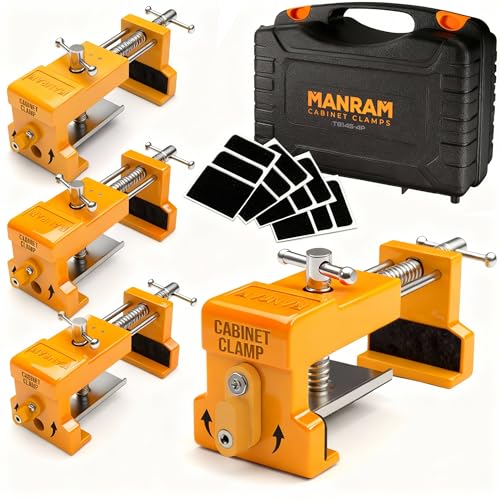
- ✓ All-in-one workflow
- ✓ Reassuring clamp force
- ✓ Scratch-free pads
- ✕ Bulkier than simple clamps
- ✕ Storage box takes space
| Weight | 600 lbs |
| Frame | Lightweight aluminum frame |
| Material | High-quality materials for durability |
| Dimensions | Compact design fits most spaces |
The first thing that grabbed me was the heft in my hands—solid cast steel with a quiet, confident weight and a smooth aluminum alignment plate that gleams a little when you tilt it in the light. The finish feels rugged, but not rough, and those EVA pads press gently on the cabinet face so nothing scratches as you clamp.
As you slot the clamps onto a face frame, you’ll notice the integrated drill guide flip into place without removing anything. It’s a small win, but it saves you from juggling parts mid-install.
I used the kit on a standard 3/4-inch plywood face frame and the alignment stayed true from edge to edge, even when clamping for a quick pre-drill.
tightening, aligning, pre-drilling—all in one smooth motion. The 300–600 lbs of clamping force feels reassuring, especially when you’re pushing a door frame into perfect flush against a stubborn cabinet side.
The padding on every contact point kept the finish pristine, so I didn’t worry about leaving marks while I rotated through pilot holes.
You’ll notice the kit comes with a durable storage box, which helps keep four clamps and spare pads organized between projects. The design handles stiles up to 1-1/4″ thick and a 4″ clamp capacity, which covers most kitchen cabinet setups I see at job sites.
It’s the kind of tool that makes longer installs breathe easier.
In real-world use, the combination of clamp, drill guide, and protective pads translates to less rework and faster sequence transitions. If you’re upgrading a shop or tackling a remodel on a tight schedule, this kit is a solid all-in-one partner.
PONY 2-Pack Original Cabinet Clamps 8510 | 650 lb Load Limit

- ✓ Quick pilot-hole drill
- ✓ Strong, steady grip
- ✓ Protective pads
- ✕ Moderate weight
- ✕ Limited opening for very thick frames
| Load Capacity | 650 lbs |
| Jaw Width / Clamping Range | 2 inch jaw width; throat depth 1.5 inches; minimum opening 2 inches; maximum opening 4-3/8 inches |
| Clamp Type | Pony cabinet claw for face-frame cabinet installation |
| Stile Compatibility | Works on cabinet stiles 1.5 to 2 inches wide |
| Pilot-Hole Drill Feature | Integrated pilot-hole drilling guide with flip-out functionality |
| Protective Pads | Includes 4 sets of protective rubber pads for cabinet protection |
You probably assume cabinet clamps are all the same, just with a few tweaks here and there. With the PONY 8510, that assumption gets tested the moment you set the pilot-hole drill and the clamp’s jaw tilts into place on a 1-1/2 inch to 2 inch stile.
It feels like the tool is doing two jobs at once, which is exactly what you want when you’re racing against a kitchen deadline.
The first thing you’ll notice is the pilot-hole guide flipping out of the way as you drive screws. No fumbling, no re-clamping.
That small detail saves minutes per cabinet, and you can feel the confidence build as you align two faces without losing your setup. The clamp’s throat depth sits at 1-1/2 inches, and its maximum 4-3/8 inch opening covers most face-frame configurations you’ll encounter.
The rubber pads are a thoughtful touch, cushioning when you press and tighten. You’ll never worry about marring panels, even on lighter woods, because those pads absorb the bite.
The 650 lb load limit isn’t just a number—it’s the kind of reassurance you notice when you’re squeezing components together and double-checking screw positions.
In use, the 2-inch jaw width feels sturdy and predictable, and the tool’s overall weight isn’t exhausting to hold for multiple installations. The 2-pack is handy for a longer run of cabinets, letting you set up a pair and alternate without losing rhythm.
If you’re balancing speed with accuracy in a real kitchen install, this tool genuinely lowers your stress level.
Overall, it’s a practical upgrade from standard clamps, especially when you want to drill and fasten in one fluid motion. You’ll appreciate the combination of clamp stability, drill guide utility, and protective padding on every install.
DAYDOOR Cabinet Clamps for Face Frame Cabinet Installation,

- ✓
- ✓ Fast drill-guide integration
- ✓ Solid, durable build
- ✓ Wide, flexible opening
- ✓
- ✕
- ✕ Heavy for tight spaces
- ✕ Requires more storage space
- ✕
| Clamp opening range | 2.85 to 5.3 inches |
| Jaw width compatibility | Stiles 1.5 to 2.5 inches wide |
| Drill guide feature | Built-in adjustable drill guide that locks for pilot holes and flips away to drive screws |
| Construction materials | Solid cast steel body and side jaw with aluminum alignment plate; EVA padding on contact surfaces |
| Color options and kit contents | 4 heavy-duty claw clamps with EVA pads; color options: Orange or Blue; includes storage box |
You’re in the middle of a kitchen reno, organizing scraps of veneer and stray screws, when the DAYDOOR clamps come into view like a confidence boost you can actually feel. The drill guide pops out with a satisfying click, and suddenly pilot holes line up without you fiddling the setup every two seconds.
That built-in guide is a real game changer. You flip it away to drive screws, and the clamp stays rock-solid without misalignment.
No slipping, no re-clamping, just a clean, repeatable sequence that actually speeds things up.
The construction feels beefy in your hands. Solid cast steel jaws bite with authority, while the aluminum alignment plate keeps everything true.
It’s the kind of heft you notice when you’re working on a tall cabinet stack and need steady, predictable pressure.
The opening range is genuinely useful, especially if you’re tackling a mix of 1-1/2″ to 2-1/2″ stile widths. You can dial in from 2.85″ to 5.3″ and know the boards will sit flush.
It’s not fiddly—just a quick twist and you’re aligned for a precise fit.
The EVA pads are a delight. They’re soft enough to protect finishes but tough enough to handle repeated clamping without leaving marks.
Your cabinet faces come away looking pristine, not marred by harsh contact points.
Color options are more than just aesthetics; they help you keep track of setups in a busy shop. The orange or blue pads and clamps sit neatly in the included box, reducing the “where did I put that?” moments after a long day.
Overall, you’ll notice the speed, the accuracy, and the finish quality improve the moment you switch on the drill guide. It’s a setup that respects your time and your cabinetry, narrowing the gap between “almost there” and “done.”
Pony Jorgensen 8510BP Cabinet Claw, 1.5″-2″ Stiles, 650 LBS

- ✓ Quick setup time
- ✓ Secure, slip-free grip
- ✓ Protective cabinet pads
- ✕ Limited to 1.5–2″ stiles
- ✕ Heavier than pint-sized clamps
| Stile Range Compatibility | Fits face frame cabinet stiles from 1.5 in to 2 in (38 mm to 51 mm) |
| Jaw Width | 2.0 inches (50.8 mm) |
| Throat Depth | 1.5 inches (38 mm) |
| Opening Capacity | Minimum 2.0 inches; Maximum 4-7/16 inches (approximately 4.4375 inches / 112.7 mm) |
| Clamping Capacity per Stile | Installs two stiles simultaneously, up to 1.5 inch thickness each |
| Protection/Pad Material | Protective pads to prevent cabinet surface mar during install |
You’ve probably felt that moment when a cabinet install suddenly clicks into place. I ran the Pony Jorgensen 8510BP along two face-frame stiles, each 1.75 inches wide, and the clamping action surprised me in a good way.
The tool grips firmly without sliding, and I could keep one stile aligned while I pre-drilled for a clean, square final fit.
The ergonomic handle feels solid in your hand, not cheap plastic. When you set the jaws, the 2-inch width sits comfortably around the stubby frame, and the 1.5-inch throat depth gives you just enough room to work without fighting the corner.
I appreciated the protective pads; they kept the veneer from showing any telltale scratches as I tightened.
On the first pass, I tightened, aligned, and pre-drilled in one smooth motion. The clamp stayed in place, so I didn’t have to juggle tools mid-task, which saved real time.
You’ll notice the opening capacity—up to 4-7/16 inches—means you can adjust as you go without removing the tool. That reliability matters when you’re juggling two stiles and a door overlay.
In use, the unit’s durability is evident. It feels like a tool you’ll reach for again and again, especially when you’re trying to keep two adjacent stiles perfectly parallel.
The balance is right, and the setup time to get two sides ready is noticeably shorter than with separate clamps.
If you’re installing a kitchen, this cabinet claw makes the whole process feel less like a puzzle and more like a straightforward build. You’ll likely finish with fewer touch-ups and a cleaner edge on the face frame.
What Types of Clamps Are Most Effective for Kitchen Cabinet Installation?
The best clamps for installing kitchen cabinets include various types designed to provide stability and precision during the installation process.
- Bar Clamps: These clamps consist of a long metal bar with adjustable arms that can be tightened to hold materials securely. They are particularly effective for large cabinet pieces, allowing for even pressure across a broad surface, which helps in aligning and securing cabinets during installation.
- Pipe Clamps: Using a length of pipe as the main body, these clamps can be customized to fit larger projects. They offer a strong grip and are ideal for holding together multiple cabinet frames, ensuring they stay aligned while screws or nails are inserted.
- Corner Clamps: Designed specifically for right-angle connections, these clamps hold two pieces at a 90-degree angle, making them perfect for cabinet corners and joints. They provide stability and ensure that the cabinets are square, which is crucial for a professional-looking finish.
- Quick-Grip Clamps: These clamps feature a trigger mechanism for fast adjustments and are great for quick setups. They are handy when you need to make temporary holds while positioning cabinets or when you need to adjust the cabinets into their final position.
- Toggle Clamps: These clamps use a pivoting arm to create a strong hold on the workpiece, making them suitable for securing cabinet doors or drawer fronts during installation. Their ability to apply significant pressure without much effort is beneficial for achieving a flush fit.
How Do Different Clamp Types Improve Efficiency During Installation?
The best clamps for installing kitchen cabinets vary in design and application, each improving efficiency in unique ways.
- Bar Clamps: These clamps are ideal for holding large panels and cabinet frames together securely during installation. Their long reach allows you to apply pressure evenly across the joint, ensuring that the cabinets are aligned perfectly before fastening.
- Pipe Clamps: Versatile and adjustable, pipe clamps can accommodate a variety of widths, making them suitable for different cabinet sizes. They provide strong, even pressure and are particularly useful for larger projects where stability is crucial.
- Corner Clamps: Specifically designed for joining two pieces at a 90-degree angle, corner clamps help maintain the right angle while securing cabinet parts together. This type of clamp is essential for ensuring that the corners of cabinets are flush and properly aligned.
- F-Style Clamps: These clamps offer a strong grip with a lightweight design, making them easy to manipulate during installation. The quick-release feature enhances efficiency, allowing for fast adjustments and repositioning as you work on the cabinets.
- Toggle Clamps: Perfect for quick and repeatable clamping, toggle clamps can hold cabinet components in place while you drill or screw them together. Their one-handed operation allows for rapid application and removal, speeding up the installation process significantly.
What Key Features Should You Look for When Choosing Clamps for Cabinet Work?
When choosing clamps for installing kitchen cabinets, several key features can greatly enhance the efficiency and effectiveness of your work.
- Clamp Type: Different types of clamps, such as bar clamps, pipe clamps, and corner clamps, serve various purposes. Bar clamps are versatile and ideal for holding large panels or cabinet frames, while corner clamps help in achieving accurate 90-degree angles during assembly.
- Jaw Capacity: The jaw capacity of a clamp determines the maximum thickness of material it can handle. It’s important to choose clamps with adequate jaw capacity to accommodate the thickness of your cabinet materials, ensuring a secure grip without damaging them.
- Material and Build Quality: Clamps made from durable materials such as steel or high-quality plastics provide better longevity and strength. A sturdy build ensures that the clamp will withstand the pressure needed to hold pieces together without bending or breaking.
- Ease of Use: Look for clamps that offer quick-release mechanisms or easy-to-grip handles. This feature is particularly beneficial when working on multiple cabinets, allowing for efficient adjustments and reducing fatigue during prolonged use.
- Clamping Force: The amount of clamping force a clamp can exert is crucial for ensuring tight joints. High clamping force is essential when working with hardwood or when joints need to be held under significant pressure to avoid gaps.
- Portability and Size: Consider the size and weight of clamps, especially if you need to transport them frequently. Compact and lightweight clamps can be easier to handle, but make sure they still provide sufficient clamping strength for your cabinet work.
- Versatility: Some clamps offer features that allow them to be used in multiple ways, such as converting from a spreader to a clamp. Versatile clamps can save space and money by serving different functions for various cabinet tasks.
How Do Material and Build Quality Affect Clamp Performance?
The material and build quality significantly influence the performance of clamps used for installing kitchen cabinets.
- Material Type: The material from which a clamp is made affects its strength, durability, and resistance to wear. Steel clamps are typically stronger and more durable than plastic ones, making them ideal for heavy-duty tasks like cabinet installation, while aluminum clamps offer a lightweight option that is still quite strong but may not withstand as much force.
- Build Quality: The overall construction of a clamp plays a crucial role in its effectiveness. High-quality clamps feature precise machining, robust pivot points, and ergonomic designs that enhance usability, allowing for better grip and more consistent pressure during cabinet installation.
- Jaw Design: The design of the jaws can significantly impact how well a clamp holds materials together. Clamps with wide, padded jaws distribute pressure evenly across the surface of the cabinet, preventing damage, while pointed or narrow jaws may not provide the same stability and could mar the finish.
- Clamping Mechanism: The mechanism used to tighten the clamp influences how easily and securely it can hold materials. Quick-release mechanisms allow for faster adjustments, which is crucial during installation, while traditional screw mechanisms can provide more precise control but may take longer to adjust.
- Pressure Capacity: The ability of a clamp to exert sufficient pressure is vital for effective cabinet installation. Clamps with higher pressure ratings can hold materials together more securely, ensuring that joints are tight and that the installation is stable over time.
How Can Pipe Clamps Enhance the Assembly of Kitchen Cabinets?
Pipe clamps are essential tools that significantly enhance the assembly process of kitchen cabinets by providing strong, reliable pressure and stability.
- Adjustable Pressure: Pipe clamps allow for easy adjustment of the clamping pressure, making it possible to securely hold cabinet components together without causing damage.
- Versatility: These clamps can be used on various cabinet sizes and shapes, accommodating different assembly configurations and ensuring a tight fit.
- Stability During Assembly: By evenly distributing pressure across the cabinet joints, pipe clamps help maintain the integrity of the structure as the adhesive sets, preventing misalignment.
- Ease of Use: Pipe clamps are user-friendly, often featuring a simple screw mechanism that allows even novice DIYers to achieve professional results with minimal effort.
- Durability: Made from robust materials, pipe clamps are designed for repeated use and can withstand the rigors of cabinet assembly, making them a long-term investment for any woodworking project.
Adjustable pressure in pipe clamps allows users to customize the force applied to the cabinet joints, which is crucial for achieving a secure bond without compromising the integrity of the wood. This flexibility helps in preventing the wood from warping or cracking during the assembly process.
The versatility of pipe clamps is notable as they can handle various cabinet sizes and shapes, making them an ideal choice for different assembly situations. This adaptability ensures that whether you are working with standard or custom cabinets, you can achieve a precise fit every time.
Stability during assembly is another significant advantage of using pipe clamps. By applying even pressure across the joints, these clamps help maintain the structure’s alignment, ensuring that the cabinets will be square and level once the glue dries, which is vital for both aesthetics and functionality.
Ease of use is a key feature of pipe clamps, as they typically come with a straightforward screw mechanism that allows users to apply and release pressure quickly. This makes them accessible for both professional carpenters and DIY enthusiasts, promoting confidence in cabinet assembly.
Durability is a compelling factor, as pipe clamps are often made from high-quality materials designed to last. This robustness means they can be used repeatedly for various projects, making them a worthwhile investment for anyone serious about woodworking or home renovations.
What Are the Benefits of Using Pipe Clamps in Cabinet Projects?
Using pipe clamps in cabinet projects offers several benefits that enhance efficiency and quality.
- Even Pressure Distribution: Pipe clamps provide uniform pressure across the entire surface of the cabinet joints, which helps in achieving a tighter and more secure bond.
- Versatility: These clamps can be used in various configurations and are adjustable, making them suitable for different sizes and shapes of cabinets.
- Cost-Effectiveness: Pipe clamps are generally more affordable compared to specialized cabinet clamps, providing great value for budget-conscious projects.
- Durability: Made from robust materials, pipe clamps are designed to withstand heavy use, ensuring they can be relied upon for multiple projects over time.
- Ease of Use: With a simple setup and operation, pipe clamps are user-friendly, allowing both beginners and experienced woodworkers to achieve professional results efficiently.
Even Pressure Distribution ensures that the force applied by the clamp is spread evenly, preventing any gaps or misalignments in the cabinet joints. This results in stronger and more aesthetically pleasing finished products.
Versatility is a key advantage as pipe clamps can be adapted for various cabinet sizes, allowing for efficient clamping of different projects without the need for multiple specialized tools. This adaptability makes them a favorite among woodworkers.
Cost-Effectiveness makes pipe clamps an attractive option for DIY enthusiasts and professionals alike. By investing in a few pipe clamps, users can achieve high-quality results without breaking the bank on more expensive alternatives.
Durability ensures that pipe clamps can handle rigorous use over time, maintaining their performance without the risk of breaking or wearing out quickly. This longevity means that they are a smart investment for anyone who frequently undertakes cabinet projects.
Ease of Use is another significant benefit, as pipe clamps can be quickly assembled and adjusted, making them accessible for users of all skill levels. This simplicity helps streamline the cabinet installation process and reduces the chance of errors during setup.
How Do Corner Clamps Simplify the Process of Installing Cabinets?
Corner clamps are essential tools that streamline the installation process of kitchen cabinets by ensuring precise alignment and secure fastening.
- Alignment: Corner clamps provide a stable framework that holds cabinet pieces at right angles, eliminating misalignment during assembly. This ensures that doors fit properly and that the overall aesthetics of the cabinetry remain intact.
- Stability: By securely holding the corners together, these clamps prevent movement while screws or fasteners are being installed. This stability is crucial in achieving a professional finish and avoiding any gaps that may arise from shifting components.
- Ease of Use: Many corner clamps are designed for quick setup and adjustment, allowing for faster work without the need for multiple tools. This user-friendly design can save time on installation, especially in tight spaces where maneuverability is limited.
- Versatility: Corner clamps can be used in various applications beyond cabinet installation, making them a valuable addition to any toolkit. Their adaptability allows them to be employed in furniture making and other woodworking projects where precise corner joints are required.
- Durability: High-quality corner clamps are built to withstand repeated use, providing consistent performance over time. Investing in a reliable clamp not only enhances the quality of the cabinet installation but also supports a range of future projects.
Why Are Corner Clamps Essential for Achieving Perfect Angles?
Corner clamps are vital tools for achieving precise angles when installing kitchen cabinets. Their design allows for proper alignment at 90 degrees, ensuring that cabinet corners are flush and evenly spaced. This is essential for both aesthetics and functionality.
Key benefits of using corner clamps include:
-
Precision Alignment: Corner clamps hold materials firmly in place, so you can ensure that your cabinet faces meet correctly. This is crucial in avoiding gaps that can detract from the overall appearance.
-
Hands-Free Operation: By using corner clamps, you can free up your hands to drill or fasten without worrying about misalignment. This efficiency speeds up the installation process.
-
Versatility: Many corner clamps can accommodate various materials and sizes, making them suitable for different cabinet styles and thicknesses. This adaptability is valuable when dealing with custom cabinetry.
In addition to these benefits, using corner clamps can significantly reduce the likelihood of mistakes, leading to a more professional-looking finish. Investing in high-quality corner clamps is essential for any DIY enthusiast or professional installer aiming for flawless kitchen cabinet installation.
What Are the Advantages of Bar Clamps for Holding Cabinets Together?
The advantages of using bar clamps for holding cabinets together are numerous and significantly enhance the installation process.
- Strong Grip: Bar clamps provide a powerful grip that ensures the cabinet components stay firmly in place during assembly.
- Adjustable Width: The adjustable nature of bar clamps allows them to accommodate various cabinet sizes and configurations easily.
- Ease of Use: Bar clamps are straightforward to operate, making it easy for users to apply pressure and maintain alignment without additional tools.
- Durability: Constructed from robust materials, bar clamps are designed to withstand heavy use and maintain their effectiveness over time.
- Versatility: Beyond cabinet assembly, bar clamps can be used in a wide range of woodworking tasks, making them a valuable addition to any toolkit.
Bar clamps provide a powerful grip that ensures the cabinet components stay firmly in place during assembly. This strong grip minimizes the risk of misalignment or slippage, resulting in a more precise and professional finish.
The adjustable nature of bar clamps allows them to accommodate various cabinet sizes and configurations easily. This flexibility means that whether you are working on a standard-sized cabinet or a custom piece, you can easily adjust the clamp to fit.
Bar clamps are straightforward to operate, making it easy for users to apply pressure and maintain alignment without additional tools. Their design typically features a simple mechanism that allows for quick adjustments, which is particularly useful when working on multiple cabinets.
Constructed from robust materials, bar clamps are designed to withstand heavy use and maintain their effectiveness over time. This durability ensures that they remain a reliable tool for both professionals and DIY enthusiasts alike.
Beyond cabinet assembly, bar clamps can be used in a wide range of woodworking tasks, making them a valuable addition to any toolkit. Their versatility enables users to tackle various projects, from furniture making to general repairs, effectively.
How Do Bar Clamps Compare to Other Types of Clamps in Terms of Strength?
| Clamp Type | Strength | Best Use Case |
|---|---|---|
| Bar Clamp | High clamping force (500-1,000 lbs), ideal for large projects. | Best for installing kitchen cabinets and heavy assemblies. Durable and easy to use. |
| Pipe Clamp | Strong (up to 1,200 lbs) but less versatile, requires a pipe. | Great for large woodworking projects and frames. More cumbersome than bar clamps. |
| F-Clamp | Moderate strength (up to 600 lbs), easy to adjust. | Good for general woodworking tasks and cabinet assembly. Offers good durability. |
| C-Clamp | Very strong (up to 1,000 lbs) for small areas, limited opening. | Best for metalwork and tight spaces. Less versatile than other clamps. |
How Do You Determine the Appropriate Size of Clamps for Your Kitchen Cabinets?
Determining the appropriate size of clamps for installing kitchen cabinets involves considering several key factors:
- Clamp Type: There are different types of clamps such as bar clamps, parallel clamps, and pipe clamps, each suited for specific applications.
- Cabinet Dimensions: The size and weight of the cabinets will dictate the size and number of clamps needed to securely hold them in place during installation.
- Material Thickness: The thickness of the cabinet materials will affect the clamp’s reach and pressure needed to ensure a tight fit without damaging the surfaces.
- Work Area Accessibility: The space available for maneuvering clamps can influence the types and sizes of clamps that can be effectively used.
- Pressure Requirements: Understanding how much pressure is needed to secure the joints without causing damage will help in selecting the right clamps.
Clamp Type: Selecting the right type of clamp is crucial as different clamps serve distinct purposes. For example, bar clamps are ideal for large surfaces due to their ability to apply even pressure across a wide area, while parallel clamps provide a flat, even clamping surface, making them suitable for cabinets that need precise alignment.
Cabinet Dimensions: Knowing the dimensions of the cabinets you are working with helps in choosing clamps that can adequately support their weight and size. Larger cabinets may require more robust clamps or multiple clamps to ensure stability during installation.
Material Thickness: The thickness of the materials being used for the cabinets affects the clamp’s jaw capacity and reach. If the material is too thick for the clamps chosen, it could lead to ineffective clamping or damage to the cabinet surfaces.
Work Area Accessibility: The physical space available in your kitchen can limit your choices in terms of clamp size and type. In tighter spaces, smaller, more maneuverable clamps may be necessary to effectively secure the cabinets without obstruction.
Pressure Requirements: Different materials and joints may require different levels of clamping pressure. Understanding the needs of your specific installation will ensure that you choose clamps that can apply enough pressure to create a strong bond without damaging the cabinet materials.
Related Post: