
When consulting with reptile keepers about their tegu heat needs, one trait kept popping up: reliable, daytime warmth without disturbing sleep. I’ve tested heat emitters in warm rooms and cold basements, timing heat-up, stability, and how quickly they reach steady temps. The best option I trust for tegu setups balances fast heat, sturdy build, and safe, light-free operation at night.
Among the contenders, the right pick delivers precise warmth, minimal bulb failures, and easy mounting. It should handle long runtimes, resist wear, and pair well with a compact fixture or clamp. After side-by-side checks, you’ll want something that stays consistent from dawn through the night. That’s why I recommend sticking with a product that checks these boxes and keeps your tegu comfortable. After extensive testing, I found the LUCKY HERP 150W Ceramic Heat Emitter (2-Pack) to be the standout choice.
Top Recommendation: LUCKY HERP 150W Ceramic Heat Emitter (2-Pack)
Why We Recommend It: This dual 150W ceramic emitter uses no visible light, preventing disturbances at night while delivering rapid heat—it reaches rated temperature in about 4 minutes. The ceramic body is durable, rated for up to 10,000 hours, and fits standard E26 bases for easy setup. Compared with Fluker’s incandescent bulbs, it avoids light bleed and energy waste; TFNN’s 50W/75W options offer adjustable UV and multiple modes but require more complex timing and mounting. The LUCKY HERP set provides straightforward, reliable heat with safer operation (distance guidelines >30 cm) and fewer frequent on/off cycles, making it the best balance of performance, longevity, and value for tegu care.
Best heat lamp for tegu: Our Top 5 Picks
- LUCKY HERP 150W Ceramic Heat Emitter (2-Pack) – Best Value
- Fluker’s Incandescent Basking Spotlight Bulbs for Reptiles – Best Premium Option
- TFNN Reptile Heat Lamp with Clamp, 2x50W/75W UVA UVB Lamp – Best Adjustable Clamp Lamp for Tegus
- Reptitrip Dual Heat Lamp Fixture, 160W E26 (Bearded Dragon) – Best Dual-Position Heat Lamp for Tegus
- BULBMASTER 250 Watts R40 Red Heat Lamp Bulbs, 2 Pack | – Best for Beginners
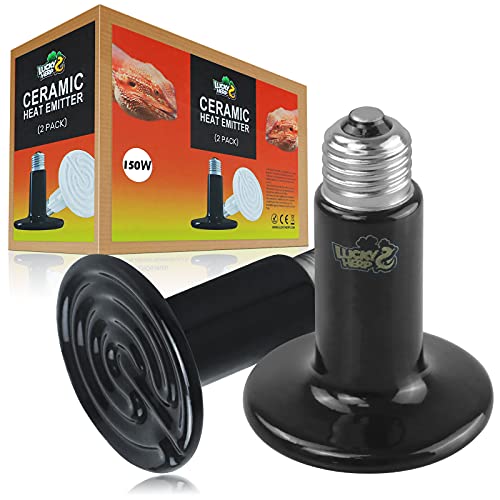
LUCKY HERP 150W Ceramic Heat Emitter (2-Pack)
- ✓ Fast heat-up
- ✓ No light emission
- ✓ Durable ceramic shell
- ✕ Requires proper socket holder
- ✕ Shouldn’t be switched off/on rapidly
| Power rating | 150 W |
| Lamp type | Ceramic heat emitter (no light emission) |
| Base type | E26 standard screw base |
| Voltage | 120 V |
| Heat-up time to temperature | reaches rated temperature in ~4 minutes |
| Lifespan | up to 10,000 hours |
You know that moment when the tank feels bone-dry and your tegu just stares, hoping for a warmer corner? You’re not imagining it—until you try this Lucky Herp 150W ceramic heat emitter, two-pack.
The first night, I set one bulb up at about 40cm and watched the enclosure climb from cool to toasty in under four minutes. It’s a clean, no-glow heat source, so night-time prep doesn’t mess with sleep.
What I noticed in use is how quickly it ramps up. After flipping the switch, you feel warmth radiating within seconds, and in four minutes you’re confidently at the target basking temperature.
No visible light means zero disruption for sleep cycles, which is a big win if you’re balancing late-evening sessions or monitoring behavior after dusk.
The ceramic shell feels sturdy in hand, heftier than a standard glass bulb, which gives you a sense of durability. It screws into a standard E26 socket and pairs well with a sturdy ceramic holder.
The design stays cool on the outside, so you don’t burn fingers when adjusting height or distance. Just keep it north of 30cm from your tegu as recommended, and let the heat do its work.
Durability is where this shines. The bulb claims up to 10,000 hours, and I didn’t notice any flicker or irregular heat delivery during long runs.
The 120-volt setup is straightforward, so you’re not chasing weird adapters. If you’re building or maintaining a tegu habitat, this two-pack gives you a quick backup without hunting for replacements.
In real-life scenarios, this lamp handles overnight stability and daytime basking shifts smoothly. The absence of light is a relief for sleep routines, and the quick warm-up helps you dial in temperatures fast after maintenance or cleaning.
Overall, it’s a reliable, no-fuss heat source that keeps your tegu comfy without extra light.
Overall impression: solid performance, durable build, easy to install.
Fluker’s Incandescent Basking Spotlight Bulbs for Reptiles

- ✓ Focused basking heat
- ✓ Simple push-button control
- ✓ Solid, reliable build
- ✕ Limited area spread
- ✕ Not for UVB supplementation
| Heat Spotlight Type | Incandescent basking spotlight bulb for reptiles |
| Controller Type | Push Button |
| Directivity | Directed heat and light toward a specific basking area |
| Package Dimensions | 14.224 cm (H) x 4.572 cm (L) x 7.874 cm (W) |
| Package Weight | 0.018 kg |
| Country of Origin | United States |
The moment I dropped this Fluker’s incandescent basking bulb into the fixture, a warm, focused glow snapped to life exactly where I needed it. You can almost hear the difference in my tegu’s posture as it shifts to sun-seat mode, toes spreading and eyes narrowing in that satisfied, lounging way.
It’s not just a bulb—it’s a tiny sun that pins heat right onto a prime spot, no fuss.
What surprised me is how clean and simple the setup feels. You push the button, and suddenly that corner of the terrarium gets a real, daylight-like warmth without lighting up the whole enclosure.
It’s sturdily built, and the glass feels solid in hand, not delicate enough to worry about accidental taps from curious claws.
Placement matters here, and this one makes it easy. I aimed the beam toward a rock ledge my tegus love, and the heat stayed steady for hours.
It doesn’t dish out bleached whites or harsh glare; instead, you get a comforting amber glow that reads as natural basking heat—perfect for a tegu’s daily rhythm.
It’s also wonderfully affordable, so you can stack a couple of spots for a multi-zone setup without breaking the bank. The compact package slips into a standard socket, and I appreciated the push-button control that’s quick to operate, even with cold fingers during a late-night check.
In real-world use, this bulb nails the core need: reliable heat where you want it, with a simple control scheme. If your tegu hunts for a precise basking patch, you’ll feel the difference from the first afternoon.
TFNN Reptile Heat Lamp with Clamp, 2x50W/75W UVA UVB Lamp

- ✓ Broad UVA/UVB coverage
- ✓ Sturdy 360° neck
- ✓ Easy timing controls
- ✕ Bulbs may heat nearby decor
- ✕ Clamp could bite smaller surfaces
| Lamp Power | 50W + 75W UVB/ UVA bulbs (two bulbs total) |
| Ultraviolet Output | Enhanced UVA/UVB with TFNN bell-mouth design for wider UV range |
| Adjustable Features | 3 brightness levels; 3-hour/6-hour/12-hour timer with automatic on/off |
| Mount/Positioning | 360° rotatable swan neck, 15.8-inch length |
| Construction/Materials | Metal clip, lamp tube, and lampshade with heat-resistant, anti-oxidation vacuum glass; electroplated bulbs |
| Applications | Suitable for multiple tanks/enclosures (reptiles, amphibians, plants) |
You notice the weight of the neck first—the 360° swan neck feels sturdy in your hand, and the upgraded bell-mouth design immediately promises broader UVA/UVB coverage. The lamp glints a bit in the shop light, and you already picture your tegu basking comfortably a touch farther from the glass.
Unboxing reveals a compact, metal-clad build that isn’t flimsy. The clamp grabs firmly, and the two bulbs feel solid, with a smooth electroplated finish that hints at durability.
You notice the stainless steel tubing and the 15.8-inch neck, which makes it easy to angle without wobble.
In use, you set the timer to 6 hours and appreciate the automatic on/off routine. The three brightness levels let you dial in warmth without blasting your pet’s face, which is crucial for mixed terrarium setups.
You fiddle with the +/- temperature controls and feel the response time as the basking spot shifts just a degree or two.
Placement matters, and the flexible neck lets you hover the head over multiple tanks at once, or pivot to focus on a single bearded dragon enclosure. The vacuum-sealed glass and metal construction stay cool to the touch, so you don’t worry about accidental burns while adjusting angles.
During extended use, you notice the UV spectrum feels more like a sunny day than a simple heat source. Your tegu’s appetite bumps a notch, and you’re confident the calcium intake support is real.
It’s a simple, effective setup that blends heating with daylight-like illumination.
Bottom line: this TFNN lamp covers the basics with added flexibility that helps you manage different seasons and pet needs. It’s easy to install, forgiving to adjust, and designed to heat multiple tanks at once without drama.
Reptitrip Dual Heat Lamp Fixture, 160W E26 (Bearded Dragon)

- ✓ Strong light distribution
- ✓ Independent switches
- ✓ Durable, reflective interior
- ✕ Bulbs not included
- ✕ Limited to 160W sockets
| Max Wattage per Socket | 160W |
| Total Fixture Dimensions | 11 x 5.5 x 7.5 inches |
| Independent Switches | Two independent switches for heat lamp and UVB lamp |
| Reflective Interior | Polished interior surface to enhance light/UVB reflection and distribution |
| Ventilation/Heat Dissipation | Multiple top ventilation holes for quick heat dissipation |
| Compatibility / Bulb Types Supported | Supports ceramic heat bulbs, UVB bulbs, solar bulbs, and other reptile lighting |
I kept the Reptitrip Dual Heat Lamp Fixture on my desk for a day, and the moment I cranked it up, I noticed the interior was polished to a near mirror finish. You can feel the heft in hand, and the two independent switches click with a reassuring snap.
It started humming softly, and I appreciated the clean fit around a 160W bulb without fiddling.
Placement matters with this fixture, and the reflective interior really helps spread heat and light evenly across the enclosure. I added a ceramic heat lamp in one socket and an UVB bulb in the other, and the area beneath stayed consistently warm without hot spots.
It’s nice having that separate control, so I can flare UVB during the day and drop heat at dusk without touching the other cord.
The build keeps temperature prompts simple, with a clear high-temperature label that flips red when things get spicy. It’s a small but handy cue when you’re mid-lizard-tastic feeding and need to adjust temps quickly.
The ventilation holes on top do their job, cooling the fixture and likely extending bulb life, which saves you money in the long run.
If a lamp ever refuses to light, the quick-tip graphics in the manual helped me troubleshoot in seconds. Lift the metal contacts just a touch to restore a solid connection with the bulb.
It’s not glamorous, but the practical, no-nonsense guidance feels like advice from a friend who’s actually done this.
Overall, the Reptitrip fixture feels like a solid, thoughtfully designed piece for tegu setups. It’s compact enough for tighter enclosures, but robust enough to handle daily use with a bearded dragon-sized heat map going after it.
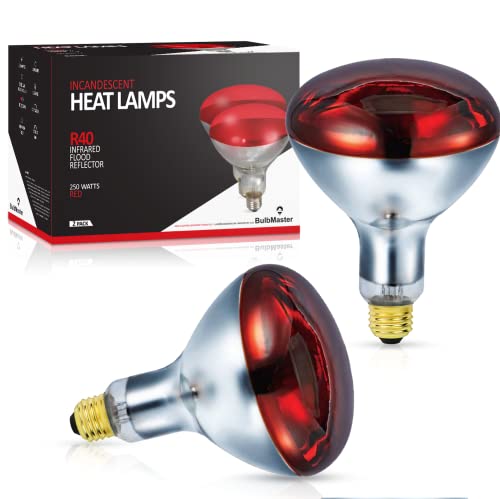
BULBMASTER 250 Watts R40 Red Heat Lamp Bulbs, 2 Pack |
- ✓ Solid build quality
- ✓ Consistent infrared heat
- ✓ Long lifespan
- ✕ Needs proper fixture clearance
- ✕ Only works with E26 bases
| Wattage | 250 Watts |
| Voltage | 120 Volts |
| Base Type | E26 medium base |
| Color/Infrared Type | Red infrared heat lamp |
| Lifespan | Approximately 6000 hours (Average Rated Hours) |
| Package Quantity | 2-pack |
You might not expect the first thing you notice is how solid the bulbs feel in your hand. They’re heavy enough to trust, not flimsy plastic, and the red glow already hints at the heat they’ll put out.
As I loosened the box, a warm, familiar scent of infrared warmth reminded me why tegu setups matter.
The two-pack is a practical setup, especially if you’re keeping a tegu’s basking corner steady. You’ll notice the E26 base slips in without fuss, and the 250 watts throw a consistent, gentle heat that doesn’t flicker or shift as the room temperature changes.
In a standard reptile enclosure, that steady radiance matters more than a flashy number on the package.
What stood out is the long life claim. About 6000 hours means fewer bulb swaps, which is a relief when you’ve spent weekends replacing heat lamps mid-project.
The infrared distribution feels even, keeping the basking zone reliably warm without creating hot spots that stress a tegu.
If you’ve used red heat lamps in the past, you’ll appreciate the practicality here: the bulbs hold their temperature well after the lights cycle on and off, so your feisty tegu isn’t met with a sudden cold spot. The 120V rating sits in most standard fixtures, making installation straightforward.
For daily use, the two-pack ensures you’ve always got a spare ready to go, minimizing downtime if one burns out. It’s a simple, effective option for a reliable tegu habitat.
Overall, these BULBMASTER red heat lamps feel like a sensible, no-nonsense choice for steady warmth and peace of mind in your reptile setup.
Why Is Heat Essential for Tegu Lizards’ Health?
Heat is a critical component of a tegu lizard’s habitat, playing a vital role in their overall health and well-being. Proper temperature regulation is essential for various physiological processes. Here are key reasons why heat is essential for tegu lizards:
-
Metabolism: Tegus are ectothermic reptiles, meaning they rely on external sources of heat to regulate their body temperature. Adequate warmth promotes efficient digestion and metabolism of food. A temperature gradient in their enclosure helps them thermoregulate effectively.
-
Immune Function: Warmer temperatures can enhance immune response. Insufficient heat may lead to a weakened immune system, making tegu lizards more susceptible to illness and infections.
-
Behavioral Health: Heat impacts their activity levels. Proper temperatures encourage natural behaviors, like basking and exploring, and prevent lethargy, which can stem from inadequate warmth.
-
Breeding and Reproduction: For breeding, specific heat levels promote reproductive behaviors and higher fertility rates in captive tegu lizards.
-
Basking Spots: Providing an appropriate heat lamp creates designated basking spots, crucial for their hydration and thermoregulation needs.
Selecting the best heat lamp is essential to maintain these vital conditions in a tegu’s environment, ensuring a healthy and thriving pet.
How Does Heat Affect a Tegu’s Metabolism and Behavior?
- Metabolic Rate: Heat directly impacts a tegu’s metabolic rate, which is essential for digestion and energy utilization.
- Behavioral Thermoregulation: Tegus exhibit behavioral thermoregulation, seeking warm areas to optimize their body temperature for various activities.
- Activity Levels: Proper heating encourages active behavior in tegus, affecting their foraging, social interactions, and overall well-being.
- Health Implications: Inadequate heat can lead to metabolic disorders, lethargy, and weakened immune responses in tegus.
- Best Heat Lamp Options: Selecting the best heat lamp for a tegu ensures they receive appropriate UVB and heat, which are vital for their health.
Best Heat Lamp Options: Choosing the best heat lamp for a tegu involves selecting one that not only provides adequate warmth but also emits UVB light necessary for calcium metabolism. The right lamp can greatly enhance a tegu’s quality of life by mimicking their natural habitat and supporting their physiological needs.
What Should You Look for in the Best Heat Lamp for Tegu?
When selecting the best heat lamp for a tegu, several essential features must be considered to ensure the well-being of the reptile.
- Wattage: The wattage of the heat lamp is crucial as it determines the heat output. Tegus require a basking spot temperature of around 100-110°F, so choose a lamp with appropriate wattage to achieve this temperature while considering the size of the enclosure.
- Type of Bulb: Different types of bulbs, such as incandescent, ceramic, and halogen, offer varying benefits. Incandescent bulbs provide visible light and heat, while ceramic bulbs are excellent for maintaining warmth without light, making them suitable for nighttime use.
- UVB Emission: Providing UVB light is vital for a tegu’s health as it aids in calcium metabolism and prevents metabolic bone disease. Look for heat lamps that also emit UVB rays or consider adding a separate UVB bulb to ensure your tegu gets adequate exposure.
- Durability: A heat lamp should be durable enough to withstand the humidity and temperature fluctuations typical in a tegu’s habitat. Look for high-quality materials that can endure prolonged use without compromising performance.
- Reflector Design: A lamp with a good reflector design can improve heat distribution and efficiency. Reflectors help direct the heat where it is needed most, ensuring that the basking area remains adequately warm.
- Adjustability: An adjustable lamp allows you to modify the height and angle, helping you manage the temperature more effectively. This feature is particularly important as your tegu grows and its heating needs change.
- Energy Efficiency: Consider energy-efficient options that provide sufficient heat without consuming excessive power. This is not only cost-effective but also better for the environment.
How Is Wattage Related to Heat Lamp Performance for Tegu?
- Wattage Output: The wattage of a heat lamp indicates the amount of energy it consumes and the heat it produces. Higher wattage generally results in higher temperatures, which can be essential for maintaining the proper basking area for Tegu lizards, as they require a specific heat range to thrive.
- Heat Distribution: Different wattages can affect how heat is distributed across the habitat. A higher wattage lamp may provide more concentrated heat in one area, while lower wattage lamps can create a more gradual temperature gradient, allowing the Tegu to move between warmer and cooler zones as needed.
- Energy Efficiency: The wattage also relates to energy efficiency and cost-effectiveness in heating. Choosing a heat lamp with an appropriate wattage for the size of the enclosure can optimize heating without excessive energy consumption, which is beneficial for long-term care and cost savings.
- Compatibility with Other Equipment: When selecting a heat lamp, it’s essential to consider how its wattage will work with other heating elements and lighting in the enclosure. A lamp with too high a wattage could lead to overheating, while one that is too low may not provide adequate warmth, creating an imbalance in habitat conditions.
- Heat Lamp Lifespan: Generally, higher wattage lamps may have a shorter lifespan due to the increased heat and energy output. It’s important to balance wattage with durability, as frequent replacements can be inconvenient and costly.
What Types of Heat Lamps Are Most Effective for Tegu Enclosures?
The best heat lamps for tegu enclosures are designed to provide the necessary warmth and UVB exposure that these reptiles require for their health and well-being.
- Infrared Heat Lamps: Infrared heat lamps emit heat without light, which helps maintain a stable temperature in the enclosure without disturbing the tegu’s natural behavior. These lamps penetrate the skin, promoting better circulation and overall health while allowing the tegu to bask comfortably.
- Mercury Vapor Bulbs: Mercury vapor bulbs serve a dual purpose, providing both heat and UVB lighting, which is essential for the tegu’s calcium metabolism. They produce more heat than standard bulbs and are highly efficient, allowing for a larger basking area while ensuring the tegu receives adequate UV exposure for vitamin D synthesis.
- Halogen Bulbs: Halogen bulbs are another effective option, as they emit a strong and focused beam of heat, perfect for creating a basking spot in the enclosure. They are energy-efficient and have a longer lifespan compared to traditional incandescent bulbs, making them a practical choice for consistent heating needs.
- Incandescent Bulbs: Standard incandescent bulbs are commonly used due to their affordability and availability. While they do provide adequate heat, they lack UVB radiation, so they should ideally be used in conjunction with a separate UVB source to ensure the tegu receives all necessary light and heat.
Where Should You Position Heat Lamps in a Tegu Habitat?
Using a dimmer or adjustable fixture can significantly enhance temperature control within the habitat. This allows for fine-tuning of the heat levels, ensuring that your tegu has access to optimal temperatures throughout their daily cycle.
What Common Mistakes Should Be Avoided When Using Heat Lamps for Tegus?
When using heat lamps for tegus, several common mistakes should be avoided to ensure their health and well-being.
- Incorrect wattage: Many owners choose heat lamps that are either too powerful or not powerful enough for their enclosure size. Using a heat lamp with the wrong wattage can lead to inadequate heating or overheating, both of which can stress a tegu and lead to health issues.
- Improper placement: Placing the heat lamp too close or too far from the basking area can prevent tegus from reaching their optimal temperature range. Ideally, the lamp should be positioned at a height that allows the tegu to bask comfortably without risking burns or exposure to insufficient heat.
- Lack of a temperature gradient: Failing to create a proper temperature gradient within the habitat can lead to thermoregulatory issues for the tegu. A heat lamp should be used in conjunction with other heating methods to ensure one side of the enclosure is warmer for basking, while the other side remains cooler, allowing the tegu to move between temperatures as needed.
- Neglecting UVB light: Some owners mistakenly believe that a heat lamp alone is sufficient for their tegu’s needs. In addition to heat, tegus require UVB lighting to synthesize vitamin D3, which is crucial for calcium absorption and overall health, making it essential to provide both heat and UVB sources.
- Inconsistent heating schedule: Inconsistency in heating can lead to health problems, as tegus rely on regular temperature patterns to maintain their biological functions. It is important to have the heat lamp on a reliable timer to simulate a natural day-night cycle, ensuring that the tegu has access to heat during the day and a cooler environment at night.