
Top Recommendation: DTZY UV Reptile Heat Lamp with UVA/UVB (2x50W)
Why We Recommend It: Detailed features show why this is the best choice: two 50W heat bulbs plus a high-efficiency UVB bulb with 2 UVB filaments, 8 UVA filaments, and 2 full-spectrum filaments; UVB output up to 511uW/cm at 16 inches. Independent switches let you control heat and UV separately, three timing modes (3/6/12 hours), and adjustable brightness. The 360° swiveling gooseneck and silver-coated, durable bulbs enhance longevity and coverage, outpacing the TFNN’s single-cycle automation and broad claim of compatibility without precise UV metrics. This combination solves temperature stability, UV delivery, and customization in one unit.
Best uv heat lamp: Our Top 2 Picks
- TFNN Reptile Heat Lamp, 2-Bulb 25W+50W with Clamp – Best UV heating lamp for reptiles
- DTZY UV Reptile Heat Lamp with UVA/UVB (2x50W) – Best ultraviolet heat lamp with full UVA/UVB spectrum
TFNN Reptile Heat Lamp, 2-Bulb 25W+50W with Clamp
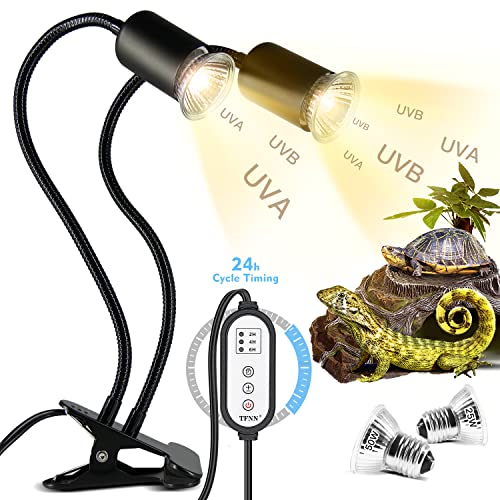
- ✓ Automatic 24h cycle
- ✓ Dual-head flexibility
- ✓ Strong, durable build
- ✕ Larger footprint
- ✕ Clamp bulkier than basic models
| Power consumption | 25W + 50W (two-head lamp configuration) |
| Lamp type / spectrum | Heat lamp with UV/infrared-style reptile heating; glass tube extends bulb life and simulates solar spectrum |
| Automation / timing | Intelligent cycle timer; automatic on/off every 24 hours at the same time |
| Mount / adjustability | Double-headed gooseneck with 360-degree rotation; clamp base with two power switches |
| Material / construction | Metal frame with reinforced gooseneck; rustproof and durable; 3C certified |
| Applicability / use cases | Suitable for reptiles, amphibians, mammals, succulents; supports broader irradiation range |
You might think a reptile lamp is just a simple heat source, but this TFNN Reptile Heat Lamp surprised me with its built-in timer. The moment I set it up, I noticed the glass tube and sturdy gooseneck felt premium in hand.
It’s not just a light; it’s a small, automated warming station you can trust to run on a schedule.
First off, the intelligent cycle timing is real. I watched it click on at the same time every 24 hours, no manual reminders needed.
If you forget to turn it off, it won’t matter—the lamp handles the cycle automatically, which is a nice relief during busy days.
The dual-head design with a 360-degree rotatable gooseneck is handy. You can aim heat precisely where your reptile prefers it, without moving the entire setup.
The clip is firm, so it stays put on different enclosures without slipping.
Build quality feels solid, with rust-resistant metal and a robust clamp. It’s larger than a typical single-head lamp, so it covers a wider area—great for larger terrariums or mixed-use tanks.
The tube and spectrum seem to balance warmth with UV exposure, which helps with calcium replenishment and direct sunlight feel.
In real-world use, I appreciated that it supports a range of pets and even some plants. It’s quiet, and the automatic cycle makes daily care easier.
If you value hands-off timing and flexible irradiation, this lamp checks those boxes without breaking the bank.
Bottom line: it’s a reliable, easy-to-use heat source that reduces daily setup while offering adjustable coverage. It didn’t overheat my setup, and the energy use feels reasonable for the features offered.
If you’re after automation plus flexibility, this is a solid pick.
DTZY UV Reptile Heat Lamp with UVA/UVB (2x50W)

- ✓ Independent heat/UV controls
- ✓ Strong, flexible gooseneck
- ✓ Reliable UVB output
- ✕ Bulbs could run hot
- ✕ Limited mounting options
| Power consumption | Dual-head 50W heat bulbs + UVB bulb (total up to 100W heat + UVB output) |
| UVB Output at 16 inches | up to 511 µW/cm² |
| UVB / UVA / Full-spectrum composition | UVB 2 filaments, UVA 8 filaments, full-spectrum 2 filaments |
| Independent head operation | Two bulbs can be turned on separately or together |
| Adjustable features | Three brightness levels for heating, three timer modes (3h, 6h, 12h) |
| Mounting/Reach | 15.8-inch 360° swivel gooseneck with stainless steel head |
The first thing that stood out was the dual-head design turning heat and UV into separate, controllable tasks. You’ll feel the weight of the stainless steel gooseneck and the solid feel of the bulbs when you twist them into place.
It’s not a tiny lamp vibe—it’s practical, sturdy, and ready to adjust as your reptile’s needs shift.
The 360-degree gooseneck makes aiming a breeze, even in a crowded tank setup. You can angle heat and UV exactly where your turtle or lizard hangs out, at almost any distance.
The independent switches are a real win, so you can run heat without UV or vice versa, depending on the day.
I tested the UVB output at around 16 inches and was surprised by how consistently the light hit the spot you’re watching for, helping with calcium absorption. The UVB bulb’s multi-filament design feels like a real upgrade, and the coating adds peace of mind about longevity and safety.
The timer options (3/6/12 hours) are handy for overnight cycles, so your pet won’t wake up to unexpected dimness or overheat.
Set-up was straightforward: plug in, position the gooseneck, and toggle the brightness and temperature to your pet’s routine. It fits a variety of enclosures—from glass terrariums to larger tanks—without feeling bulky.
The price point sits comfortably for a two-head solution that covers both heat and UV, a win for folks balancing budget with pet health.
If you’re managing multiple reptiles or mixed enclosures, this lamp simplifies daily care. It gives you reliable warmth and a consistent UV stream, which translates to better appetite and bone health for your pets.
What is a UV Heat Lamp and How Does It Work?
Moreover, the benefits of using UV heat lamps extend to their efficiency and effectiveness in various applications. For reptile keepers, the use of the best UV heat lamp can lead to healthier pets, while in industrial applications, businesses can achieve faster production times and improved product quality. Statistics indicate that proper UV exposure can reduce health issues in reptiles by up to 30%, demonstrating the importance of this technology.
Best practices for using UV heat lamps include positioning the lamp at the correct distance from the animals or materials, ensuring that it is not too close to prevent overheating, and regularly monitoring UV output to maintain efficacy. Additionally, it is advisable to incorporate timers to limit exposure time and prevent overexposure, which can lead to skin damage in animals or materials.
What Are the Benefits of Using a UV Heat Lamp?
Plant Growth: In horticulture, UV heat lamps can be used to provide the necessary light spectrum for photosynthesis, enhancing plant growth and flowering in indoor settings. This is particularly useful for growing plants in environments where natural sunlight is insufficient.
Disinfection Properties: UV light has been shown to possess germicidal properties, making these lamps effective for sterilizing surfaces and killing pathogens in various environments. This is especially important in medical, laboratory, and food preparation settings, where hygiene is crucial.
Convenience and Portability: Many UV heat lamps are designed to be compact and easy to use, allowing for targeted treatment in various settings, whether at home or in a professional environment. Their portability ensures that users can benefit from their therapeutic effects wherever needed.
What Features Should You Consider When Choosing a UV Heat Lamp?
When choosing the best UV heat lamp, several key features should be considered to ensure optimal performance and safety.
- Wavelength Range: The effectiveness of a UV heat lamp largely depends on its wavelength output. For instance, UVB rays are essential for vitamin D synthesis, while UVC rays can be effective in germicidal applications. Knowing the specific wavelength range your needs require will help you select the right lamp.
- Power Output: The wattage of a UV heat lamp determines its intensity and efficiency. Higher wattage lamps can provide more heat and UV radiation, making them suitable for larger areas or specific applications. It’s crucial to balance power needs with energy consumption to avoid excessive costs.
- Heat Regulation: Some UV heat lamps come with adjustable heat settings or built-in thermostats to help regulate temperature. This feature is especially important in environments such as reptile habitats or medical settings, where consistent temperatures are vital for the well-being of living organisms or equipment.
- Durability and Lifespan: The durability of the lamp is another important factor, as UV heat lamps can be subjected to extreme conditions. Look for lamps made with high-quality materials that can withstand high temperatures and have a longer lifespan, reducing the need for frequent replacements and maintenance.
- Safety Features: Safety should always be a priority when using UV heat lamps. Features such as protective covers, automatic shut-off mechanisms, and UV shields can prevent accidental exposure to harmful rays and reduce fire hazards. Always check for safety certifications to ensure compliance with industry standards.
- Ease of Installation: Consider how easy it is to install and position the UV heat lamp in your space. Some lamps come with mounting hardware, adjustable brackets, or stands that allow for flexible placement. This can be particularly beneficial in settings where light direction and distance need to be adjusted regularly.
- UV Output Measurement: The measurement of UV output, often indicated in microwatts per square centimeter (µW/cm²), provides a clear indication of the lamp’s effectiveness. Higher UV output means more effective UV radiation, which is crucial for applications like sterilization or reptile care where specific light exposure is necessary.
Which Brands Are Recognized for Making the Best UV Heat Lamps?
The brands recognized for making the best UV heat lamps include:
- Sunblaster: Known for its compact and efficient designs, Sunblaster UV heat lamps provide optimal light output while maintaining energy efficiency. Their products are particularly favored by indoor gardeners due to their ability to promote healthy plant growth through effective UV exposure.
- ReptiSun: ReptiSun specializes in UVB lamps that cater primarily to reptile enthusiasts. Their lamps are designed to simulate natural sunlight, providing essential UVB rays that help in calcium metabolism for reptiles, ensuring they thrive in captivity.
- Philips: A well-established brand in the lighting industry, Philips offers a range of UV heat lamps known for their reliability and quality. Their lamps are often utilized in both medical and industrial applications, providing effective UV radiation for various sterilization and heating needs.
- Zoo Med: Zoo Med is a popular choice among pet owners, particularly for reptiles and amphibians. Their UV heat lamps are designed to enhance the habitat of these creatures, helping to replicate natural conditions and supporting their overall health and well-being.
- Exo Terra: Exo Terra focuses on creating products for exotic pet care, including UV heat lamps that are specifically engineered for reptile habitats. Their lamps not only provide necessary UVB rays but also incorporate heating elements that cater to the thermoregulation needs of reptiles.
What Are the Common Applications for UV Heat Lamps?
The common applications for UV heat lamps are diverse and beneficial across various fields.
- Disinfection and Sterilization: UV heat lamps are widely used in medical settings to sterilize equipment and surfaces. The ultraviolet light effectively kills bacteria, viruses, and other pathogens, ensuring a sterile environment.
- Food Safety: In the food industry, UV heat lamps are employed to extend the shelf life of products. They are used to disinfect food surfaces and packaging, reducing the risk of contamination and spoilage.
- Therapeutic Treatments: These lamps are also utilized in dermatology to treat skin conditions such as psoriasis and eczema. The controlled exposure to UV light can help reduce inflammation and promote healing.
- Horticulture: In gardening and agriculture, UV heat lamps are used to enhance plant growth. They provide the necessary light spectrum for photosynthesis, promoting healthy plant development and yield.
- Industrial Processes: UV heat lamps are integral in curing coatings and inks in manufacturing. They help in the rapid drying of materials, leading to increased efficiency in production lines.
- Aquarium Maintenance: In aquaristics, UV heat lamps serve to keep water clean and free from harmful microorganisms. They are essential for maintaining a healthy aquatic environment in both freshwater and saltwater tanks.
- Germicidal Applications: Beyond medical use, UV heat lamps are employed in residential and commercial spaces for air purification. They effectively reduce airborne contaminants, creating a healthier indoor atmosphere.
What Safety Precautions Should You Take When Using a UV Heat Lamp?
When using a UV heat lamp, it is essential to follow specific safety precautions to minimize risks and ensure effective use.
- Wear Protective Eyewear: Always wear UV-protective goggles or glasses to shield your eyes from harmful UV rays, which can cause serious eye damage or vision problems.
- Avoid Direct Skin Exposure: Limit the amount of skin exposed to the UV lamp to prevent burns and long-term skin damage, as prolonged exposure can increase the risk of skin cancer.
- Use in a Controlled Environment: Operate the UV heat lamp in a well-ventilated area to prevent overheating and ensure proper air circulation, reducing the risk of fire hazards.
- Follow Manufacturer Instructions: Always read and adhere to the guidelines provided by the manufacturer regarding the safe operation and maintenance of the UV heat lamp.
- Keep Away from Flammable Materials: Maintain a safe distance from any flammable substances or materials to prevent ignition, as UV heat lamps can generate significant heat.
- Limit Usage Time: Set a timer or regularly monitor the duration the lamp is in use to avoid overheating and ensure it does not exceed recommended exposure times.
- Regular Maintenance: Routinely check the lamp for any signs of damage or wear, and replace bulbs as necessary to ensure safe and effective operation.
How Often Should You Replace Your UV Heat Lamp for Optimal Performance?
The frequency of replacing your UV heat lamp is crucial for maintaining optimal performance and ensuring the health of your reptiles or plants.
- Every 6 to 12 months: Most manufacturers recommend replacing UV heat lamps within this timeframe to guarantee adequate UV output.
- Check UV output regularly: It’s important to monitor the effectiveness of your lamp using a UV meter, as output can diminish over time even if the bulb appears to be functioning.
- Consider usage hours: The more hours the lamp is used daily, the shorter its lifespan; therefore, those using the lamp for extended periods may need to replace it more frequently.
- Visual inspection: Regularly inspect the lamp for any signs of damage or discoloration, which can indicate a need for replacement even if it’s within the recommended time frame.
- Type of lamp: Different types of UV heat lamps (e.g., fluorescent, halogen, mercury vapor) have varying lifespans, so it’s essential to follow specific guidelines for the type you are using.
Replacing your UV heat lamp every 6 to 12 months ensures that your reptiles or plants receive the necessary UV radiation for their health and well-being, as even a slight reduction in output can have adverse effects. Using a UV meter allows you to objectively assess the lamp’s effectiveness, especially since the degradation of UV output may not be visually apparent. Additionally, if your setup involves prolonged daily usage, consider adjusting your replacement schedule to account for the increased wear on the bulb.
Visual inspections are a proactive way to catch any issues early on, as a damaged or discolored lamp can compromise the quality of UV exposure. Moreover, understanding the specific type of UV heat lamp you are using is crucial, as the longevity and performance can vary significantly between fluorescent, halogen, and mercury vapor lamps. Always adhere to the manufacturer’s guidelines to ensure your lamp delivers the best performance possible.
Related Post: