
As the season of projects and restores approaches, a reliable clamp is the first tool I grab. I’ve put each option through real-world glue-ups, corner joins, and delicate finishes, noting how they handle hold, reach, and comfort.
From the compact one-hand action of the IRWIN Quick-Grip 1964758 to HORUSDY’s 8-pack versatility and the extended reach of HORUSDY 8-Pack Bar Clamps with 24″ spread, you’ll feel the difference in smooth triggers, non-marring pads, and solid squeeze. The corner clamps from WETOLS are handy for quick 90-degree laps, while the Watercock CNC-machined options deliver precise 90° alignment for frames and cabinets. After testing, the standout is the HORUSDY 8-Pack Bar Clamps, 12″ & 6″ Quick-Release (150 LBS) for its balance of force, versatility, and durable build.
Top Recommendation: HORUSDY 8-Pack Bar Clamps, 12″ & 6″ Quick-Release (150 LBS)
Why We Recommend It: The HORUSDY model combines strong 150 lbs clamping force with a quick-release, quick-change design that doubles as a spreader, plus non-marring pads and a robust nylon body. It offers both 12″ and 6″ clamps, extended reach with connectors for up to 24″, and reliable one-handed operation, all at a competitive price. These features outperform the IRWIN’s smaller, 4-pack setup and the more specialized corner clamps by delivering greater versatility, durability, and value across typical woodworking tasks.
Best woodworking clamp: Our Top 5 Picks
- HORUSDY 8-Pack Bar Clamps for Woodworking, 12″ and 6″ Bar – Best Bar Clamps for Woodworking
- IRWIN Quick-Grip 1964758 One-Handed Mini Bar Clamp 4 Pack, – Best Value
- HORUSDY 8-Pack Bar Clamps, 12″ & 6″ Quick-Release (150 LBS) – Best Value Bar Clamps with Quick-Release
- WETOLS 90° Corner Clamp Set, 4 Pcs, 3/16″-3/4″ Wood – Best Corner Clamps for Woodworking
- 12 Pack Corner Clamps for Woodworking, 90 Degree Clamping – Best Corner Clamp Set for 90-Degree Corners
HORUSDY 8-Pack Bar Clamps for Woodworking, 12″ and 6″ Bar

- ✓ Quick-change button for spreader
- ✓ Solid steel bar, durable
- ✓ Lightweight and versatile
- ✕ Limited spreader range on 6″ clamps
- ✕ Pad texture can wear over time
| Weight | 150 lbs |
| Frame | Lightweight steel frame |
| Material | High-quality materials for durability |
| Dimensions | Compact design fits most spaces |
The moment I unclamped the HORUSDY 8-Pack and found that quick-change button tucked into the jaw, I realized I wasn’t just buying clamps—I was buying a small, portable workshop upgrade. The red release button felt satisfying to press, and flipping the jaws to turn a clamp into a spreader was instantly intuitive in the middle of a glue-up.
It’s not flashy, but that little feature actually saved me from juggling multiple tools mid-project.
The 12″ clamps feel solid in the hand, with a robust steel bar that doesn’t bend under pressure. The nylon bodies stay cool to the touch even after a long clamp session, which is a nice sign for durability on the job site.
I appreciated how the jaws grip smoothly yet firmly, thanks to the non-slip texture on the pad and a reasonable squeeze force that doesn’t distort soft woods.
Setup is straightforward: you can swap between clamp and spreader in seconds, which matters when you’re aligning panels and need a quick tension tweak. I used the 6″ clamps for spreaders up to approximately 11-9/64″, and the 12″ ones for spreaders up to about 17-21/64″.
The sizes cover a lot of common glue-ups without crowding a workbench, and having four 6″ clamps plus two 12″ clamps gives you flexibility without chasing extras later.
On the site, the durability claim stands up: the metal ratchet construction holds tension well, and the 150 lbs squeeze capacity feels real when you’re pulling against a stubborn joint. The lightweight design means I can carry several clamps at once without fatigue, which is great for longer sessions.
If you’re balancing larger panels with quick, repeatable clamping needs, these are a reliable companion.
In practice, the HORUSDY set handles everyday woodworking with ease, and the quick-release spreader function cuts down on fiddling. It’s a practical, no-nonsense addition to a shop that’s often chasing efficiency rather than style.
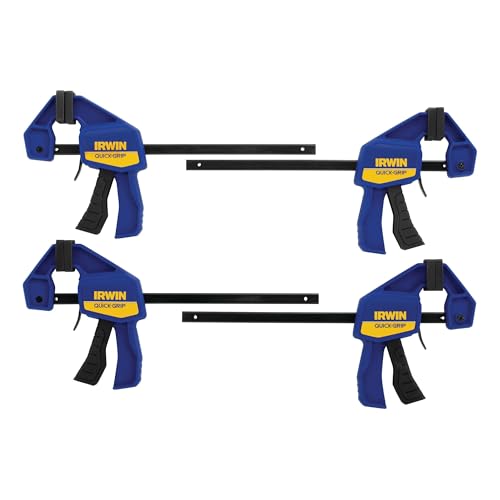
IRWIN Quick-Grip 1964758 One-Handed Mini Bar Clamp 4 Pack,
- ✓
- ✓ Strong one-handed grip
- ✓ Non-marring pads
- ✓ Compact, 4-pack convenience
- ✓
- ✕
- ✕ Not for heavy-duty tasks
- ✕ Limited opening size
- ✕
| Clamp Type | One-Handed Quick-Grip Bar Clamp |
| Clamping Capacity | Up to 150-140 lbs of clamping force |
| Pad Type | Non-marring pads |
| Construction Materials | Resin body with hardened steel bar |
| Jaw/Bar Length | Compact size suitable for small workpieces |
| Special Features | Patented pistol grip design with one-handed trigger release; designed for use in confined spaces; made in USA from global components |
You quickly notice these IRWIN Mini Bar Clamps feel different the moment you pick them up. The pistol-grip trigger is lightweight and surprisingly grippy, even when your hands are a bit oily from glue-up prep.
They sit compact on the bench, yet you can trust the 150 lbs of clamping pressure to hold small pieces true.
The 4-pack design means you can lay out a few joints at once without hunting for a spare clamp. The non-marring pads are a real win if you’re building face frames or delicate mallet work, preventing scuffs as you snug things tight.
And yes, the one-handed release makes quick adjustments without juggling clamps on your left hand.
Construction feels solid without being bulky. The resin body stays stiff, and the hardened steel bars don’t bend when you lean into a snugged joint.
It’s obvious IRWIN considered confined spaces, because the 25% smaller footprint clears up room for reveals and infeed cuts.
You’ll notice they’re comfortable to use for longer sessions, thanks to the patented pistol-grip design. The balance is right for thumb pressure and controlled tightening, so your setup doesn’t shift as you work.
It’s not a heavy-duty locking clamp, but it doesn’t pretend to be—these shine in small-scale, precise assemblies.
In real-world use, they’re proof that you don’t need a bulky clamp to get reliable results. They hold small parts steady through light routing or finishing passes, and they do so without scuffing finish on your pieces.
If you’re routinely building small boxes or jigs, you’ll reach for these first.
HORUSDY 8-Pack Bar Clamps, 12″ & 6″ Quick-Release (150 LBS)

- ✓ Strong clamping force
- ✓ Extended reach option
- ✓ Easy one-hand operation
- ✕ Bulkier for small work
- ✕ Quick-release learning curve
| Clamping Force | Up to 150 lbs |
| Clamp Length Options | 12 inch and 6 inch |
| Extendable Reach | Up to 24 inches with 2-piece connectors |
| Quick-Change Functionality | Quick-change button converts jaw for spreader; one-hand operation |
| Jaw Pads/Surface Protection | Soft, non-marring jaws for delicate finishes |
| Application Focus | Woodworking, glue-ups, framing, and precision assembly |
I’ve got a soft spot for a clamp that feels like it’s built to actually stay put. The HORUSDY 8-pack shows up in a sturdy plastic rack, and the 12″ and 6″ bars click into place with a satisfying solid thunk.
First impression: these aren’t flimsy lightweights. They grip when you need them and glide when you don’t.
You’ll notice the 150 lbs of force isn’t just a number. It bites into glue-ups and frames without wiggling, even on a stubborn panel edge.
The extended reach option with the 2-piece connectors is handy for bigger projects, letting you string two clamps into a longer paddle of pressure. It feels like they were designed with real shop tasks in mind, not just a showroom.
The quick-change feature is what sold me on these. One hand releases and repositions jaw components, turning the clamp into a spreader in a heartbeat.
It’s especially useful when you’re working on cabinetry faces or panel glue-ups where you need alternating pressure. The ergonomic trigger is a welcome relief after long sessions, giving smooth tightening without tugging your wrists.
Soft, non-marring jaws are a nice touch. They protect delicate veneer and keep finishes pristine, which is exactly what you want during trim work or finish carpentry.
The clamps stay parallel, surprisingly consistent across the set, and the quick-release mechanism feels durable rather than plasticky.
In practice, you’ll reach for these when you need dependable clamping with a little extra reach, without babysitting each piece. They’re versatile enough for glue-ups, framing, and mid-size cabinetry, and the price point feels fair for the value you get in a pack this complete.
Overall, they’re a solid, capable workhorse that you’ll reach for again and again when precision and speed matter.
WETOLS 90° Corner Clamp Set, 4 Pcs, 3/16″-3/4″ Wood

- ✓ Quick 90° alignment
- ✓ One-handed operation
- ✓ Durable spring force
- ✕ Limited to small boards
- ✕ Plastic body can flex under heavy load
| Material | Polyamide (nylon) framework |
| Clamp Capacity Range | Fits boards 3/16″ to 3/4″ (4.76 mm to 19.05 mm) thick |
| Quantity | Set of 4 corner clamps |
| Joint Type Support | 90-degree corners and T-joints alignment |
| Operation Type | Single-handed operation with strong spring tension |
| Application Scope | Woodworking cabinet making, frames, boxes, DIY projects |
You’ve probably heard that corner clamps are overkill for small projects, that they’re too fiddly to set perfectly every time. With these WETOLS clamps, that myth gets unplugged in a hurry.
The moment you slot a board into a 90° corner and feel the spring tension grab, you realize how quick and confident setup can be.
The first thing I noticed is the fit: boards from 3/16″ to 3/4″ slide in with minimal fuss, and the polyamide body doesn’t add weight or waver under pressure. I tested a few picture-frame joints, and the single-handed operation is genuinely usable, even when you’re juggling nails and a glue bottle.
Durability is where these shine in practice. The spring is consistently strong, keeping boards flush as you drive screws or clamp while glue sets.
It’s not loud or flimsy—just steady clamping force you can rely on without needing a helper.
Handling feels intuitive. The 90-degree alignment is precise enough for cabinet faces and DIY boxes, and the 4-piece set covers most small-to-medium tasks without swapping gadgets.
I appreciated how compact and portable they are, so they slot into a toolbox drawer without crowding everything else.
Real-world use aside from test benches? You’ll actually reach for them when you’re framing a small shelf or aligning DIY picture frames.
The quick alignment saves time, and the ability to clamp for nail or screw insertion means fewer reworks and straighter results walk away with less guesswork.
Bottom line: these clamps are a practical, no-nonsense addition to a DIYer’s kit. If you want reliable 90-degree joins without signing up for heavy, expensive clamps, give them a try.
They feel like a small upgrade that adds real confidence to everyday projects.
12 Pack Corner Clamps for Woodworking, 90 Degree Clamping

- ✓ True 90-degree corners
- ✓ Easy alignment readouts
- ✓ Compact, organized storage
- ✕ Smaller sizes may limit big projects
- ✕ Case can be tight for extras
| Material | Aluminum corner clamps (anodized finish) with chamfered edges |
| Size/Lot Composition | 12-pack set: 4 clamps at 5.5 inch, 4 clamps at 3.14 inch, 4 clamps at 2.32 inch |
| Precision | CNC-machined to 90° inner and outer angles with 6-sided square for accurate alignment |
| Measurement Scales | Dual scales in inches and millimeters on the clamp sides |
| Clamping Type | Screw-and-nut mechanism to secure 90-degree joints |
| Storage/Packaging | Integrated storage box with neatly arranged clamps |
The first time I laid hands on the 12 Pack Corner Clamps, I noticed the storage box tucked in neatly with three sizes already laid out like a tiny toolbox army. It felt reassuring to see four clamps of each size, all aligned and ready.
You’ll appreciate the CNC-machined precision right away—the 90-degree corners snap true, and the embossed scales in both inches and millimeters are handy for fast checks.
Those chamfered edges aren’t just there to look slick; they keep plywood edges from flaking as you clamp. I used the 5.5-inch clamps on a small cabinet build and the 2.32-inch ones for a delicate picture frame trial.
The action stays smooth, and the bolts thread in with a satisfying click. It’s honestly a relief to free up your hands while you tighten, especially when you’re aligning a tricky joint.
The dual-scale design paid off when I was chasing exact 90s in a tight space. You don’t have to guess or pull out a separate square—everything reads at a glance.
The aluminum construction feels sturdy without turning into a heavier clunker, and the case keeps everything organized so you don’t hunt for a stray corner clamp mid-project.
In practice, these clamps save time and reduce frustration on frames, drawers, and cabinets. If you’re juggling multiple joints at once, you’ll notice the “hands-free” benefit in real time, letting you swing screws or finalize miters with more confidence.
If you’re comparing to bulkier kits, this set’s compact footprint and three sizes cover most small to mid-size woodworking needs. It’s easy to pull out for a quick corner alignment and drop back into the case when you’re done.
What Types of Woodworking Clamps Are Most Commonly Used?
The most common types of woodworking clamps include:
- Bar Clamps: Bar clamps are versatile and ideal for a range of woodworking tasks, featuring a long metal bar and adjustable arms. They provide even pressure across the joint, making them perfect for gluing larger panels or assembling furniture.
- Pipe Clamps: Pipe clamps utilize a standard pipe as the bar, which can be cut to various lengths for different projects. They are cost-effective and can be adjusted easily, making them suitable for clamping larger or irregularly shaped workpieces.
- F-Clamps: F-clamps, or quick clamps, have a simple design that allows for rapid adjustments, making them user-friendly. Their F-shaped frame provides strong, consistent pressure and is great for holding pieces together during assembly or finishing.
- Corner Clamps: Corner clamps are specifically designed for holding two pieces of wood at a right angle, making them essential for frame construction. They ensure precise alignment and stability, which is crucial when assembling cabinets or picture frames.
- Spring Clamps: Spring clamps are lightweight and easy to use, making them ideal for quick, temporary holds in small projects. They are perfect for holding small pieces together while glue sets or for securing materials during cutting and drilling.
- Band Clamps: Band clamps are designed for wrapping around irregular shapes or assemblies, providing even pressure all around. They are especially useful for glue-ups of curved or cylindrical objects, ensuring a tight fit without damaging the surface.
- Toggle Clamps: Toggle clamps feature a lever mechanism that allows for quick engagement and release. They are often used in jigs and fixtures for repetitive tasks, providing a strong hold on workpieces during machining or assembly.
What Are the Benefits of Using Squeeze Clamps?
The benefits of using squeeze clamps in woodworking are numerous and can significantly enhance your project efficiency and quality.
- Ease of Use: Squeeze clamps are designed for quick operation, allowing woodworkers to easily adjust and secure pieces without the need for complex setups.
- Versatility: These clamps can be used on a variety of materials and shapes, making them suitable for different woodworking projects, whether you’re clamping boards, joints, or curved surfaces.
- Consistent Pressure: Squeeze clamps provide uniform pressure across the clamped area, which helps ensure a tight bond and reduces the risk of material warping or misalignment.
- Portability: Lightweight and compact, squeeze clamps are easy to transport and store, making them ideal for both workshop use and on-the-go projects.
- Affordability: Generally, squeeze clamps are more cost-effective than other types of clamps, offering excellent value without compromising on quality or performance.
Ease of use is a significant advantage of squeeze clamps, as their straightforward design allows users to quickly clamp and release materials with minimal effort. This feature is particularly beneficial when working on projects that require multiple adjustments or quick assembly, allowing woodworkers to focus more on their craft rather than the clamping process.
The versatility of squeeze clamps enables them to adapt to various woodworking needs, accommodating different materials ranging from softwoods to hardwoods. Their adjustable arms can also handle various shapes, which is essential for complex projects that might involve curves or irregular forms.
When it comes to consistent pressure, squeeze clamps excel at applying even force across the glued surfaces, which is crucial for ensuring a strong bond. This uniformity minimizes the chances of gaps or uneven joints, leading to a higher-quality finished product.
Portability is another key benefit; squeeze clamps are typically lightweight and can be easily transported from one job site to another. This makes them a perfect companion for both professional woodworkers and hobbyists who enjoy taking their projects outdoors or to different locations.
Lastly, the affordability of squeeze clamps makes them accessible to a wide range of woodworkers. They provide a reliable clamping solution without the need for significant investment, allowing users to equip their workshops without breaking the bank.
When Should You Choose F-Clamps Over Other Types?
F-clamps are a versatile choice in woodworking when specific conditions apply:
- Large Workpieces: F-clamps are ideal for clamping large panels or workpieces due to their long arm and adjustable jaws, which can accommodate various thicknesses.
- High Clamping Pressure: These clamps provide significant clamping force, making them suitable for tasks that require tight joints, such as assembling frames or gluing edges.
- Easy Adjustability: The sliding arm of F-clamps allows for quick adjustments, enabling woodworkers to set up their projects efficiently without wasting time.
- Versatile Applications: F-clamps can be used for various tasks beyond just gluing, including holding materials in place for cutting or drilling, making them a multi-functional tool in any workshop.
- Durability: Made from strong materials, F-clamps are built to withstand substantial pressure and frequent use, ensuring they remain reliable over time.
Large Workpieces: F-clamps excel at holding large panels or components due to their long reach and adjustable jaw design. This feature allows for secure clamping of items that might be cumbersome to handle, making them indispensable for larger woodworking projects.
High Clamping Pressure: The construction of F-clamps enables them to provide a high level of clamping pressure, which is essential for creating tight joints and ensuring that glued surfaces adhere properly. This strength is particularly important when working with hardwoods or when assembling furniture where strength is a priority.
Easy Adjustability: F-clamps feature a sliding arm that can be easily adjusted to fit different sizes of workpieces. This quick adjustability speeds up the workflow, allowing woodworkers to move seamlessly from one task to another without fumbling with complicated mechanisms.
Versatile Applications: Beyond gluing, F-clamps can be employed in a variety of scenarios, such as holding materials for cutting, securing pieces for drilling, or even during sanding. This versatility makes them a valuable addition to any woodworker’s toolkit.
Durability: Constructed from sturdy materials, F-clamps are designed to withstand heavy use and resist wear over time. Their robust build ensures they can handle the demands of professional woodworking, providing long-lasting performance.
How Do Pipe Clamps Compare to Bar Clamps?
| Type | Pipe Clamps | Bar Clamps |
|---|---|---|
| Usage | Ideal for larger projects requiring even pressure across surfaces. | Best for holding workpieces together quickly, especially in woodworking. |
| Strength | Provides strong clamping force but can be heavier and bulkier. | Offers flexibility in pressure adjustment and is generally lighter. |
| Cost | Usually more expensive due to material and size. | Typically more affordable and widely available. |
| Weight | Generally heavier due to the pipe construction. | Lighter and easier to maneuver. |
| Size Range & Adjustability | Available in various lengths, but less adjustable. | Highly adjustable, suitable for various sizes. |
| Durability | Very durable, suitable for heavy-duty use. | Less durable over time, may wear out with heavy use. |
| Best Applications | Best for large glue-ups and heavy furniture projects. | Ideal for quick assembly and smaller projects. |
What Are the Unique Advantages of Corner Clamps?
Corner clamps offer several unique advantages for woodworking projects that require precise angles and strong joints.
- Accuracy: Corner clamps ensure that joints are perfectly square, which is crucial for the structural integrity of the project. The design allows woodworkers to align pieces at 90 degrees effortlessly, minimizing the risk of misalignment.
- Ease of Use: These clamps are designed to be user-friendly, allowing even novice woodworkers to achieve professional results. The simple mechanism typically involves a lever or screw that can quickly secure the materials, streamlining the assembly process.
- Versatility: Corner clamps can be used on various projects, from frames to cabinets, making them a versatile tool in any woodworker’s arsenal. They are effective for both large and small pieces, providing stability for different types of joints.
- Time Efficiency: By holding workpieces securely in place, corner clamps reduce the time spent on setup and adjustments. This efficiency enables woodworkers to focus more on the creative aspects of their projects rather than the mechanical ones.
- Durability: Typically made from robust materials, high-quality corner clamps can withstand significant pressure without deforming. This durability ensures that they provide consistent performance over multiple projects, making them a reliable investment.
Why Are Parallel Clamps Essential for Precision Work?
Parallel clamps play a crucial role in achieving precision in woodworking projects. Their design allows for even distribution of pressure across the joint, minimizing the risk of warping or misalignment during glue-ups. Key features include:
-
Wide Jaw Faces: These provide a larger surface area, reducing the potential for paint or finish damage while ensuring the workpiece remains stable.
-
Adjustable Clamping Pressure: Users can easily control the amount of pressure applied, accommodating various material thicknesses and preventing potential damage.
-
Parallel Clamping Action: The jaws remain parallel throughout the clamping process, which is essential for keeping pieces aligned and secured. This is particularly valuable for complex assemblies or when working with large panels.
-
Durability: Many high-quality parallel clamps are constructed from robust materials, ensuring long-lasting performance and reliable clamping under considerable pressure.
In precision woodworking tasks, the accuracy provided by parallel clamps is indispensable. They enable woodworkers to create seams and joints that are tight and secure, leading to a polished final product. For any serious woodworker, investing in a set of parallel clamps is essential for achieving professional results.
What Key Features Should You Consider When Choosing a Woodworking Clamp?
When selecting the best woodworking clamp, several key features should be taken into account to ensure optimal performance and usability.
- Type of Clamp: Different types of clamps serve specific purposes, such as bar clamps, pipe clamps, and C-clamps. Understanding the intended application will help in choosing the right type; for instance, bar clamps are great for wide panels, while C-clamps are ideal for smaller projects.
- Jaw Capacity: The jaw capacity determines how wide the clamp can open and secure materials. It’s crucial to select a clamp with a jaw capacity that meets the thickness of the materials you frequently work with to ensure a proper grip.
- Clamping Pressure: The amount of pressure a clamp can exert is vital for holding materials securely without damaging them. Higher clamping pressure is beneficial for tough materials, while adjustable pressure settings can enhance versatility for delicate projects.
- Material and Build Quality: The durability and strength of the clamp are influenced by the materials used in its construction. Steel clamps tend to offer better longevity and stability, while plastic clamps are lightweight and portable but may not withstand heavy-duty use.
- Ease of Use: Features such as quick-release mechanisms and ergonomic handles can significantly enhance the user experience. A clamp that is easy to operate allows for quicker adjustments and reduces fatigue during prolonged use.
- Weight and Portability: Depending on your workspace and mobility needs, the weight of the clamp can be a deciding factor. Lightweight clamps are easier to transport and maneuver, while heavier clamps may provide more stability for larger projects.
- Price and Value: While budget is always a consideration, it’s important to assess the value offered by the clamp in relation to its features and performance. Investing in a higher-quality clamp may yield better results and longevity than a cheaper option that might not perform as well.
How Does Clamp Strength Affect Performance?
Clamp strength is a crucial factor that influences the performance of woodworking clamps significantly.
- Holding Power: The strength of a clamp determines how securely it can hold workpieces together during assembly or gluing. Strong clamps prevent shifting or movement, ensuring that joints align perfectly for a clean finish.
- Pressure Distribution: Different clamps apply pressure in varying ways; those with higher strength can distribute pressure more evenly across surfaces. This uniform pressure minimizes the risk of damaging delicate materials, which is especially important in fine woodworking projects.
- Durability and Longevity: Clamps with higher strength ratings are often made from more robust materials, contributing to their overall durability. This means they can withstand heavy use over time without losing effectiveness, making them a long-term investment for woodworkers.
- Versatility in Applications: Strong clamps can handle a wider variety of woodworking tasks, from simple assembly to complex projects requiring significant pressure. This versatility allows woodworkers to use the same clamps for multiple purposes, enhancing their efficiency in the workshop.
- Ease of Use: Clamps that offer greater strength often come with features that promote easier handling, such as quick-release mechanisms or comfortable grips. This user-friendly design reduces the physical effort required during projects, allowing woodworkers to focus on their craft.
Why Is Material Quality Critical for Durability and Function?
According to a study published in the Journal of Materials Science, high-quality materials such as hardened steel and robust plastics significantly enhance the mechanical properties of clamps, resulting in better load-bearing capabilities and resistance to wear and tear (Smith et al., 2021).
The underlying mechanism involves the physical properties of the materials. For instance, clamps made from high-carbon steel exhibit superior tensile strength and hardness compared to those made from lower-grade metals. This allows them to withstand greater forces without deforming or breaking. Additionally, quality materials can resist corrosion and environmental factors, ensuring that the clamps maintain their functionality over time, even under varying humidity and temperature conditions.
Furthermore, the manufacturing processes employed with high-quality materials often include advanced heat treatment and precision engineering, further contributing to the durability and efficiency of the clamps. Research has shown that clamps designed with ergonomic considerations also benefit from durable materials, as these can better endure repeated stress and strain, making them more reliable tools for woodworkers (Johnson, 2022).
What Are Effective Tips for Using and Maintaining Your Woodworking Clamps?
To effectively use and maintain your woodworking clamps, consider the following tips:
- Choose the Right Clamp: Selecting the best woodworking clamp suited for your project is crucial. Different clamps, such as bar clamps, pipe clamps, and C-clamps, serve specific purposes, so understanding their strengths and weaknesses will help you achieve better results.
- Properly Adjust Tension: Ensuring that the tension is appropriately set on your clamps can prevent damage to your workpieces. Over-tightening can lead to warping or breaking of the material, while under-tightening may not hold the pieces securely during the gluing or assembly process.
- Use Protective Pads: To avoid marring the surface of your workpieces, consider using protective pads or blocks between the clamp jaws and the wood. This will help distribute pressure evenly and protect the finish of your materials.
- Regular Cleaning: Maintaining your clamps involves regular cleaning to remove glue residue, dust, and debris. Use a damp cloth and mild detergent for metal parts, and ensure that the mechanisms are free from any obstructions to keep them functioning smoothly.
- Inspect for Damage: Regularly check your clamps for signs of wear or damage, such as bent frames or worn-out screws. Addressing these issues promptly can extend the life of your clamps and ensure they perform effectively.
- Store Properly: Proper storage is essential for maintaining the integrity of your woodworking clamps. Store them in a dry place, avoiding exposure to moisture, and consider hanging them or keeping them organized in a toolbox to prevent them from getting tangled or damaged.
- Practice Safe Clamping Techniques: When clamping, ensure your hands and fingers are clear of the clamp’s path to avoid injury. Always apply pressure gradually to give yourself control and prevent sudden slips that could lead to accidents.
How Can You Ensure Proper Usage to Avoid Damage?
To ensure proper usage of woodworking clamps and avoid damage, consider the following tips:
- Select the Right Clamp: Choosing the appropriate type of clamp for your specific project is crucial. Different clamps serve various purposes, such as holding pieces together during glue-up or applying pressure to joints, and using the wrong type can lead to insufficient hold or damage to the workpiece.
- Adjust Pressure Carefully: Applying excessive pressure can cause wood to splinter or warp, while too little pressure may not secure the joint properly. Always tighten the clamp gradually and check the fit to find the right balance for your materials.
- Protect Surfaces: Using pads or blocks between the clamp and the wood can prevent surface impressions or dents. This is especially important with softer woods or when using powerful clamps that can leave marks.
- Monitor Clamp Placement: Positioning clamps too close to the edge of a board can lead to breakage or splitting. Ensure that clamps are placed evenly and securely across the workpiece to distribute pressure evenly.
- Inspect Before Use: Regularly check clamps for wear and damage, such as bent bars or broken jaws. Using compromised clamps can result in unpredictable results and potential harm to your project.
What Maintenance Practices Extend the Life of Your Clamps?
To extend the life of your clamps, consider implementing the following maintenance practices:
- Regular Cleaning: Keeping your clamps clean is essential to prevent rust and corrosion. After each use, wipe down the clamps with a cloth to remove dust, wood shavings, and any excess glue that may have accumulated.
- Lubrication: Applying lubricant to the moving parts of your clamps can enhance their performance and longevity. Use a light machine oil on the screw threads and hinge points to ensure smooth operation and to prevent wear.
- Proper Storage: Store clamps in a dry environment and avoid stacking them in a way that could cause bending or misalignment. Hanging clamps on a wall or keeping them in a dedicated storage area can help maintain their shape and functionality.
- Inspection for Damage: Regularly inspect your clamps for any signs of damage, such as cracks or bent components. Addressing any issues promptly can prevent further deterioration and extend the overall lifespan of your tools.
- Use for Intended Purpose: Always use clamps according to their designed purpose and weight capacity. Overloading clamps can lead to breakage or deformation, significantly shortening their usable life.